PAGE 1
cover-page
This is a cover page for a file folder containing handwritten names and a date.
[HANDWRITTEN: Carol Rosin and Jan Cypher] [HANDWRITTEN: 4/30/2001] [HANDWRITTEN: 78078]
> FILE / 7CF4A2DC
This document is the English-language version of the 1999 COMETA report, an independent study by French military and aerospace experts regarding the national security implications of UAP. It provides a comprehensive analysis of historical sightings, radar data, and propulsion theories, ultimately advocating for increased government transparency and international cooperation. The file includes supplementary correspondence regarding the report's distribution to U.S. officials.
> PAGES INDEXED [094]
OPEN A PAGE BELOW
 P.1
P.1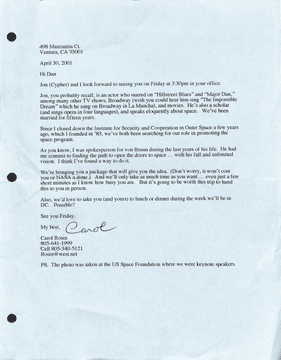 P.2
P.2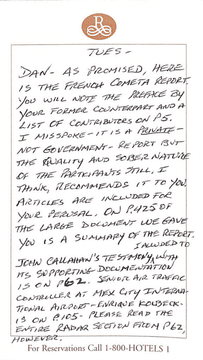 P.3
P.3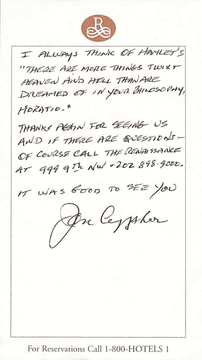 P.4
P.4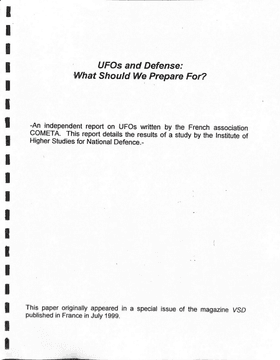 P.5
P.5 P.6
P.6 P.7UNCLASSI
 P.8
P.8 P.9
P.9 P.10UNCLASSI
 P.11
P.11 P.12
P.12 P.13
P.13 P.14
P.14 P.15
P.15 P.16
P.16 P.17
P.17 P.18
P.18 P.19
P.19 P.20UNCLASSI
 P.21
P.21 P.22
P.22 P.24UNCLASSI
 P.25
P.25 P.26
P.26 P.27
P.27 P.28UNCLASSI
 P.29UNCLASSI
 P.30
P.30 P.31
P.31 P.32
P.32 P.33
P.33 P.35
P.35 P.36
P.36 P.37
P.37 P.38
P.38 P.39
P.39 P.40
P.40 P.41
P.41 P.42
P.42 P.43
P.43 P.44
P.44 P.45
P.45 P.46
P.46 P.47UNCLASSI
 P.48
P.48 P.50
P.50 P.51
P.51 P.52
P.52 P.53
P.53 P.54UNCLASSI
 P.55
P.55 P.56
P.56 P.57
P.57 P.58
P.58 P.59
P.59 P.60
P.60 P.61
P.61 P.62
P.62 P.63
P.63 P.64
P.64 P.65
P.65 P.66
P.66 P.67
P.67 P.68
P.68 P.69
P.69 P.70
P.70 P.71
P.71 P.72
P.72 P.73
P.73 P.74
P.74 P.75
P.75 P.76
P.76 P.77
P.77 P.78
P.78 P.79
P.79 P.80
P.80 P.82
P.82 P.83UNCLASSI
 P.84UNCLASSI
 P.85UNCLASSI
 P.86
P.86 P.87UNCLASSI
 P.88UNCLASSI
 P.89UNCLASSI
 P.90UNCLASSI
 P.91UNCLASSI
 P.92
P.92 P.93UNCLASSI
 P.94UNCLASSI
> PAGE TEXT
PAGE 1
cover-page
This is a cover page for a file folder containing handwritten names and a date.
[HANDWRITTEN: Carol Rosin and Jan Cypher] [HANDWRITTEN: 4/30/2001] [HANDWRITTEN: 78078]
PAGE 2
letter
A personal letter from Carol Rosin to Dan regarding a scheduled meeting to discuss a proposal related to the space program, mentioning her background with von Braun and her husband Jon.
498 Manzanita Ct.
Ventura, CA 93001

April 30, 2001

Hi Dan

Jon (Cypher) and I look forward to seeing you on Friday at 3:30pm in your office.

Jon, you probably recall, is an actor who starred on “Hillstreet Blues” and “Major Dan,” among many other TV shows, Broadway (wish you could hear him sing “The Impossible Dream” which he sang on Broadway in La Mancha), and movies. He’s also a scholar (and sings opera in four languages), and speaks eloquently about space. We’ve been married for fifteen years.

Since I closed down the Institute for Security and Cooperation in Outer Space a few years ago, which I founded in ’83, we’ve both been searching for our role in promoting the space program.

As you know, I was spokesperson for von Braun during the last years of his life. He had me commit to finding the path to open the doors to space ... with his full and unlimited vision. I think I’ve found a way to do it.

We’re bringing you a package that will give you the idea. (Don’t worry, it won’t cost you or NASA a dime.) And we’ll only take as much time as you want ... even just a few short minutes as I know how busy you are. But it’s going to be worth this trip to hand this to you in person.

Also, we’d love to take you (and yours) to lunch or dinner during the week we’ll be in DC. Possible?

See you Friday.

My best, Carol

Carol Rosin
805-641-1999
Cell 805-340-5121
Rosin@west.net

PS. The photo was taken at the US Space Foundation where we were keynote speakers.
PAGE 3
letter
A handwritten note to Dan providing guidance on reading the French COMETA report, including references to specific pages for John Callahan's testimony and Enrique Kolbeck's account.
TUES-

DAN- AS PROMISED, HERE IS THE FRENCH COMETA REPORT. YOU WILL NOTE THE PREFACE BY YOUR FORMER COUNTERPART AND A LIST OF CONTRIBUTORS ON P5. I MISSPOKE- IT IS A PRIVATE- NOT GOVERNMENT- REPORT BUT THE QUALITY AND SOBER NATURE OF THE PARTICIPANTS STILL, I THINK, RECOMMENDS IT TO YOU. ARTICLES ARE INCLUDED FOR YOUR PERUSAL. ON P.425 OF THE LARGE DOCUMENT WE GAVE YOU IS A SUMMARY OF THE REPORT. I ALLUDED TO JOHN CALLAHAN'S TESTIMONY, WITH ITS SUPPORTING DOCUMENTATION IS ON P62. SENIOR AIR TRAFFIC CONTROLLER AT MEX CITY INTERNATIONAL AIRPORT- ENRIQUE KOLBECK- IS ON P105- PLEASE READ THE ENTIRE RADAR SECTION FROM P62, HOWEVER.

For Reservations Call 1-800-HOTELS 1
PAGE 4
letter
A handwritten note from Jon Cepsher referencing a quote from Hamlet and providing contact information for the Renaissance hotel.
I ALWAYS THINK OF HAMLET'S "THERE ARE MORE THINGS TWIXT HEAVEN AND HELL THAN ARE DREAMED OF IN YOUR PHILOSOPHY, HORATIO." THANKS AGAIN FOR SEEING US AND IF THERE ARE QUESTIONS- OF COURSE CALL THE RENAISSANCE AT 999 9TH NW - 202 898-9000. IT WAS GOOD TO SEE YOU Jon Cepsher For Reservations Call 1-800-HOTELS 1
PAGE 5
report
This page serves as an introduction to an independent report on UFOs produced by the French association COMETA, noting its original publication in the magazine VSD in July 1999.
UFOs and Defense: What Should We Prepare For?

-An independent report on UFOs written by the French association COMETA. This report details the results of a study by the Institute of Higher Studies for National Defence.-

This paper originally appeared in a special issue of the magazine VSD published in France in July 1999.
PAGE 6
cover-page
This is a title page for the COMETA Report titled 'UFOs and Defense'.
UFOs and Defense

--The COMETA Report--
PAGE 7
other
This page is a foreword by Professor André Lebeau discussing the scientific challenges of studying UFOs, the difficulty of applying standard scientific methods to rare and discrete phenomena, and the role of organizations like COMETA, GEPAN, and SEPRA in investigating these events.
"Stripping the UFO phenomenon of its irrational layer"

Foreword by Professor André Lebeau, Former chairman of the Centre National d'Etudes Spatiales
(CNES) [French National Center for Space Studies]

It is not looked on highly in certain scientific circles to be preoccupied with phenomena that are deemed to come under the heading of popular mythology or that are, at any rate, outside the realm of science. Such was the case with stones falling from the sky, which was long considered in our country to be the stuff of fable. However, the day that a meteorite shower over the town of Laigle permitted a collective and indisputable observation, it entered into the domain of science. One century later NASA, no doubt hastily, elevated these stones to proof of the existence of primitive life on Mars.
Phenomena of this type pose a preliminary problem for the scientific approach: does a scientific fact exist?
When the phenomenon is a matter of experimentation, the criterion to be used is simple; the reproducibility of the experiment is the touchstone and furnishes the fact that must then be interpreted. But the situation is more difficult when the phenomenon is not open to experimentation, when repeated observation is the only basis on which one can go, as is the case in astronomy and for the most part in geophysics. However, when the fact, albeit rare, is collectively and indisputably visible, it is easy to elevate it to the status of scientific object. The existence of eclipses, comets, and novas has been recognized since ancient times, even though their interpretation long contained - and sometimes still contains - a religious dimension. Thus collective and simultaneous observation plays the same role as the reproducibility of experiments.
This is not true when the event is not only rare but discrete as well, and when there is a very small amount of evidence at each occurrence, which opens the door to various suspicions. Unidentified flying objects, or UFOs, fall into this category. One runs up against additional difficulties in the case of UFOs, firstly that of how many human activities, especially since the beginning of the space age, have generated atmospheric phenomena the origin of which is not immediately ascertainable by those who observe them. In any case, UFOs, the origin of which cannot be attributed to either a human source or a natural mechanism that has been identified by science, are mixed in with a background noise the origin of which, although difficult to identify, is not at all mysterious.
Moreover, and above all, the existence of unexplained manifestations, both in the atmosphere and occasionally on the surface of the earth, inevitably gives rise to a fundamental question: are we alone in the universe? Could some of these phenomena be the work of extraterrestrial beings? This question gives the UFO issue a sociological, media-related, and even religious dimension in a domain that is not that of science and scientific methods. And it is the very existence of this dimension that elicits reactions of rejection in the scientific community.
However, a dispassionate examination of the situation should lead those who believe in the value of scientific method to consider that the very existence of a strong irrational environment is another reason to apply the precepts of this method to the issue of UFOs.
COMETA has tried its luck at this in the report that it is presenting, supported, namely, by the work performed by GEPAN, which later became SEPRA. The significant place granted to sightings, to testimonies, and to the analysis of cases that have been explained shows the major role played here by the establishment of facts. But we also find in this
PAGE 8
report
This page contains the table of contents for a report on UFOs, including sections on testimonies, research organization, defense implications, and various appendices.
document a reflection on the hypothesis of extraterrestrial intelligence and of the importance that it could have if studies came together to confirm it.
This report is useful in that it contributes toward stripping the phenomenon of UFOs of its irrational layer. When all is said and done, the question of determining whether or not those who created this report believe in the existence of extraterrestrial visitors, concealed in a variety of phenomena that are surprising in appearance but commonplace with respect to their cause, is of no real importance. What a scientist believes is important in the conducting of his research because this is what motivates and drives him. But his belief is not important to the results of his research nor does it have any effect on those results if he is rigorous.

Table of Contents

PREFACE Page 5
FOREWORD Page 6
INTRODUCTION Page 7
PART 1 FACTS AND TESTIMONIES
Chapter 1 Testimonies of French Pilots Page 9
Chapter 2 Aeronautical Cases Throughout the World Page 12
Chapter 3 Sightings from the Ground Page 17
Chapter 4 Close Encounters in France Page 20
Chapter 5 Counterexamples of Phenomena That Have Been Explained Page 24

PART 2 THE EXTENT OF OUR KNOWLEDGE
Chapter 6 Organization of the Research in France Page 27
Chapter 7 Methods and Results of GEPAN/SEPRA Page 31
Chapter 8 UFOs: Hypotheses, Modeling Attempts Page 35
Chapter 9 Organization of the Research Abroad Page 42

PART 3 UFOs AND DEFENSE
Chapter 10 Strategic Planning Page 55
Chapter 11 Aeronautical Implications Page 59
Chapter 12 Scientific and Technical Implications Page 62
Chapter 13 Political and Religious Implications Page 64
Chapter 14 Media Implications Page 69

CONCLUSION AND RECOMMENDATIONS Page 71

APPENDICES
Appendix 1 Radar Detection in France Page 74
Appendix 2 Astronomers’ Sightings Page 74
Appendix 3 Life in the Universe Page 75
Appendix 4 Colonization of Space Page 75
Appendix 5 The Roswell Affair - Disinformation Page 77
Appendix 6 The Long History of the UFO Phenomenon - Elements of a
PAGE 9
other
This page provides publication details, copyright information, and a description of the cover photo for the report titled 'UFOS AND DEFENSE: What should we prepare for?'
Chronology Page 80
Appendix 7 Reflections on Various Psychological, Sociological, Page
82
REFERENCES Page 87
GLOSSARY Page 90

The photo section from pages 43 to 50, as well as pages 2 and 91, were not part of the initial report.

Publication of:
[G.S. Presse Communication logo] 79-83, rue Baudin, 92309 Levallois-Perret Cedex.01 55 21 00 50, fax: 01 55 21 00 55. Société anonyme with FF 250,000 in capital, in business for 99 years. Sole Chief Executive Officer: Daniel Denis. Publication Director: Daniel Denis. Art Director: Richard Yotis. Editorial Assistant: Jacques Péron. Illustrations and Technical Consulting: Bernard Thouanel. Editorial Dept. 01 55 21 00 50. E- mail: vsd_hs@worldnet.fr. Public Relations Agent: Image7/Isabelle de Segonzac 01 44 15 93 94. Sales and restocking: MEP, 01 42 56 12 26,

UFOS AND DEFENSE
What should we prepare for?
COMETA, an association governed by the Law of July 1, 1901.
All reproduction, in whole or in part, translation, and adaptation rights reserved for all countries. Copyright 1999.
terminal ELL. Photoengraving: Key Graphic. Printing: Berger Levrault, 34, avenue du Roule, 92220 Neuily-sur-Seine. Joint Appeals Board No.: 59521. ISSN 1278-916 X.
Copyright deposit: July 1999.
© G.S. Presse Communication. The editorial department is not responsible for the loss of or damage to texts or photos that are sent to it for consideration. Reproduction in whole or in part of any material published in the magazine is prohibited.

Cover:
Photo taken on September 4, 1971, directly over the Tilaran range in Central America by an airplane from the National Geographic Institute of Costa Rica (Bernard Thouanel collection).
PAGE 10
report
General Bernard Norlain discusses the formation of the COMETA committee for the study of UFOs, noting its origins in the IHEDN Auditors Association and its goal to provide actionable recommendations for national and international authorities.
"Concrete problems are raised that call for a response
in terms of action"

by General Bernard Norlain,
Former director of the Institut des Hautes Etudes de Défense
Nationale
[Institute for Advanced National Defense Studies
(IHEDN)]

When General Letty visited me in March 1995 at my office at IHEDN to explain to me
his project for creating a new committee for study of UFOs, I assured him of my interest
and referred him to the management of the IHEDN Auditors Association (AA), which
gave him its support. Knowing that some twenty years earlier the AA had produced and
published a preliminary report on the subject in its bulletin, it was but time to update it.

Denis Letty seemed to me to be the perfect one to spearhead this task; one month
earlier, in February, he had organized, within the framework of the Ecole de l'Air [Air
Force Academy] Alumni Association, a conference on unidentified aerospace phenomena.
Before a large public, some of our comrades, former pilots, spontaneously related their
encounters with UFOs. The person in charge of studying these phenomena at the CNES
then presented his results, and a well-known astronomer described a scientifically
acceptable version of the extraterrestrial hypothesis.

The fields of knowledge affected by the UFO phenomenon are very diverse, and
General Letty was able to find within the AA, but on the outside as well, numerous
experts whose efforts he coordinated. The list of high-level civilian and military degrees
of the members of his committee is very impressive: officers, engineers, and specialists in
physics, life sciences, and social sciences were able to deal with all aspects of the study.

This is not a purely academic study. Concrete problems are raised, and not only for
civilian and military pilots, that call for a response in terms of action. The makeup of
COMETA [Committee for In-Depth Studies], which is the name of the committee, took
these into account. Almost all of its members have, or had during the course of their
careers, important responsibilities in defense, industry, teaching, research or various
central administrations.

I express the wish that the recommendations of COMETA, which are inspired by good
sense, will be examined and implemented by the authorities of our country. The first
report of the AA favored the creation within CNES of the only civilian government agency
known in the world dedicated to the study of UFOs. May this new report, which is much
more in-depth, give new impetus to our national efforts and to indispensable international
cooperation. IHEDN will then have well served the nation and, perhaps, humanity.

"Consider all of the hypotheses"
PAGE 11
report
This page is an introduction to the COMETA report, written by Air Force General Denis Letty, detailing the formation of the committee and acknowledging the contributors and members involved in the study of UFOs.
by Denis Letty,
Air Force General, 2nd Section, AA (35)

The accumulation of well-documented sightings made by credible witnesses forces us to consider from now on all of the hypotheses regarding the origin of unidentified flying objects, or UFOs, and the extraterrestrial hypothesis, in particular. UFOs are now a part of our media environment; the films, television broadcasts, books, advertisements, etc., dealing with UFOs amply demonstrate this.
Although no characterized threat has been perceived to date in France, it seemed necessary to the former auditors of the Institut des Hautes Etudes de Défense Nationale (IHEDN) to take stock of the subject. Along with qualified experts from extremely varied backgrounds, they are grouped together to form a private in-depth fact-finding committee, which was christened COMETA.

This committee was transformed into a COMETA association, which I chair. I would like to thank General Bernard Norlain, former director of IHEDN, and Mr. André Lebeau, former chairman of the Centre National d’Etudes Spatiales, without whom COMETA would not have been born.

In addition, I wish to acknowledge the various people who agreed to give their testimony or to contribute to this study, and namely:
Jean-Jacques Vélasco, Head of SEPRA at CNES,
François Louange, Chief Executive Officer of Fleximage,
Jean-Charles Duboc, Jean-Pierre Fartek, René Giraud, civilian and military pilots,
Edmond Campagnac, former technical director of Air France at Antananarivo,
Michel Perrier, Squadron Commander, Gendarmerie Nationale
M. Soun, of the Direction Générale de l’Aviation Civile [Civil Aviation Agency]
Joseph Domange, Air Force General, Auditors Association delegate general.

I must also thank the commander of the Air Force Air Operations Command Center for its participation during the investigation into flight AF 3532 on January 28, 1994.

Among the members of COMETA who spared no effort for close to three years, it is possible for me to list:
Michel Algrin, State Doctor of Political Science, attorney-at-law, AA (35), (1)
Pierre Bescond, Weapons Engineer General, 2nd Section, AA (48),
Denis Blancher, Chief of Police, Police Nationale, Ministry of the Interior,
Jean Dunglas, Doctor of Engineering (Ret.), in Water and Foredtry Management AR (48)
Bruno Le Moine, Air Force General, 2nd Section, AA (41),
Françoise Lépine, Fondation pour les Etudes de Défense [Foundation for Defense Studies], AA (33),
Christian Marchal, Chief Mining Engineer, Research Director at ONERA [National Aerospace Study and Research Office],
Marc Merlo, Admiral, 2nd Section, AA (35),
Alain Orszag, Doctor of Physical Sciences, Weapons Engineer General, 2nd Section.
PAGE 12
report
This page serves as an introduction to a report on UFO/UAP phenomena, detailing the history of French research organizations like GEPAN and SEPRA, and outlining the report's structure regarding scientific analysis and defense implications.
(1): AA or AR xx: auditor of national or regional promotion no. xx.

INTRODUCTION

In 1976, a committee of the Institut des Hautes Etudes de Défense Nationale (IHEDN) chaired by General Blanchard, of the Gendarmerie Nationale, opened the unidentified flying objects file. The objective: to make proposals for organizing research and the collection of data on these phenomena. The goal was achieved, because the recommendations of this committee were followed by the creation of the Groupe d’Etude des Phénomènes Aérospatiaux Non Identifiés (GEPAN) [Unidentified Aerospace Phenomena Study Group], the precursor to the current Service d’Expertise des Phénomènes de Rentrée Atmosphérique (SEPRA) [Atmospheric Reentry Phenomena Consulting Department], a division of the Centre National d’Etudes Spatiales (CNES), which is in charge of this file. Twenty years later, it seemed useful to us to take stock once again of the knowledge regarding these sightings, which are becoming of greater and greater interest to a large public that is often convinced of the extraterrestrial origin of UFOs. Just look at the number of films or television broadcasts on this subject.

For the sake of convenience with respect to language, we will use the term UFO (Unidentified Flying Object) generally, instead of the more scientific term UAP (Unidentified Aerospace Phenomenon).

Without a doubt, the phenomenon remains and the number of sightings, which are completely unexplained despite the abundance and quality of data, is growing throughout the world. On the ground, some sightings, like the Trans-en-Provence sighting in 1981, have been the subject of in-depth studies proving that something did in fact land on the ground and parked there. Civilian and military pilots have provided gripping visual testimonies, often corroborated by radar recordings, as was the case recently in France. In view of the lack of irrefutable proof regarding the origin of these phenomena, the need for understanding persists.

We will devote the first part of this report to several particularly remarkable French and foreign cases.

In the second part, after having recalled the current organization of the research on these phenomena in France and abroad, we will evaluate the work being done by scientists worldwide who are interested in UFOs and are proposing, as we will see, partial explanations that are based on known laws of physics.

Some of these (propulsion systems, non lethal weapons, etc.) could become realities in the short, medium and long term.

We will review the principal global explanations proposed, focusing on those that are in keeping with the current scientific data, which range from secret weapons to extraterrestrial manifestations.

The UFO phenomenon involves defense in the broad sense and calls for a certain number of measures, which we will examine in the last part:
- [providing] civilian and military pilots with sufficient information to teach them an adapted conduct when faced with these phenomena and, more generally, [providing] the public and decision-makers with information,
- developing the actions of SEPRA and promoting supplemental scientific monitoring, or even research, actions,
- considering the strategic, political, and religious consequences of a possible confirmation of the extraterrestrial hypothesis, the bizarre connotation of which it is
PAGE 13
report
This page introduces a section on UFO facts and testimonies, specifically detailing a March 7, 1977, incident involving a French Mirage IV pilot, Hervé Giraud, who encountered an unidentified bright object while flying near Dijon.
advisable to eliminate here and now.

PART 1

Facts and Testimonies

Before going further, it seems worthwhile to us to present several facts and testimonies that in themselves justify the interest of the in-depth study that we are going to develop below:
- three testimonies of French civilian and military pilots who encountered UFOs in flight,
- five major aeronautical cases in the world,
- three sightings from the ground,
- four cases of close encounters in France.
These few examples are among the hundreds of remarkable, that is to say credible and well-documented, cases observed around the world in recent decades. None of these cases has been explained, whereas the majority of times the investigations enable the origin of the phenomena observed by the witnesses to be determined; we will give two significant examples of this.

Chapter 1 - Testimonies of French Pilots

Three French pilots who encountered UFOs in flight came to testify before the committee. Their testimonies are all the more interesting because they can be evaluated better than other aerial phenomena since they pertain to the aeronautic world.

1.1 M. Giraud, Mirage IV pilot (March 7, 1977).

The sequence of events of this incident was reconstructed from radio exchanges between the pilot and the controller, which are routinely recorded and kept for a specific period of time in accordance with the procedure in force at all control centers. The incident occurred on March 7, 1977, at around 2100 hours local time during the Dijon flyover when the Mirage IV was returning, the automatic pilot engaged, to Luxeuil after a night mission. [The aircraft was] at an altitude of 9600 m and flying at a speed of “Mach 0.9.” The flight conditions were very good. The pilot (P), Hervé Giraud, and his navigator (N) observed a very bright glow at “3 o’clock” (time code) from their aircraft, at the same altitude, coming on a collision course and approaching very rapidly. We will designate it “assailant” (A1) in the rest of the account. P queried the Contrexéville military radar station that controlled them to ask whether they had a radar contact on the aircraft coming towards them. In fact, P and N thought that it was an air defense interceptor, as it is currently being used, that was seeking to intercept their aircraft to then identify it with its identification beacon.

The radar controller (C), who did not have a corresponding radar contact on his scope, gave a negative response and asked the pilots to check their oxygen. This request on the part of the controller is a standard emergency procedure; it shows that the controller is so
PAGE 14
report
This page describes two separate aerial encounters: one involving a Mirage IV aircraft and an unidentified 'assailant' glow, and a second account from March 3, 1976, where a student pilot in a T-33 encountered a bright green sphere.
surprised by the crew’s question that he suspects an oxygen problem capable of causing a “hallucination.”
“Assailant A1” maintained its course towards the Mirage IV. P initiated a bank to the right toward A1, a bank which he was forced to keep tightening (3 to 4 g) in order to try to maintain visual contact on A1 and to keep it from positioning itself to the rear. Despite this maneuver, A1 moved behind the Mirage IV at an estimated distance of 1500 m. At this point P reversed his bank to regain visual contact on A1. He saw the glow move away to “11 o’clock.” He resumed course to Luxeuil. But 45 seconds after he resumed course to Luxeuil, feeling like he was being “watched” according to his own words, P told N, “you wait and see, it’s going to come back.” And in fact, an identical glow, which we will call A2, appeared at “3 o’clock.”
P then initiated a very tight bank (6.5 g) to disengage his aircraft from what he now considered to be a real threat. The glow followed the Mirage IV’s maneuver in order to position itself to the rear at an estimated distance of 2000 m. P reversed, as before, and once again saw the glow disappear under the same conditions. C still did not have a radar contact on “assailant A2.” P and N continued their flight and returned normally to the Luxeuil base.
Those are the facts. Two points should be emphasized:
- only a combat aircraft could have had performance comparable to that of A1 and A2 (speed, maneuverability). In this case, C would have had a radar contact on this aircraft, especially at that altitude, a contact that he would have seen all the better since there was no other traffic in the vicinity of the Mirage IV.
- given the apparent maneuvers of A1 and A2, regardless of whether or not they were the same craft, their speed could only be supersonic, which, in the case of combat aircraft, would be manifested on the ground by a very loud sonic boom due to the phenomenon of the focusing of the shock wave generated by the bank. This would have been noticed in the surrounding area, especially since it was nighttime. But no sound was heard in the region.

1.2 Testimony of a Fighter Pilot (March 3, 1976)
Since this pilot (P) wanted to preserve his anonymity, the following lines are extracted from the written deposition that he wished to send to us (he revealed his name
subsequently; he is Colonel Claude Bosc). On March 3, 1976, P, then a student pilot at the Combat Flight School at Tours, was making a solo night flight in a T-33 training aircraft. The mission consisted of navigating at an altitude of 6000 m following a Rennes-Nantes-Poitiers itinerary, then landing at Tours. Several aircraft were following the same itinerary at 5-minute intervals. The night was dark but cloudless, and the towns could be detected very clearly at the flight altitude in question. Visibility was greater than 100 km. While he was flying stabilized at an altitude of 6000 m, at a speed of 460 km/h, P first saw straight ahead, very far off in the distance (at the detection limit of lights on the ground) what he at first thought was the launching of a green signaling flare.
In 1 to 2 seconds, this flare exceeded the altitude of his aircraft by 1500 m and seemed to level off in space before descending in his direction. It approached at a dizzying speed on a collision course with the aircraft and filled the entire front windshield of the cockpit. Thinking that impact was inevitable, P let go of the joystick and crossed his arms in front of his face in a reflex protection gesture. The aircraft was completely enveloped in a very bright and phosphorescent green light. P saw a sphere (S) that avoided his aircraft at the
PAGE 15
report
This page details the sighting of an unidentified aerial phenomenon by the crew of Air France flight AF 3532 on January 28, 1994, including radar confirmation by the Taverny Air Defense Operations Center (CODA).
very last moment and passed over his right wing grazing it, all within a fraction of a second. P retained the following memory of this incident:
- S was not very large (1 to 2 m in diameter),
- S was extended by a tail, which was comparable to that on a comet, that was also a fluorescent green color,
- the center of S consisted of a very bright white light (magnesium-fire type),
- the sighting lasted a total of less than 5 seconds.
P, who was very shocked by this phenomenon, informed the radar controller (-) ensuring the control of the mission on the ground; the controller had not detected anything on his radar scope. Upon return, two other pilots who had followed the same itinerary as P stated that they had seen the phenomenon, but from a distance.

1.3 Air France Flight AF 3532 (January 28, 1994)

Jean-Charles Duboc (P), captain of Air France flight AF 3532, was assisted by Copilot Valérie Chauffour (CP) in making the Nice-London connection on January 28, 1994. At 1314 hours, while they were cruising at an altitude of 11,900 m in the vicinity of Coulommiers in Seine-et-Marne [Department] under excellent meteorological conditions, the chief steward, who was present in the cockpit at the time, pointed out a phenomenon that appeared to him to be a weather balloon. His sighting was immediately confirmed by the copilot. P, who in turn saw it, first thought that it was an aircraft banking at a 45° angle. Very quickly, however, all three agreed that what they were seeing did not resemble anything that they knew of. The excellent visibility and the presence of altocumulus clouds permitted P to estimate that the phenomenon was at an altitude of 10,500 m and at a distance of approximately 50 km. Taking into account its apparent diameter, they deduced that the craft was large. They were struck by the changes in the shape of the craft, which first appeared in the form of a brown bell before transforming into a chestnut brown lens shape, then disappearing almost instantaneously on the left side of the aircraft, as if it had suddenly become invisible. P reported to the Reims Air Navigation Control Center, which had no information on any mobile air presence in the vicinity. However, following the existing procedure, Reims informed the Taverny Air Defense Operations Center (CODA) of the sighting made by the crew and asked P to follow the “Airmiss” procedure upon landing.
CODA did in fact record a radar track initiated by the Cinq-Mars-la-Pile control center at the same time that corresponded in location and time to the phenomenon observed. This radar track, which was recorded for 50 seconds, did cross the trajectory of flight AF 3532 and did not correspond to any flight plan filed. It should be noted that the phenomenon disappeared from the view of the crew and the radar scopes at the same instant. The investigations conducted by CODA enabled both the hypothesis of a weather balloon to be ruled out and the precise crossing distance of the two trajectories to be determined, consequently bringing the approximate length of the craft to 250 m in length. It should be noted that the Northern Regional Air Navigation Center (CRNA), which handles 3000 movements per day, has investigated only three cases over the last seven years, one of which was that of flight AF 3532.

Chapter 2 - Aeronautic Cases Throughout the World
PAGE 16
report
This page describes the 1956 Lakenheath-Bentwaters UFO incident, detailing radar and visual sightings of unidentified objects by military personnel and subsequent investigations by the Condon Commission and others.
It is appropriate to specify that those cases that have been sighted from aircraft are considered to be aeronautic cases. This chapter describes five significant cases that occurred in different parts of the world and which were the subject of an investigation by the authorities of the countries in question. In four cases, the objects were detected both visually and by radar. In the fifth case, they were observed by a number of independent witnesses.

2.1 Lakenheath (United Kingdom) (August 13-14, 1956)

The joint USAF - U.S. Air Force - and RAF [Royal Air Force] military bases of Lakenheath and Bentwaters are located 30 km northeast of Cambridge with respect to the first and near the coast to the east of this city with respect to the second. Unknown aerial objects followed by their radars during the night of August 13 to 14, 1956, were judged "unidentified" by the report published in 1969 by the Condon Commission tasked with evaluating the research of the U.S. Air Force on UFOs (cf. Chapter 9). In September 1971, the magazine Astronautics and Aeronautics published a study of the case by Thayer, the radar expert on the Condon Commission, which was based in part on a study presented in 1969 by Professor MacDonald, an atmospheric physicist. For the record, we point out that on several occasions, and namely in 1976, Philippe Klass, editor of the journal Aviation Week and Space Technology, attempted to criticize this work and to reduce the case to a series of ordinary events (meteorites, radar propagation anomalies, etc.). The incidents began at the Bentwaters base, preceded, between 2100 and 2200 hours, by unusual sightings of the approach control radar [center], which we will not go into in further detail. They took place as follows:
- At 2255 hours, the radar detected an unidentified object moving east to west passing over the base, always almost into the wind at an apparent speed of 2000 to 4000 miles per hour (mph), or 3200 to 6400 km/h. No sonic boom was mentioned. The personnel of the Bentwaters control tower said they saw a bright light flying over the ground from east to west "at an incredible speed" at an altitude of approximately 1200 m. At the same time, the pilot of a military transport plane flying over Bentwaters at an altitude of 1200 m stated that a bright light passed under his plane tearing east to west "at an incredible speed." The two visual sightings confirmed the radar detection.
- The Bentwaters radar operator reported these concurring radar and visual sightings to the shift supervisor at the Lakenheath [air] traffic radar control center, an American noncommissioned officer to whom we are indebted for a quite detailed report of these sightings and those that follow. The report, which was sent to the Condon Commission in 1968 by the then retired NCO, is coherent and does not contradict the documents in the USAF [Project] Blue Book file except in a few minor points; among these documents, the regulation telex sent by Lakenheath to the Blue Book team on the day of the incident and the report forwarded two weeks later to that same team by American Captain Holt, an intelligence officer at Bentwaters.
- The shift supervisor at the Lakenheath base alerted his radar operators. One of them detected a stationary object approximately 40 km southwest of the base, almost in the axis of the trajectory of the supersonic object seen at 2255 hours. The shift supervisor called the Lakenheath approach radar [center], which confirmed the sighting. The radar technicians at the air traffic control center suddenly saw the object immediately go from immobility to a speed of 600 to 950 km/h. The shift supervisor notified the base commander.
PAGE 17
report
This page describes two UFO incidents: the Lakenheath-Bentwaters incident involving an RAF Venom fighter, and the 1957 RB-47 aircraft incident in the United States.
The object changed direction several times, describing line segments ranging from 13 to 30 km, separated by abrupt stops for 3 to 6 minutes; the speed always went from a value of zero to a value of some 950 km/h without any transition.
Visual sightings were made from the ground and confirmed the high speed and astounding accelerations. The regulation telex sent by Lakenheath concluded: "The fact that radar and ground visual observations were made on its rapid acceleration and abrupt stop certainly lend credence to the report."
- After 30 to 45 minutes, the RAF sent a night fighter, a Venom two-seater, in pursuit of the object. The Lakenheath air traffic radar control center guided it in the direction of the object 10 km east of the center. The pilot acquired the target visually and on radar, then lost it. The center then directed the plane 16 km to the east of Lakenheath; the pilot again acquired the target and said, "my machine guns are locked onto him." A short time afterward, he once again lost his target; but the target was followed by the radar operators at the center. They informed the pilot that the object had made a rapid movement to position itself behind him and was following him at a short distance. The pilot confirmed [this]. Watched by the radar technicians, the pilot tried every maneuver for about 10 minutes in order to move back behind the object (steep climbs, dives, sustained turns), but he didn't succeed: the UFO followed him at a constant distance according to the ground radar stations. Finally, low on fuel, he returned to base, asking that someone tell him whether the object continued to follow him. The UFO did, in fact, follow him for a short distance, then came to a standstill. The radar technicians then saw the object make several short moves, then leave in a northerly direction at about 950 km/h and disappear from radar range at 0330 hours.
- A Venom sent to replace the first had to quickly return to base, due to mechanical problems before having been able to establish contact with the object.
Thayer concluded his article in the journal Astronautics and Aeronautics in this manner: " taking into consideration the high credibility of information and cohesiveness and continuity of account, combined with a high degree of 'strangeness', it is also certainly one of the most disturbing UFO incidents known today."

2.2 The RB-47 Aircraft in the United States (July 17, 1957)

This case, which appears as "unidentified" in the Condon report, has been cited and studied extensively for 40 years. Physicist James MacDonald published the results of his investigation in 1971 in the journal Astronautics and Aeronautics. Phillip Klass, the aforementioned journalist, then endeavored in 1976 to trivialize the facts, which was highly contestable from the outset. The bulk of this interpretation was refuted at the end of 1997, upon completion of an in-depth investigation contained in a memorandum from the aerospace technology researcher Brad Sparks.
We will summarize here the important sequences of events of the case, which show a luminous unidentified flying object detected at night not only by sight and on radar, but also by pulsed microwave emissions coming from its direction:
The RB-47 was a bomber the bomb bays of which had been converted to hold three officers each equipped with means enabling emissions from ground radars to be detected and their azimuth direction, but not their distance or the nature of the signals, to be specified. In the south central region of the United States, where the aircraft was making a training flight that day, numerous radar stations were emitting signals the frequencies of which were close to 3000 MHz and the pulses of which lasted 1 microsecond and
PAGE 18
report
This page details a series of radar and visual sightings of an unidentified object by the crew of an RB-47 aircraft over Mississippi, Louisiana, and Texas in 1969.
occurred every 600 microseconds. The radars scanned the horizon four times per minute.
Three other officers (pilot, copilot, navigator) were in the cockpit and, as a result,
could themselves see out of the aircraft. The six officers were questioned by MacDonald
in 1969. They related that:
- The first incident took place above Mississippi, probably at around 0930Z (0330 local
time), when the aircraft, going back to the north from the Gulf of Mexico, was
approaching the coast a little to the east of the Mississippi delta, flying at Mach 0.75.
Captain MacClure detected on his screen a blip corresponding to a pulsed microwave
source located behind and to the right of the RB-47 (at “5 o’clock”) that rapidly passed
the aircraft and turned around it, departing again on its left in the other direction (between
“6 o’clock and 9 o’clock”). The source was therefore airborne and supersonic. MacClure
noted the characteristics of the signal: they were those of the aforementioned ground radar
stations, with the exception of the length of the pulses, which were 2 microseconds. He
did not report this incident immediately, thinking that it was perhaps a malfunction of the
electronics. As Klass writes, at the time there were no supersonic aircraft either in the
United States or in the USSR large enough to transport a radar, the signal from which
possessed the characteristics that were observed.
- The following incident occurred at 1010Z in Louisiana, when Commander Chase,
pilot, and Captain MacCoyd, copilot, saw an intense bluish-white light aim at the aircraft
from “11 o’clock,” then jump from their left to their right and disappear while it was at “2
o’clock.” Klass showed that this object was perhaps a meteorite the trajectory of which
caused an optical illusion, but, at the time, Chase and MacCoyd wondered whether it
wasn’t a UFO. Hearing them, MacClure remembered his prior detection and looked for a
signal of the same type.
- He found this signal at 1030Z, which was identical to the previous one and, perhaps
by coincidence, came from “2 o’clock.” This signal was confirmed by Captain
Provenzano, whose detector was itself also able to operate at around 3000 MHz. It could
not have been the signal from a fixed radar, because its “2 o’clock” direction remained
unchanged when the aircraft followed its route to the west for several minutes. The
aircraft entered Texas, then came within range of the “Utah” radar [center] located near
Dallas. The crew reported to Utah, which detected both the aircraft and an object
maintaining a constant distance of 18 km from it.
- At 1039Z, still in Texas, Commander Chase perceived a large red light, which he
estimated was moving 1500 m below the aircraft at approximately “2 o’clock.” The
aircraft was flying at an altitude of 10,500 m, and the weather was perfectly clear.
Although the commander was not able to determine either the shape or the size of the
object, he had the distinct impression that the light was emanating from the top of the
object.
At 1040Z, he received authorization to pursue this object and notified Utah. He
slowed down, then accelerated; Utah informed him that the object was mirroring his
movements, all the while maintaining a constant distance of 18 km.
- At 1042Z, Chase accelerated and saw the red object turn to the right in the direction
of Dallas; this was confirmed by MacClure.
- At around 1050Z, a little to the west of Dallas, the object stopped and simultaneously
disappeared from the view of the radar(s) (Utah and the onboard radar that had just
detected the object when the RB-47 had approached it) and from MacClure’s screen (the
disappearance of an object from a radar screen is less surprising nowadays; it calls to mind
the active stealth technologies currently in development if not in operation). The aircraft
then banked to the left. MacClure picked up a signal that was perhaps the one from Utah.
PAGE 19
report
This page describes two separate UAP incidents: an RB-47 encounter near Dallas and Oklahoma City, and a 1976 incident in Tehran involving the Imperial Air Force.
Visual and radar contact were regained.
- At 1052Z, Chase saw the object drop to around 4500 m. He had the RB-47 make a dive from 10,500 to 6000 m. The object then disappeared from his view, from the Utah radar, and from MacClure’s screen simultaneously.
- At 1057Z, still near Dallas, the object reappeared on MacClure’s screen, and Utah indicated
that it had prepared a “CIRVIS” (Communications Instructions for Reporting Vital Intelligence Sightings) report, a secret urgent radio report sent to the Air Defense Command, which is mandatory in the event of a sighting by the Air Force of an unidentified aerial object. At 1058Z, the pilot regained visual contact at “2 o’clock.” A few minutes later, seeing his fuel reserves drop, he decided to return and headed roughly north toward Oklahoma City. The object then positioned itself behind the aircraft at a distance of 18 km, as reported by Utah, which tried to send fighter jets in pursuit of the unknown [object]. The object, flowing lower than the RB-47 and behind it, could not be seen from the cockpit, but it was detected on MacClure’s screen until Oklahoma City, well outside the range of the Utah radar. Then it suddenly disappeared from the screen at 1140Z.

2.3 Tehran (September 18 to 19, 1976)

This incident took place during the night of September 18 to 19, 1976. Different newspapers worldwide reported it more or less accurately: for example, France-Soir in the September 21st issue. An American citizen took laborious steps with the U.S. authorities to obtain a report, invoking the freedom of information act. He finally obtained it from the Defense Intelligence Agency (DIA). Other U.S. documents have been obtained since then.
Interviews with generals and the Iranian air [traffic] controller involved in this affair enabled the DIA report to be confirmed and supplemented a bit, namely with the mention of proper names. The following summary resulted from a reading of the all the information:
- At around 11:00 p.m. on September 18, the Tehran airport control tower received several calls reporting a strange immobile luminous object in the sky above the Shemiran residential district in the northern part of the capital. The person in charge of the night shift, Hossain Perouzi, went out to look at the object with binoculars. He testified that he saw a rectangle, probably corresponding to a cylindrical object, the ends of which pulsed bluish-white lights. In the middle of the object, a small red light described a circle. Perouzi reported this strange sighting to the Imperial Air Force Command, which alerted General Youssefi, the third in command of this air force. He went out on his balcony and saw an object similar to a star, but much bigger and brighter; he ordered a Phantom F-4 reaction aircraft, the mission of which he directed through Perouzi as intermediary.
When the F-4 came to 45 km from the object, its flight instruments and all its means of communication (radio and intercom) suddenly stopped working. The pilot aborted the interception and headed for his base. The crew then regained use of their instruments and means of communication.
- A second F-4 was sent by General Youssefi. The UFO’s echo on its screen was similar to that of a Boeing 707. The F-4 approached the UFO at a relative speed of 280 km/h. When it came to 45 km from it, the UFO accelerated and maintained a constant distance of 45 km from the F-4. The crew was not able to determine the size of the object
PAGE 20
report
This page describes two UFO incidents: a 1976 encounter near Tehran involving an F-4 aircraft and electromagnetic interference, and a 1990 report from Russia involving sightings of disk-shaped objects with high maneuverability.
because it shone so intensely. Its brightness came from lights arranged in a rectangle, changing rapidly from glue to green, to red, and to orange.
- Suddenly a bright object with an apparent diameter one half or one third of that of the moon exited the UFO and headed rapidly for the F-4. The pilot tried to shoot a Sidewinder missile at the object, but at the same instant his fire control console and his means of communication (radio and intercom) became inoperable. He promptly initiated a bank and a dive, but the object changed direction and pursued the aircraft at a distance of approximately 6 km. Finally, the object moved inside the F-4’s bank and departed in order to reenter the UFO from which it had exited.
- A short time afterwards, an object again exited the UFO and rapidly headed straight down to the ground. The F-4 crew waited to see it explode, but the object seemed to touch down gently and shine a very bright light over an area 2 to 3 km in diameter. The crew, momentarily blinded, orbited long enough to recover their night vision before landing at the Tehran airfield. It noted that it lost communications (radio and intercom) whenever their aircraft crossed a certain zone. It should be pointed out that a civilian aircraft also lost communications when it crossed that zone. The next day, the crew was taken by helicopter to the place where the object had apparently landed, a dried up lake, but it didn’t find any trace [of the object].
An attached note from DIA was just as astonishing as the report itself; it indicated that the information had been confirmed by other sources and ended with this assessment:
"An outstanding report. This case is a classic which meets all the criteria necessary for a valid study of the UFO phenomenon."
a. The object was seen by multiple witnesses from different locations...,
b. The credibility of many of the witnesses was high (an Air Force General, qualified aircrews, and experienced radar operators),
c. Visual sightings were confirmed by radar,
d. Similar electromagnetic effects (EME) were reported by three separate aircraft,
e. There were physiological effects on some crew members (i.e. loss of night vision due to the brightness of the object),
f. An inordinate amount of maneuverability was displayed by the UFOs.
The attempt by Klass to trivialize this case shows how solid it is.

2.4 Russia (March 21, 1990)
This case took place at night in the Pereslavl-Zalesski region east of Moscow. It was reported in an article by Aviation General Igor Maltsev, Air Defense Forces commander, which appeared in the newspaper Rabochaya Tribuna (“Workers’ Tribune”) on April 19, 1990, entitled “UFOs on Air Defense Radars” (cf. the book by Marie Galbraith referenced in Chapter 9.1).
The article mentions the dispatch of combat aircraft on a mission to intercept the UFOs detected. General Maltsev, who summarized over one hundred visual sightings collected by unit commanders, stated:
"I am not a specialist in UFOs, and therefore I can only correlate the data and express my own supposition. According to the evidence of these eyewitnesses, the UFO is a disk with a diameter from 100 to 200 meters [320 to 650 feet]. Two pulsating lights were positioned on its sides... Moreover, the object rotated around its axis and performed an 'S-turn' flight both in the vertical and horizontal planes. Next the UFO hovered above the ground and then flew with a speed exceeding that of the modern jet fighter by two or three times .. The objects flew at altitudes ranging from 100 to 7000 m. [300 to 24,000 feet]. The movement of the UFOs was not accompanied by sound of any kind and was distinguished by its startling maneuverability. It seemed the UFOs were completely devoid of inertia. In other words, they had somehow 'come to terms' with gravity. At the present time, terrestrial
PAGE 21
report
This page describes a UFO sighting near San Carlos de Bariloche on July 31, 1995, involving an Aerolineas Argentinas flight, and introduces a chapter on ground sightings, specifically mentioning a 1954 incident in Antananarivo.
machines could hardly have such capabilities."

2.5 San Carlos de Bariloche (July 31, 1995)

Source SEPRA
Aerolineas Argentinas flight AR 674, a Boeing 727 en route from Buenos Aires, was 140 km from San Carlos de Bariloche, a tourist resort in the central Andes where it was preparing to land.
At that precise instant, a power outage plunged the town into darkness, and the pilot received the order to stay on standby for a few minutes before making his final approach.
When he began his approach, the pilot noticed a strange star. At the same time, the control center put a second airplane that had arrived in the sector on standby. Flight AR 674 continued its approach, but when it had completed its turn and was in the axis of the runway, an object resembling a large aircraft appeared on its right side and flew parallel to it! This object had three lights, one of which was red, in the middle of it. The airport lights failed again, and the runway and approach ramp lights also went out. The airplane on standby observed the same phenomenon from its position.
Since the pilot could not land, he pulled up and turned again in order to reposition himself in the axis of the runway. At that moment, the object, which had become luminous, moved behind the airplane, stopped, ascended vertically, and once again stopped. It moved back in front of the airplane before finally disappearing in the direction of the Andes Cordillera. The crew and passengers of flight AR 674, those on the other airplane, the airport controllers, and some of the inhabitants of San Carlos watched this unusual aerial ballet dumbfounded.

This case is interesting in more than one respect:
- the sighting was corroborated by multiple independent observers both in flight and on the ground,
- the phenomenon lasted several minutes,
- there were different trajectories, some of which closely followed those of the airplane,
- there was an observation of an electromagnetic phenomenon (the lights of the town and the airport went out) directly related to the presence of the object.

Chapter 3 - Sightings from the Ground

This chapter deals with sightings from the ground, two of which were reported to the committee by direct witnesses of the phenomena observed. Here again, their testimonies are all the more interesting since they pertain to the aeronautic world and the phenomena were observed during the day.

3.1 Phenomenon Observed by Numerous Witnesses at Antananarivo (August 16, 1954)

Testimony before the committee
Edmond Campagnac (C), a former artillery officer and former chief of technical services for Air France in Madagascar who is now retired, came to testify before the committee. The phenomenon described below occurred on August 16, 1954, in
PAGE 22
report
This page describes two separate UFO sightings: one in Antananarivo involving a green ball-shaped craft, and a 1979 sighting in Dijon by a former Air Force pilot of a saucer-shaped object.
Antananarivo. It was seen by several hundred witnesses.
At 1700 hours, when the personnel of the Air France office were waiting for the mail to arrive, someone spotted a “large” green “ball” in the sky moving at high speed. The first thought of the witnesses was that it was a meteorite. The phenomenon disappeared behind a hill, and they thought that the green ball was going to crash into the ground and that they were going to feel the impact.
However, it reappeared after a minute. In passing directly over the observers, it revealed itself to be “a sort of metal rugby ball preceded by a clearly detached green lens[-shaped portion] with sparks issuing from the rear.” In the estimation of the witnesses, the “ball” was the length of a DC4 airplane, or some forty meters long. The green lens[-shaped portion] separated itself [and remained] a little less than 40 m out in front, with fairly long sparks [coming out] in the rear. The craft flew over Antananarivo at an estimated height of 50 to 100 meters, an estimation that was made possible by comparison with the height of a nearby hill. When the craft was moving, shop lights went out, and animals exhibited a real anxiety.
After having flown over Antananarivo, the craft departed in a westerly direction. When it flew over the zebu park in the town, the craft caused a violent fright reaction among them. This is a surprising detail, since normally these animals do not show any agitation when Air France planes pass by. Two or three minutes later, an identical craft was observed 150 km from there above a farm school. There, too, the herds were overcome with panic. If the craft sighted was the same one as the one in Antananarivo, its speed would have had to be on the order of 3000 km/h. According to C’s account, General Fleurquin, Commander-in-Chief in Madagascar, assembled a “scientific commission” to conduct an investigation into these phenomena. No trace of this investigation could be found in the Air Force archives; however, GEPA (Groupe d’Etudes des Phénomènes Aérospatiaux [Aerospace Phenomena Study Group]) bulletin no. 6 of the 2nd half of 1964 described this sighting.

3.2 Sighting by a Pilot of a Saucer Close to the Ground (December 9, 1979)
GEPAN/SEPRA investigation and testimony before the committee
At the time of the incident, former Air Force Lieutenant-Colonel Jean-Pierre Fartek (F) was a Mirage III pilot in the 2nd fighter squadron at Dijon. F is currently a pilot for a private company. F was living, and still lives, in the same village near Dijon. His house is located at the end of a housing development looking out onto fields. Approximately 250 m away is a grove of trees with an average height of 15 m at maximum. On December 9, 1979, at around 9:15 a.m., F and his wife saw an unusual object (hereinafter called M) in the field near their house. The weather and visibility were excellent. M, the dimensions of which they estimated to be 20 m in diameter by 7 m thick, was hovering approximately 3 m above the ground in front of the grove of trees, which partially concealed it. In complete agreement with his wife, witness F described it as:
- having the shape of two superposed saucers with very distinct contours inverted one on top of the other and not exhibiting any portholes or lights,
- being metallic gray on the upper portion and darker (bluish) on the lower portion, with a perfectly delimited separation between the upper side and the underside of the craft. This color difference could not be due to a difference in lighting given the position of the sun,
- in constant motion as a result of very slight oscillations, the frequency of which was not very rapid, like something trying to balance,
PAGE 23
PAGE 24
report
This page details two UFO incident investigations: the 1965 Maurice Masse encounter in Valensole and the beginning of the 1967 Cussac incident report.
4.1 Valensole, Alpes-de-Haute-Provence [Department] (July 1, 1965)

In-depth investigation by the Gendarmerie Nationale
At Valensole on July 1, 1965, Maurice Masse, who left his home at 5:00 a.m., headed for his lavender fields located on the plateau near the village. Before starting his tractor at around 6:00 a.m., he lit a cigarette and at that moment heard a hissing sound that attracted his attention. Emerging from behind a pile of stones, he saw an object resting in his field approximately 90 m from him. Its shape was reminiscent of that of a “Dauphine” automobile standing on six legs with a central pivot. He approached it with caution, at a distance of ten meters or so, thinking he might surprise people about to steal his lavender from him. He then saw two small beings, one of whom, who was turned in his direction, reportedly pointed a tube at him that he took from a sort of bag hanging on his left side. Maurice Masse indicated that he was totally immobilized in place, numbed and paralyzed, but completely aware of the events that were unfolding before his eyes. The two beings then got back in their craft. He watched them while they were behind a sort of dome, and he heard a heavy noise when the object lifted up off the ground. He also remarked that the tube that was under the object, touching the ground, began to turn, as well as the six legs, which retracted under the machine. The object then ascended in a vertical direction before tilting diagonally and disappearing more rapidly than a jet. Maurice Masse remained immobilized in this manner for about 15 minutes before coming to, then resuming his work and going to tell his story in the village, where the gendarmes, having learned of the incident, questioned him during the day.

The Valensole gendarmerie force, then the Digne investigations squad, investigated this case for several days. The investigations of the gendarmerie established the existence, at the spot indicated by Maurice Masse, of a depression impressed into the ground, which had been soaked in that place. In the center of it was a cylindrical hole 18 cm in diameter and 40 cm deep with smooth walls. At the bottom of the hole were three other bent holes 6 cm in diameter. Along the object’s axis of flight, over some one hundred meters, the lavender beds were dried up. This phenomenon lasted for several years, during which time the witness tried in vain to replant the plants within a radius of several meters around the tracks.

Despite a few contradictory elements in Maurice Masse’s account, the data collected by the two gendarme brigades confirmed the plausibility of the facts, particularly the effect on the environment and on the witness himself, who slept twelve to fifteen hours a night, followed by the paralysis of which he had been a victim, for several months. The investigation into the witness’s character did not turn up any specific information that would permit one to suspect him of mythomaniac behavior or of staging a hoax.

4.2 Cussac, Cantal [Department] (August 29, 1967)

GEPAN/SEPRA investigation
The Cussac incident has occupied a special place among the UFO cases, since a second inquiry was conducted in 1978, as an example, at the request of the GEPAN scientific council. On August 29, 1967, at around 10:30 a.m., during a beautiful sunny morning on the high plateaus in the center of France, two young children were watching the family’s herd. The dog that accompanied them alerted them that a cow was getting ready to jump
PAGE 25
report
This page describes two separate UFO sighting cases: one involving children encountering small beings and a sphere in 1978, and the 1981 Trans-en-Provence case involving a silent ovoid object landing in a garden.
over the low wall of the enclosure. The boy, who was 13 years old at the time, got up to make the cow come back, when he spotted four children whom he did not recognize on the other side of the road.
Surprised by what he saw, he called his sister, when he noticed an extremely bright sphere back behind the unknown children. They then realized that these were not children but small black beings whose height did not exceed 1.20 m. Two of them were standing next to the sphere, another was kneeling before it, and the fourth, who was standing, held in its hand a sort of mirror that blinded the children. The boy tried to call out to them, but the small beings then hurriedly returned to the sphere. The children saw them rise from the ground and penetrate the ball from the top, diving in head first. The sphere took off with a hissing sound, then rose into the sky describing a continuous spiral movement at high speed. The dog barked, the cows started to moo, and a very strong odor of sulfur filled the air. The second inquiry began in 1978 with a team of investigators from GEPAN and qualified outside advisors, one of whom was a former examining magistrate.
The highlights of this second inquiry did not have to do with the facts or the account, but with new elements such as secondary witnesses found at the site who provided supplemental information and strengthened the credibility of the case. In particular, a gendarme who arrived on the scene immediately following the incident found tracks on the ground at the place indicated by the children and noted the very strong odor of sulfur. Likewise, another witness also came forward who admitted being in a granary close to the site and clearly remembered a hissing sound very different from that of a helicopter of the time.
The reconstruction at the site in the presence of the two main witnesses confirmed both the descriptive accounts and the circumstances that followed the sighting. At the time the children gave off a strong odor of sulfur, but, above all, they suffered from physiological disorders, and their eyes ran for several days. These facts were certified by the family doctor and confirmed by their father, who was mayor of the village at the time. In the conclusion of this, second inquirythe judge gave his opinion on the witnesses and their testimony: "There is no flaw or inconsistency in these various elements that permit us to doubt the sincerity of the witnesses or to reasonably suspect an invention, hoax, or hallucination. Under these circumstances, despite the young age of the principal witnesses, and as extraordinary as the facts that they have related seem to be, I think that they actually observed them."

4.3 Trans-en-Provence, Var [Department] (January 8, 1981)

GEPAN/SEPRA investigation
In Trans-en-Provence on January 8, 1981, at around 5:00 p.m., a man who was building a small shed for a water pump in his garden reportedly was witness to what is perhaps one of the most unusual cases ever observed and studied in France. A reflection of the sun on something moving in the sky supposedly attracted his attention, allowing him to observe the descent, then the abrupt landing on a platform of earth located below his house, of a silent metal object. The object, which was ovoid in shape, did not exhibit any apparent projections, wings, control surfaces, or engine that would permit one to liken it to some type of aircraft. The object rested on the platform of earth for a few short seconds, still without emitting any noise, then it took off and disappeared at high speed in the azure blue sky. The account could stop at this simple visual sighting if there hadn't been visible mechanical tracks and imprints in the shape of a crown, which pushed the case
PAGE 26
report
This page details two UFO cases: the Trans-en-Provence incident involving soil and plant analysis, and the 'Amaranth' case in Nancy, France, involving a witness report of a hovering ovoid craft.
into the domain of the unexplained.
The gendarmerie and then GEPAN conducted an in-depth investigation including numerous interviews with the witness and his neighbors. The expert's appraisals of the ground - the taking of soil and plant samples followed by analyses - showed unequivocally that it really was a case of an unidentified heavy metal object that had actually landed on the platform of earth. The analyses of plant samples taken at the site indicated that they were not dealing with any type of [known] aircraft, or even a helicopter or military drone, which were hypotheses that were considered and analyzed.
The vegetation at the landing site - a sort of wild alfalfa - had been profoundly marked and affected by an external agent that considerably altered the photosynthesis apparatus. In fact, the chlorophyll, as well as certain amino acids of the plants, exhibited significant variations in concentration, variations which decreased with the distance [of the plants] from the center of the mechanical track. These effects disappeared completely two years later, thus revealing a specific and particular type of trauma. According to Professor Michel Bounias of the ecology and plant toxicology laboratory of INRA [National Institute for Agronomic Research] who performed the analyses, the cause of the profound disturbances suffered by the vegetation present in that ecosystem could likely be a powerful pulsed electromagnetic field in the high frequency (microwave) range. Studies and research are still being conducted in regard to this case and numerous leads have been explored. None of these leads has-been able to satisfy all of the conditions that would enable the object that landed in Trans-en-Provence on January 8, 1981, to be identified with certainty, and this is all the more true with respect to the determination of its origin.

4.4 Nancy, Meurthe-et-Moselle [Department], the so-called “Amaranth” Case
(October 21, 1982)

GEPAN/SEPRA investigation
The “Amaranth” Case concerns the sighting during the day by a witness, a cellular biology researcher, of an object that hovered above his garden for 20 minutes. The testimony recorded by the gendarmerie less than 5 hours after the sighting is summarized as follows:
- The witness was in his garden in front of his house at around 12:35 a.m. after work on October 21, 1982; he saw a flying craft, which he first took for an airplane, come from the southeast. He saw a shiny craft. He indicated that there were no clouds, that the sun was not in his eyes, and that visibility was excellent. The craft's speed of descent was not very great, and he thought that it was going to pass over his house. Once he realized that the trajectory of the craft was bringing it toward him, he backed up 3 to 4 meters. This craft, which was oval in shape, stopped approximately one meter from the ground and remained hovering at this height for about 20 minutes.
- The witness stated that since he had looked at his watch, he was absolutely certain about the length of time the craft hovered. He described the craft as follows: ovoid in shape, approximately 1 m in diameter, 80 cm thick, the bottom half metallic in appearance like polished beryllium and the upper half the blue-green color of the inner depths of a lagoon. The craft did not emit any noise, nor did it seem to emit any heat, cold, radiation, magnetism, or electromagnetism. After 20 minutes, the craft suddenly rose straight up, a trajectory which it maintained until it was out of sight. The craft's departure was very fast, as if it were under the effect of strong suction. The witness indicated, finally, that there were no tracks or marks on the ground and the grass was not charred or flattened,
PAGE 27
report
This page discusses the analysis of vegetation affected by electrical fields in UFO sightings and provides a case study of a 1988 incident where a red sphere, initially suspected to be a falling Soviet satellite, was identified as a prop for a Jean-Michel Jarre concert.
but he did remark that when the craft departed, the grass stood straight up, then returned to its normal position.
The interest of this sighting, apart from its strangeness, lies in the visible traces left on the vegetation and, namely, on an amaranth bush, the tips of whose leaves, which had completely dried up, led one to think that they had been subjected to intense electrical fields. However, despite short time delays before intervention, the sampling conditions and then the storage of the sample did not permit this hypothesis to be verified definitively. Based on an earlier study on the behavior of plants subjected to electrical fields, it emerged that:
- the electrical field, which was what probably caused the blades of grass to lift up, had to have exceeded 30 kV/m,
- the effects on the amaranth that were observed were probably due to an electrical field that had to have far exceeded 200 kV/m at the level of the plant.

Chapter 5 - Counterexamples of Phenomena That Have Been Explained

The cases reported in the preceding chapters have remained unexplained, despite the richness of their data. Such cases are in the minority. Many sightings of aerial phenomena made in France that the witnesses could not understand and reported to the gendarmerie have been explained after a short investigation by the gendarmerie and/or GEPAN/SEPRA: the causes of these have been the moon, planets, aircraft, weather balloons, reflections from automobile headlights on clouds, etc., and, very rarely, hoaxes. Sometimes the investigation yielded more unusual explanations. We will give two examples.

5.1 A Strange Object Crosses a Highway (September 29, 1988)

GEPAN/SEPRA investigation
An auto mechanic driving on the Paris-Lille freeway saw an enormous red ball cross the road a few dozen meters away from him and roll down below the road. Casting reflections of light and enveloped in dense smoke, it finally came to a halt in a field. Troubled by this disturbing observation, the auto mechanic apparently reported it to the highway gendarmes. On the chief's orders, the gendarmerie then sealed off the freeway and a zone several kilometers around the object. The principal witness and his family were taken to the hospital, where they underwent a series of examinations. Civilian and military security officers went to the site of the incident, equipped primarily with Geiger counters. At that time, in fact, they were waiting for the Soviet satellite Cosmos 1900, which was equipped with a nuclear power generator, to fall, and precise instructions had been given. When consulted, CNES very quickly informed them that Cosmos 1900 was overflying the Indian Ocean at that very moment. Did the red ball come from space? Advancing with caution, monitoring their nuclear radiation detectors, the security specialists drew near a sphere approximately 1.50 m in diameter. Under the bright light from the searchlights, they saw that it bore no sign of the considerable heat build-up or mechanical effects that atmospheric reentry would have produced. It appeared to be intact, and small mirrors covered its surface. No smoke or radioactivity were detected near it.
It was later learned that this sphere, which was intended to serve as a decoration at a Jean-Michel Jarre concert, had fallen from the truck that was carrying it to London. The
PAGE 28
report
This page describes a GEPAN/SEPRA investigation into a 1979 UFO sighting in the Dombes region of France, which was ultimately attributed to an electrical power line failure, and introduces the organization of UAP research in France.
small mirrors stuck to its polystyrene casing were for reflecting the show's lighting effects...

5.2 A Bright Glow in a Village in the Dombes Region (March 10, 1979)

GEPAN/SEPRA investigation
On March 13, 1979, the local [gendarmerie] force of a small village in the Dombes region was alerted by an inhabitant who said he had seen an unidentified flying object over the town during the night of March 10 to 11. In the course of its investigation, the [gendarmerie] force recorded a total of four testimonies, three of which were totally independent of one another. The first witness, a restaurateur in the village, described the phenomenon as a bluish and purplish luminous mass slightly oval in shape and around 15 meters in length. The light was so bright that the village square was lit up as if it were broad daylight, to such a degree that the public lighting, which goes on automatically, went out. Two other witnesses, who were in a car close to the village, reported that this luminous mass preceded their vehicle on the road about 2 m ahead of them. They informed the gendarmes that this light went out suddenly after an orange-colored light appeared on each side of the glow.
Finally, a fourth witness, a fish farmer, said he had been awakened that night by a dull noise and had seen a bright bluish glow. The next day, all the fish in one of his fish (-------) tanks, catfishes, were found dead. The presence of a power line hanging over the tank enabled the gendarmes to focus their investigation on phenomena of an electrical origin.
GEPAN/SEPRA did the same during the investigation that it conducted on the site a few days later. It discovered very quickly that the 10-kV power line hanging over the tank had melted. The information provided by [the French electricity company] EDF enabled them to demonstrate that since this line was some thirty years old, it was very likely that corrosion and oxidation of the aluminum wires had caused a power arc effect in the line, probably in conjunction with a corona effect. This would explain, on the one hand, the bluish glow and the noise heard by the witness and, on the other hand, the public lighting going out. The glow was, in fact, bright enough to trigger the photoelectric control cell, which was located close to the melted line.
Finally, the fish died as a result of being poisoned by drops of aluminum that fell in the tank for several minutes.

PART 2

The Extent of Our Knowledge

Chapter 6 - Organization of the Research in France

In 1977, the Centre National d'Etudes Spatiales was tasked with the mission of setting up a permanent structure for the study of unidentified aerospace phenomena (UAP): the Groupe d'Etudes de Phénomènes Aérospatiaux Non Identifiés (GEPAN). This
PAGE 29
report
This page outlines the organizational history of GEPAN and SEPRA in France, detailing the involvement of the Gendarmerie Nationale in collecting UFO reports starting in 1974.
establishment had within it the skills and resources appropriate to this mission, in particular, engineers and personnel with high-level technical knowledge who were in close touch with scientific circles. A scientific council chaired by Hubert Curien and composed of twelve members who were representative of the social and exact sciences guaranteed that this complex and delicate subject would be handled with all the necessary precision. This council had the job of guiding, organizing, and reviewing the work of GEPAN annually.
Three phases can be distinguished in the progression of the activity connected with the study of UFOs in France, which culminated in 1988 in the creation of the Service d'Expertise des Phénomènes de Rentree Atmosphérique (SEPRA), which succeeded GEPAN, still within CNES:
- a phase that consisted of setting up the organization and defining the procedures for the collection and processing of data, which is described in this chapter,
- a phase that consisted of defining the scientific method for studying cases,
- a phase that consisted of implementing the previously defined methods and procedures, the last two of which are discussed in the next chapter.
SEPRA plays a more limited role in the study of UFOs than does GEPAN, the scientific council of which has ended its mission

6.1 The Setting Up the Organization Phase

GEPAN's first job was to form a partnership among the different public, civilian, and military agencies with a view to organizing the collection and analysis of reliable data. The Gendarmerie Nationale, the civil and military aviation authorities, the National Weather Service, etc., were approached and brought together in this organization via agreements and protocols established with GEPAN.
The first goal set was the rapid acquisition and provision of data collected at the sites where a phenomenon was sighted. To do this, in accordance with the directives of the scientific council, GEPAN was tasked with the mission of forming teams of specialized investigators for the collection of psychological and physical data, such as, for example, taking samples of tracks in the ground. In parallel to this organization, various civilian and military research laboratories were asked to participate in expert's appraisals and analyses of the data collected in investigations, such as, for example, the processing of photographic documents and radar recordings.

6.2 Participation of the Gendarmerie Nationale

It was in February 1974 that the first instructions were given tasking the Gendarmerie Nationale with the job of collecting and centralizing spontaneous testimonies on UFOs. Previously, these testimonies had been collected on an occasional basis in the regional [gendarmerie] forces and rarely gave rise to the drafting of reports or to in-depth investigations (the Valensole case in [1965]). The administrative or technical authorities did not process or use these documents.
Beginning in May 1977, one of the six copies of the report drafted by the regional gendarmerie forces was forwarded to GEPAN, which from then on became the recipient of all information collected on UFOs.

6.2.1 Role and Action of the Gendarmerie Nationale
PAGE 30
report
This page outlines the procedures for the Gendarmerie Nationale in collecting and reporting data on unidentified aerospace phenomena to GEPAN/SEPRA, and assesses the effectiveness of this cooperation since 1974.
Each gendarmerie force possesses a manual, the “gendarmerie handbook,” which contains all of the instructions on the procedures to be followed in the collection of data on unidentified aerospace phenomena. Depending on the degree of complexity of the case reported, the level of intervention may range from the simple transcript of a testimony to an actual investigation, which may be conducted jointly with the GEPAN/SEPRA departments at the locations of sightings and often results in an in-depth report.

6.2.2 Use of Data Collected by the Gendarmerie Nationale

Once the information has been collected locally by the gendarmerie, it is forwarded in the form of a report to the Gendarmerie Nationale headquarters in Paris, which issues a copy of it to GEPAN/SEPRA. The latter processes it at two different levels:
- at the first level, the report is analyzed, then entered into a database, and perhaps is processed statistically for the purpose of establishing classifications and typologies of phenomena,
- at the second level, which relates to more complex “UAP D” (category D unidentified aerospace phenomena) cases, the investigation in the field generates a set of research activities with respect to elements for further processing that results in the drafting of a detailed, in-depth investigation report; the report may be used for track interpretation studies.

6.2.3.Assessment and Results of the Cooperation with the Gendarmerie Nationale

Since 1974, over 3,000 gendarmerie reports representing an average of three spontaneous testimonies per document have been collected and forwarded to GEPAN/SEPRA. Added to this are some one hundred investigations and interventions in the field, conducted jointly with the local [gendarmerie] forces. All of these have permitted the characterization of a set of rare, natural and artificial phenomena that have occurred with varying frequency which would not have been able to be identified without this type of organization. Thanks to this collaboration, it has been possible to study UFO cases like the Trans-en-Provence and “Amaranth” cases (see Chapter 4) under excellent conditions, showing that there was a remnant of events the nature of which had yet to be identified. A volume of information describing the objectives sought by CNES in the study of UFOs was widely disseminated to all of the regional [gendarmerie] forces. Supplemental information and training, [end of line cut off] direction of officers and lower-level gendarmes, is regularly provided by the Gendarmerie Nationale schools to sensitize the [gendarmerie] force commanders to this subject.

The results of this collaboration could be more effective. Regular updating of the data collection procedures would be desirable, as well as shorter time delays before intervention for investigations between the time the local [gendarmerie] force learns of the case and the time when SEPRA intervenes. This reduction in the intervention time would considerably diminish the loss of information, particularly with respect to effects on the environment. It would also be important for the gendarmerie forces to be routinely informed of the results of work and investigations carried out by SEPRA. However, the
PAGE 31
report
This page outlines the collaborative procedures between the French Air Force, the Civil Aviation Authority, and GEPAN/SEPRA for reporting and investigating UFO sightings, as well as the involvement of additional research resources.
resources currently available in terms of personnel and budget allocations do not permit a response with the efficacy desired.

6.3 Participation of the Air Force

Just after World War II, the first reports of French aeronautic UFO sightings were collected and archived by the Air Force Chief of Staff's Office of Planning and Studies (EMAA/BPE).
When GEPAN was created, a memorandum of understanding defined the respective roles of the two agencies for the processing of information relating to cases of military aeronautic sightings. In principle, all UFO sightings must be reported to the military air [traffic] control center in question, which forwards the information to the Air Operations Center (CCOA) in Taverny. The latter is responsible, in collaboration with the Air Force Chief of Staff's Space Office, for forwarding it to GEPAN/SEPRA. At the same time, all radar information is recorded in the radar control centers and kept for a minimum of one month and longer on request. This information is made available to investigators if needed.
A protocol established with the Army defines the conditions for the forwarding of information collected in flight by pilots of the Army Air Corps (ALAT).

6.4 Participation of the Civil Aviation Authority

The same type of organization and procedures is used by the civil aviation authority to collect and process the information relating to UFO sightings made by civilian pilots. A protocol signed between the Civil Aviation Directorate (DGAC) and CNES permits GEPAN/SEPRA to have access to UFO sighting reports drafted by national and foreign airlines crews. To this end, a sighting report form prepared jointly by DGAC and GEPAN/SEPRA is made available to crews at the air [traffic] control centers of the civil aviation authority and airlines. In addition, the radio conversations between the crew and the air [traffic] control [center] are routinely recorded and attached to the detailed sighting report.
There is also a regulation concerning flight incidents that could involve safety. In this case, the flight captain must follow the “Airmiss” procedure, which routinely triggers an investigation by the DGAC.

6.5 Additional Research Resources

Numerous civilian (public or private) and military bodies contribute to the expert appraisals performed in investigations and work by GEPAN/SEPRA. This involvement takes place at two levels, either in the collection of data in the field and the utilization of sighting reports or in the
analysis of data after the expert's appraisal and the theoretical and experimental research that are deemed necessary.

Cooperation agreements have been established, particularly with various bodies that can benefit in return from the results of investigations of interest to their own area of study,
PAGE 32
report
This page outlines technical applications for investigating UFO-type phenomena, including sample analysis, image processing of photographs, and the use of the ORION sky surveillance system.
for example:
 - lightning (EDF, CEA [French Atomic Energy Commission], the National Weather Service, ONERA, CEAT [Toulouse Aeronautic Test Center]),
 - meteors (CNRS [National Center for Scientific Research], DGA [French General Delegation for Armaments]),
 - line disturbances (EDF, France Télécom [French telecommunications company]),
 - group sociology and, in particular, sects (CNRS, universities),
 - photography, the study of films, the processing of satellite imagery (Fleximage company).

The following three applications should be emphasized:

6.5.1 Sample Analysis

GEPAN/SEPRA is supported by various civilian and military laboratories, including those of the Etablissement Technique Central de l’Armement (ETCA), [Central Technical Armaments Institution] for analyzing soil and plant samples collected during the course of investigations.

6.5.2 Use of Photographs

Image processing work was performed at ETCA between 1981 and 1988. This work enabled the techniques and procedures, listed in GEPAN technical memorandum no. 18, for studying supposed UFO photographs to be defined. Diffraction filters were issued to each gendarmerie regional unit to permit on-site collection of information over the light spectrum emitted.

6.5.3 Sky Surveillance System

A system called “ORION” was studied and partially deployed by [the Ministry of] Defense for the purpose of monitoring, identifying, and predicting the passage of satellites, particularly over national territory. It should meet, at least partially, the need for the surveillance of UFO-type light phenomena. The system consists of:
 - the current surveillance and tracking radar systems and listening antenna on the ship Monge,
 - two radar and optical surveillance systems and one optical imaging system:
 • the “GRAVES” surveillance radar system, which will be capable of detecting objects from 1 m2 [in size] at a distance of 1500 km,
 • the “SPOC” [Sky Observation Probe System] optical surveillance system, which uses CCD cameras to detect and determine the trajectory of orbiting satellites or magnitude 7 to 8 space debris (the installation of equipment at two sites is currently under way),
 - finally, the development of the 4 m diameter “SOLSTICE” telescope, which may be provided with adaptive optics, for the observation of objects in geostationary orbit (36,000 km).
PAGE 33
report
This page outlines the methodology used by GEPAN/SEPRA for investigating unidentified phenomena and defines the four categories used to classify UAP reports.
Chapter 7 - Method and Results of GEPAN/SEPRA

7.1 Method Developed by GEPAN

GEPAN developed an original method for studying rare, randomly occurring phenomena. Meteorites are among these phenomena. Scientists have long refused to consider sightings of stones that have fallen from the sky, which are generally reported by rural inhabitants. Fortunately, in 1803, the physicist Jean-Baptiste Biot conducted an in-depth investigation in the village of Laigle in Orne [Department] about three weeks after it was reported that stones had fallen from the sky. Biot examined numerous stones and certain evidence (broken branches, perforated roofs, fires) and questioned many independent witnesses. He prepared a convincing report that gave scientific existence to meteorites.
The method developed by GEPAN was approved by its scientific council. It basically consists of identifying initially unknown phenomena and performing a joint analysis of four types of data concerning:
- witnesses: physiology, psychology, etc.,
- testimonies: accounts, reactions to questions, general behavior, etc.,
- the physical environment: weather, air traffic, photographs, radar data, traces left on the environment, etc.,
- the psychosocial environment: readings and beliefs of witnesses, possible influence of the media and various groups on these witnesses, etc.
Gendarmerie reports often contain sufficient data in order to be able to identify the phenomenon sighted. In many cases, the phenomenon turns out to be an airplane, a planet, a satellite, etc. In other cases, a fairly large supplemental investigation is conducted by GEPAN/SEPRA. An in-depth study can take up to two years. The analysis of traces left on the environment may result in specialized laboratories being called on for assistance (see the Trans-en-Provence and "Amaranth" cases in Chapter 4).
Finally research was conducted in collaboration with the universities in order to perfect the investigation method. CNES, out of a concern for scientific precision, adopted the term "UAP" instead of the term UFO, which is more well known but more restrictive. GEPAN is the group that studies UAPs.

7.2 First Classification of UAPs (Unidentified Aerospace Phenomena)

After a study is conducted, each case is classified by GEPAN/SEPRA into one of the following four categories, depending on the extent to which it has been identified:
- Category A: completely identified phenomenon,
- Category B: phenomenon that can probably be identified but which cannot be identified with certainty due to a lack of evidence,
- Category C: phenomenon that cannot be identified due to a lack of data,
- Category D: phenomenon that cannot be identified despite the abundance and quality of the data.
Category D UAPs represent 4 to 5% of the cases and are called UAP Ds. They include sightings of phenomena, some of which were close to the ground, within a few meters of the witnesses. The strangest and most mysterious cases in this category are generally
PAGE 34
PAGE 35
report
This page discusses the classification of UAP sightings, specifically focusing on 'radar/visual' cases and the historical context of UAP reports, including a reference to a 1947 report by General Twining regarding 'flying disks'.
worldwide includes the description of 489 well-documented cases of aeronautical UAP D sightings the sources of which were duly verified. Most of the information on these aeronautical UAP Ds is drawn from official sources, government authorities, the Air Forces of different States, or agencies like SEPRA.
This list offers a classification according to criteria with respect to the quality of the sighting. It ranges from simple visual sightings, describing the specific performances or maneuvers of the phenomenon observed (speed, acceleration, maneuverability, silence, etc.), to more elaborate sightings, mentioning environmental disturbances caused by the aeronautical UAP Ds, such as radio interference or radar jamming, navigation instrument malfunctions, or even physical effects on the crew (heat, blinding, etc.).
Between 1947 and 1969, that is(-) during the time of the U.S. Air Force Blue Book Project on UFOs, 363 sightings were identified. 1952 is the year in which the greatest number of sightings were recorded: 68. A total of 63 countries are cited as having been the scene of at least one aeronautical sighting.

7.5.3 “Radar/Visual” Cases Worldwide

“Radar/visual” cases are those in which a visual sighting is associated with an onboard radar and/or ground radar detection. It is noted that:
- the first sightings in Japan and the USSR date back to 1948,
- 30 of the 68 countries cited in the list reported “radar/visual” cases,
- of the 489 cases in the report, 101 were “radar/visual” cases (21%),
- of the 363 cases in the Blue Book report, 76 were “radar/visual” cases (21%),
- in 1952, 16 out of 68 cases were “radar/visual” cases (23.52%).
In conclusion, we can clearly establish that from 1942 to 1995, at least 500 well-documented and recognized aeronautical UAP D sightings were identified throughout the world, nearly 20% of which were “radar/visual” cases. They furnish proof of a physical reality of phenomena that exhibited paradoxical maneuvers.

7.6 The Physical Reality of UAP Ds

7.6.1 An Initial Report as Early as September 1947 in the United States

We have seen that the work of GEPAN/SEPRA showed that there was an entire category of rare physical phenomena occurring at varying frequency that could not be classified as known natural or artificial phenomena. These phenomena, UAP Ds, which we have highlighted, both in the aeronautical sphere (military and civilian aeronautical cases) and close to the ground (cases of close encounters), support other cases of well-documented sightings that have been verified by official authorities throughout the world. It is interesting to note that as early as November [sic] 1947, right at the start of the very first wave of modern UFO sightings, in the United States, General Twining, head of the Air Material Command, drafted a report on “flying disks,” the conclusions of which are very explicit:
1. The phenomenon reported is something real; .and not visionary or fictitious
2. Disk-shaped objects the size of which is comparable to that of our aircraft do exist.
3. It is possible that some sightings correspond to natural phenomena.
4. The very high rate-of-climb observed, the maneuverability, and the escape
PAGE 36
report
This page discusses French and foreign UAP cases, referencing General Twining's 1947 conclusions regarding the potential remote-controlled or piloted nature of these objects, and notes the lack of physical evidence while highlighting expert appraisals of specific sightings.
maneuvers when the disks are detected lead one to assume that they are piloted or operated by remote control.
5. Most witnesses describe objects with a metal surface that are circular or elliptical in shape, the upper portion of which is dome shaped, flying without making any noise in a formation of three to nine objects...

7.6.2 GEPAN/SEPRA's Work

We do not have irrefutable tangible proof in the form of material, either whole or in fragments, that confirm the physical nature of UAP Ds and their artifact character. Nevertheless, the collection and expert appraisal work carried out at GEPAN/SEPRA for over 20 years confirms the statements General Twining made in 1947.

7.6.3 French Aeronautical Cases

The study of French military aeronautical UAP D [sightings] (Orange in 1951, Tours in 1976, Luxeuil in 1977) supports General Twining's conclusions, namely the fourth one. The testimonies of the pilots do in fact lead one to assume that the objects were "either piloted or operated by remote control": all of the pilots reported that it was "the object" that appeared to be moving toward them and not the other way around. Moreover, all of them considered the maneuvering abilities of the object to be far superior to those that they were familiar with.

7.6.4 Cases of Close-Up UAP D Sightings in France

For their part, the cases of close-up UAP D sightings in France are very much in keeping with Twining's conclusions 4 and 5. In Trans-en-Provence (Chapter 4), the expert appraisals made at the site support the local testimony and show that the object with a metallic appearance and circular shape landed, then took off silently within a very short space of time not far from a wall 2.5 m in height. No modern aircraft is capable of these silent maneuvers, nor of this degree of precision when landing. It is hard not to imagine a piloted or remote-controlled flying machine, or else one having highly advanced cybernetics.
The other French cases of close encounters described in Chapter 4 also strongly suggest the existence of an intelligent [civilization] behind the UAP Ds. In the Valensole, "Amaranth" and Cussac cases, once the witness or witnesses are brought face to face with the UAP D, everything generally happens very quickly, and the object escapes without having shown the slightest aggressiveness toward the witnesses.

7.6.5 Foreign Cases - Conclusion

The study of certain foreign cases leads to conclusions similar to those drawn from the French cases. One may reread in this spirit the description of the aeronautical cases presented in Chapter 2. We could also relate foreign cases of close encounters, such as
PAGE 37
report
This page discusses hypotheses and modeling attempts for UAP phenomena, specifically focusing on magnetohydrodynamic (MHD) propulsion as a potential explanation for silent, high-performance aerial movement.
the Socorro (New Mexico) case, which is similar to the Trans-en-Provence case, but the critical overview of which would needlessly weigh down this report.
One strong conclusion emerges from this set of facts: some UAP Ds do seem to be completely unknown flying machines with exceptional performances that are guided by a natural or artificial intelligence.

Chapter 8 - UFOs: Hypotheses, Modeling Attempts

8.1 Partial Models

Credible sightings of aerial objects can be reinforced by plausible technical explanations of the phenomena reported. Among the most striking observations in relation to the current state of our knowledge, we cite:
- aerial movements carried out silently with very rapid accelerations and/or very high speeds,
- the shutting off of the engines of nearby land vehicles,
- the locomotive paralysis of witnesses.
Insofar as the sightings that are the most well documented, and the most credible owing to the obvious competence of the witnesses, come from aircraft pilots, it is their sightings of aerial movements, sightings which are, moreover, supported by radar plots, that should be explained first.

8.1.1 Travel

There are, from the standpoint of the concept, various principles of propulsion that do not require propellers or jet engines that could thus be silent. The most advanced uses magnetohydrodynamics, abbreviated MHD, but many others can also be considered. We will review these.

8.1.1.1 MHD Propulsion

The principle of MHD propulsion, which cannot be envisioned in a vacuum, consists of causing an electrical current to flow in the medium surrounding the .ship At the same time, the ship emits a magnetic field. According to Laplace's law, this field exerts a force on the current and thus on the medium in which it is flowing; this is the principle of most electric motors. The medium being thus displaced in relation to the ship, it is in fact the latter that undergoes, by reaction, a force that enables it to be propelled. It remains to create the necessary field and current:
- for the magnetic field, this is easily accomplished by installing windings (like those in electric motors), in which a suitable electrical current travels, in or under the walls of the ship,
- for the electrical current, all depends on the medium.
In sea water it is easy to cause a current to flow using electrodes positioned on the hull. This is why MHD propulsion has been experimented with, so far successfully, in the United States and Japan on both surface and submarine ship models.
In air, which is naturally insulating, it is more difficult to cause an electrical current to flow, but air can be made conducting by using, for example, strong electric fields generated here again by suitable electrodes (air, when rendered conducting, can become more or less
PAGE 38
report
This page discusses the theoretical application of Magnetohydrodynamic (MHD) propulsion for aerial vehicles, comparing it to current aeronautical capabilities and addressing the silence of observed UAPs. It also explores alternative propulsion methods for vacuum environments and the use of stealth technology.
luminous, which has frequently been observed around unknown objects). As for the magnetic field, it can be created as it is for boats.. However, propulsion is much more difficult to achieve in air, since, in that case, it must not only propel the aircraft but first of all compensate for its weight. The electrical and magnetic fields required are therefore much stronger than for a naval ship and, in practice, obtaining the very strong fields that are essential is scarcely conceivable without having recourse to superconductive wirings. Still theoretical until a only few years ago, their use in an aerial vehicle has been a credible prospect since 1991, with the discovery of superconductors capable of operating at near-ambient temperatures.

Propulsion in the atmosphere without propellers or jet engines is, therefore, completely possible in principle with MHD, and the calculations show that the power necessary is not, in certain cases, incompatible with our current aeronautical engines. The fact that no cooling system has been seen (or heard) on the objects that have been observed close up can be explained as long as the length of the craft's flights does not exceed a few dozen minutes. Furthermore, other motors that we already use - electric motors, from energy stored onboard or flywheels if they are not yet powerful enough - would not need immediate cooling, which duly proves that this problem is not insurmountable.

Numerous witnesses have been struck by the silence accompanying the maneuvers of the objects, which do not create a “bang” even at supersonic speeds (cf. Part 1, Chapters 1, 2, and 3). MHD propulsion could account for this silence: preliminary experiments in noise reduction by eliminating the wake and shock wave, albeit under very special conditions, are encouraging.

There has been extensive work on the different aspects of MHD propulsion of aircraft abroad: in the United States at Rensselaer Polytechnic Institute in Troy (NY), and according to the journal New Scientist (February 1996), in Great Britain and in Russia.

To sum up, based on the current state of our knowledge, an MHD aircraft model is conceivable in the short term, while the creation of a craft having the same movement capabilities as the aerial vehicles described by the witnesses seems quite likely to us within a few dozen years. For the time being, only the quasi absence of perceptible air flow and noise while hovering close to the ground pose problems.

8.1.1.2 Other Propulsion Methods

In a vacuum, the absence or scarcity of molecules or atoms prevents current flow in the medium as well as the projection of a mass of sufficient substance pulled from this medium. MHD propulsion is therefore not possible, and it is necessary to formulate other hypotheses. Jet propulsion by means of chemical reactions, comparable to our rocket engines - even though its performance is more advanced - should not be ruled out a priori. In fact, the space phase of the travel of unknown objects takes place very far from sight.

In addition, skins for stealth purposes render them invisible to telescopes and radars beyond a few kilometers or a few dozen kilometers. Consequently, at these distances, these objects could very well use classic propulsion systems without being detected. Mainly, then, problems with respect to power consumption and mass to be expelled are raised, but the method reviewed below in 8.1.1.3 would enable these problems to be partially solved.

More advanced technologically are propulsion systems that call for very high velocity exhaust - a considerable fraction of the speed of light - of particle beams. Due to the
PAGE 39
report
This page discusses various methods of space propulsion, including particle beams, nuclear fission, fusion, and antimatter, as well as the concept of using planetary or stellar gravity for propulsion. It also briefly touches upon the phenomenon of land vehicle engine immobilization.
extremely high exhaust velocity, the mass expelled is low and expulsion can be continued for a very long time. Such particle beam generators that can be loaded on board satellites have been developed for space warfare in the former USSR (at the von Ardenne laboratory in Soukhoumi, Georgia) and the United States, especially at the Argonne National Laboratory. At present, of course, these beams are much less powerful than what would be necessary here, but they are already of interest as low-power engines once out of the proximity of planets. The U.S. probe “Deep Space 1”, which should narrowly miss asteroid 1992 KD on July 29, 1999, was equipped with an engine of this type.
Other methods of space propulsion are being studied very actively: nuclear propulsion using fission (“NERVA,” “ORION,” and “DAEDALUS” projects) and, more recently, fusion, which would offer respective gains of one and over two orders of magnitude in comparison with the best engines at present. Beyond this, the use of power stored in the form of antimatter - which has become credible since CERN [European Council for Nuclear Research] created an antihydrogen atom and demonstrated the means for storing it - will offer gains even one hundred times greater.
This is why a growing number of research centers are doing work on this subject: the Jet Propulsion Laboratory, Lawrence Livermore Laboratory, the Air Force Astronautical Laboratory (Edwards Air Force Base), where antigravitation is also being studied, according to the June 10, 1996 issue of Jane’s Defence Weekly. The latter topic is reportedly also being pursued in Great Britain and in the CIS [Commonwealth of Independent States].

8.1.1.3 Use of Planetary or Stellar Impulse

Closer to our current technologies, even though, strictly speaking, it does not have to do with propulsion, the Jet Propulsion Laboratory imagined, in 1961, that a spacecraft slingshotting off the potential [gravity] wells of suitably selected planets could attain higher and higher speeds without expending any energy. This method is now routinely used for missions to the remote planets in our [solar] system. One can then envision that by using “reflections,” not only by planets but also by stars, as Dyson proposed in 1963, considerable speeds could be attained (limited only by escape velocities) and interstellar distances could be crossed using relatively little energy at the price, of course, of the time necessary for the departure and arrival slingshots
This method would lead to interstellar voyage lengths probably figuring in thousands of years, thus with an order of magnitude greater than lengths anticipated for the envisioned antimatter propulsion.

8.1.1.4 Conclusion Regarding Travel

To sum up, for travel both in the atmosphere and in space, we can formulate reasonable hypotheses on flight without any apparent means of lift in the first case and on the crossing of great distances, up to an interstellar scale, in the second.

8.1.2 The Shutting Off of Land Vehicle Engines

To explain this phenomenon, which has been reported frequently abroad, it is necessary to consider a remote action. [Since] no beams of light appear to be associated with these engine , immobilizations we can imagine radio-frequency radiation, such as microwaves,
PAGE 40
report
This page discusses the potential effects of microwave and particle beam radiation on vehicles and human witnesses, specifically addressing engine failure and localized paralysis, and notes that such effects are being studied at the Air Force Weapons Laboratory.
which we know can cause effects of this type and which can be easily formed into beams to act from a distance. Under these conditions, microwave emissions from unknown objects would be likely to create around the vehicle an electrical field strong enough to cause, when added to the ignition voltages, ionization and electrical breakdown of the air around the high voltage circuit of the engine ([ignition] coil, distributor, spark plug wire), thus short-circuiting the firing pulses to the engine mass and shutting it off.
Since electronic ignition came into widespread use in the 70s, the action of microwaves, apart from the mechanism previously described, may be exerted directly, paralyzing the electronic circuit generating the high voltage. We can therefore envision the action of unknown objects on land vehicles, including nowadays those with diesel engines, which are made vulnerable due to their more and more common electronic regulation circuit. Let us recall that the ability to generate high power microwave beams is within the capabilities of our own technologies, as demonstrated by the intensive work being carried out in the United States and the former USSR to develop microwave weapons intended precisely to destroy or immobilize enemy electronic systems from a distance, and even to act on personnel. In France, high power microwave generators that can be used for this purpose are being studied.
This does not rule out the possibility of other types of radiation being used. Charged particle beams would be capable of analogous effects, passing through, if necessary, living matter, such as the bodies of some witnesses, without being felt by the latter or leaving any notable or lasting sequels..
This can be illustrated by the beams of accelerators used in proton therapy, which begin by passing through tissue without causing too much damage and becoming destructive only when their energy falls below a certain threshold as a result of their penetration.
This mode of action corresponds, moreover, to certain testimonies that report the observation of beams of light passing through physical obstacles; in fact, by ionizing the air, proton beams generally do become visible in the form of truncated beams of light the length of which is a function of their initial energy.
8.1.3 Locomotive Paralysis of Some Witnesses
This phenomenon is less common. It is remarkable in that the paralysis reported only affect certain voluntary movements, but not respiration or posture (balance, in particular, is not compromised; the witnesses do not fall down) or eye movements. From the standpoint of concepts, it can be remarked that in human beings posture and respiration are controlled by the cerebellum, an organ that is independent of the cerebrum, which governs voluntary movements. The paralysis effects observed can reasonably be attributed to microwaves acting from a distance on certain parts of the human body (this is also one of the objectives of the work mentioned above on microwave weapons). We should note that these effects, among others, are being studied at the Air Force Weapons Laboratory at Kirtland AFB.
8.2 Modeling and Credibility
The fact that we can formulate a credible hypothesis on the propulsion of the objects sighted is obviously only a positive indication, but not proof of their existence, no more than that of their conformity to the model that we imagine.
In this regard, the history of the technique teaches humility, but it can also yield quasi
PAGE 41
report
This page discusses the difficulty of predicting future technological advancements, the vast timescales of cosmic evolution, and the statistical likelihood of the relative development levels of potential extraterrestrial civilizations compared to humanity.
certainties:
- humility in noting prognostic errors committed in the past. It suffices to recall the affirmations made by or attributed to several very great scientists: "You cannot breath in tunnels," "science is almost finished," "something heavier than air cannot fly," etc. It would therefore be presumptuous to claim to foresee, based on our current knowledge and accomplishments what might be technologies (-----) only slightly more advanced than our own - or our own technologies in one or two centuries. Let us consider that only 150 years ago, engines, electricity, the existence of the atom, and Hertzian waves were unknown! We can also reread Jules Verne: Paris au XXe siècle [Paris in the 20th Century] or Hier et demain [Yesterday and Tomorrow]...
- certainties, since scientific and technical progress can only continue, supported by more scientists and engineers than there have ever been, spurred by competition among nations. This competition, in our now "closed" world will focus on all of the resources that once were free: potable water, the deep sea, the polar regions, air, space, radio frequencies, etc.
Although it is risky to predict the results of an increasingly accelerated scientific and technical development, it is, at least, almost certain that our own knowledge will have advanced greatly even within a few decades. There’s no telling what progress will be made beyond that time! Under these circumstances, we can conclude with a high degree of certainty that movements of objects that at present are just beyond our capabilities will be technically possible within a few decades, or even a few centuries, even if the knowledge put into play is not what we are predicting.
To the extent that the preceding conclusion is acceptable, let us go further and comment that only a few million years will have elapsed (barring a catastrophe) between the appearance of man and the future stellar expeditions of our descendants (cf. Chapter 8.3.6 and Appendix 4).
This interval between the appearance on earth of a conscious intelligence and the time when we will be able to perform the same feats as those performed by the objects we are dealing with here is infinitesimal (one to two thousand years) compared with the age of the earth or even with the 600 million years that separate us from the appearance of the first living organisms at the beginning of the Cambrian period.
But the development of other intelligent [beings] on other worlds cannot have taken place at exactly the same rate as on earth. If the age of these other worlds, like that of the earth, is on the order of 4 billion years, and if a conscious life [form] appeared, neither the rate of its development nor the epoch in which that world was created cannot have been exactly the same as ours.
Under these conditions, even a minuscule deviation of 0.1%, for example, in regard to these initial data would make it possible to place such a civilization between several million years ahead of ours and several million years behind ours.
Thus the probability of the extent of development of two civilizations in the universe, and in the same solar system, being equal appears to be very low, and in all likelihood we have only two possibilities:
- our "neighbors" are several thousand or several million years behind us (or do not yet exist as a conscious species), and it will be we who discover them,
- our neighbors are ahead of us, but then the probability is that this advance figures in the thousands of years or more, rather than in years or even hundreds of years, and if we can judge from the rate of our own development, their level of development would certainly exceed our forecasting capabilities in every domain.
PAGE 42
report
This page discusses various hypotheses regarding UAP sightings, categorizing them into non-scientific explanations (such as manipulation, extraterrestrial beings, or time travel) and the possibility of secret terrestrial military weapons.
8.3 UFOs - Overall Hypotheses

For several dozens of years, the systematic collection and scientific study of unusual atmospheric phenomena have permitted a number of major advances. Of course, on analysis, a good proportion of the sightings have proven completely explicable: satellite, re-entries sounding balloons, etc. This has furthermore enabled the precision of the observers, as well as the veracity and consistency of the testimonies, to be tested. Cases of hoaxes are, on the whole, very rare and quite easy to detect. The majority of the observers provide reliable reports, although it is necessary to take into account the problems of diverse assessments.

Most of the sightings of all types have also enabled the credible and well-documented sightings called UAP Ds (category D unidentified aerospace phenomena), for which no explanation has been found to be classified separately. However, these phenomena are often attested by means of consistent testimonies all the way up to visual sightings coupled with radar sightings. Of course, if there had only been ten or so UAP D [sightings], this ambiguous file could just have been classified as “no action,” but we are no longer at that point and are far beyond that. Thus we are forced to seek plausible explanations. All sorts of hypotheses have been constructed, and they may be classified as follows:

8.3.1 Non Scientific Hypotheses

“We are being manipulated without realizing it” (by a very secret, very powerful, and very knowledgeable group of people; by strange, unknown, or even extraterrestrial beings; by spirits; by the devil; by our psychological fantasies; etc.). Obviously, we cannot say a priori whether these hypotheses are true or false [since] they cannot be proven; their main drawback is that they aren’t much good to us.

Parapsychological phenomena and collective hallucinations should be classified in this category.

The same is true of the idea that is sometimes expressed that the futuristic craft sighted are actually products of the future activity of humanity. Our descendants of the distant [future], who have found the way to go back in time, come to observe us...

It is obviously classic to try to reconstruct and observe the past via any of the traces that it leaves, and one could theoretically observe it directly (for example, by discovering a well-oriented mirror on a planet located a few light years away). It is, however, out of the question for such an observation to be able to influence a bygone time in any way, even by being detectable.

8.3.2 Secret Weapons of a Superpower

UAP Ds would then be piloted or remote-controlled craft of terrestrial origin. There is no lack of observers to believe that the object with fantastic performances that they saw maneuvering in the sky is the state of the art of military progress, which would explain the secrecy in which they are cloaked. Certainly studies such as those regarding the stealth aircraft or magnetohydrodynamics actually lead to impressive progress. But besides the fact that it would be extremely unwise to expose to the eyes of laymen and foreign experts in this way what there has been so much interest in concealing, it can be added today that
PAGE 43
report
This page discusses various hypotheses regarding UFO phenomena, specifically covering disinformation attempts, holographic images, unknown natural phenomena, and extraterrestrial hypotheses.
throughout the decades during which these phenomena have occurred, the secret would have inevitably come out, especially if the political upheavals of recent years are taken into account.

8.3.3 Disinformation Attempts

Into this category fall special effects and montages, which are generally accompanied by a lot of media publicity. Some researchers believe that without necessarily lending themselves to the manufacture of ultramodern weapons, the performances of high-tech craft might serve to brainwash public opinion in the same way as other propaganda techniques. Of course, this point of view is a direct result of the cold war period. Any means were good at that time for destabilizing the other camp, including fear of an invasion by extraterrestrials or the instilling of doubt about leaders “who hide something manifestly very serious from us.”
This type of hypothesis is even less satisfying than the preceding ones because it runs up against the objections to each of those.

8.3.4 Holographic Images

At the junction between disinformation attempts and extraterrestrial hypotheses lies the technique of holographic images, whether they be the work of a superpower or extraterrestrial crews. In actual fact, this technique is difficult to employ. It requires considerable preparation because air is very transparent and diffuses light only very poorly. Therefore it is necessary to have large equipment covering the optical field used or at least to project an appropriate screen on it, for example, a film of water.
The first method corresponds to theoretical holographic images, while the second is simpler and is frequently used for spectacular effects, but it obviously leaves traces behind... We can also envision using clouds or a curtain of rain, but this, of course, poses multiple hazards. Without necessarily being able to judge them at present, the method of holographic images and associated methods have only very limited use.

8.3.5 Unknown Natural Phenomena

This hypothesis cannot be ruled out completely and must therefore be cited. However, it is difficult to support in cases where the UFO sighted behaves in an apparently intelligent manner (approach, pursuit, evasion, and escape maneuvers, etc.).

8.3.6 Extraterrestrial Hypotheses

A large number of people today are convinced that UFOs are piloted by intelligent beings who have come from a very remote part of the universe and are tasked with watching us and even initiating contact with us. As appealing as they may be, these hypotheses run up against all sorts of huge difficulties. The hypothetical Martians only recently disappeared from the realm of possibility, and apart from earth, the solar system appears to be totally unable to have produced organized life and even more unable to have produced an advanced civilization. It is therefore necessary to look farther, to the stars, but the closest star is already one hundred million times further away than the moon.
The only contacts that we may try to establish from such distances at present are radio
PAGE 44
report
This page discusses various scientific and speculative hypotheses regarding extraterrestrial life and UFOs, including interstellar travel scenarios and the popularity of the UFO subject in the United States, specifically mentioning the Roswell incident and the Air Force's stance.
contacts. Astronomers have attempted contacts via message transmission and radio listening in the “SETI” and “MEGASETI” programs. Although some enthusiasts have suggested futuristic ideas to “bypass” the vast expanse, such as, for example, the use of “black holes,” the crossing of interstellar distances by possible extraterrestrials has elicited much skepticism and the majority of astronomers reiterate that “to date there has been no UFO case that is sufficiently well established to imply that it came from an extraterrestrial civilization.”

Two professional astronomers, Jean-Claude Ribes and Guy Monnet, have, however, proposed a scenario in our future in space that includes plausible interstellar voyages. In this scenario, which is summarized in Appendix 4, they envision the establishment of large communities in verdant “islands in space,” enormous artificial structures orbiting the earth, as described by the physicist O’Neill, and even inside large asteroids, where an abundance of different materials, including water and oxygen, as well as ready protection against meteorites and cosmic radiation, are found. Later on, when our descendants have mastered the production, storage and use of antimatter as energy, they will utilize it to propel some of their habitats to another solar system. They will settle in an asteroid belt, start families there, and then visit the planets of the receiving system aboard craft that are perceived by any possible natives the same way we perceive UFOs today.

This scenario, which in essence relies only on laws of physics that are currently well accepted, gives the extraterrestrial hypothesis a certain degree of plausibility; it is possible to imagine that a civilization that came from somewhere else colonized the region of our asteroid belt and used it as a staging base to our planet. Current progress in the conquest of space and physics reinforces this idea.

We should point out that some people envisage another hypothesis, which is very controversial: the UFOs do belong to a civilization located in the asteroid belt, but this civilization itself comes from our planet. Older than any known terrestrial civilizations and highly advanced, it supposedly disappeared from earth (nuclear war, radioactivity, pollution, etc.) but resettled in the solar system.

Both hypotheses have to their credit the fact that they place the UFO problem outside the realm of the paranormal and promote thought about the future of our planet.

Chapter 9 - Organization of the Research Abroad

9.1 Organization of the Research in the United States

The subject of UFOs is presently very popular in the United States. This is evidenced by the number and success of fiction films such as Independence Day, Men in Black, and Contact, which deal with this topic. A survey conducted in June 1997 for Time magazine showed that nearly one American in four believes that an extraterrestrial craft crashed at Roswell (New Mexico) at the beginning of July 1947. A professor of psychiatry at Harvard, Dr. Mack, treats the problem of the temporary abduction, whether real or imagined, of his fellow countrymen by UFOs very seriously. In view of the public’s expectations, what are the authorities doing?

They deny that the UFO phenomenon poses a threat to national security, or that it is evidence of an extraterrestrial origin. This position has been taken almost continuously by the Air Force, which was tasked with the study of UFOs from 1948 to 1969 within the
PAGE 45
report
This page discusses the history of the Condon Commission and the Blue Book project, the impact of the Freedom of Information Act on UFO document availability, and the challenges of analyzing UFO photographs for authenticity.
framework of a project which bore the overall title Blue Book. It was confirmed in the summary and conclusions of the university commission in charge of evaluating the Blue Book [Project], the Condon Commission. The physicist Condon wrote in his conclusions that the study of UFOs had little chance of advancing science. All official studies thus came to a halt in the United States as of December 1969, and the Air Force referred those who were curious to private ufological associations.
Although it was endorsed by the Academy of Sciences, the Condon report was harshly criticized by numerous scientists, particularly at the powerful AIAA (American Institute of Aeronautics and Astronautics). The latter justly pointed out that the summary and conclusions of the report, which were drafted by Professor Condon himself, conflicted with a number of analyses within its body. The AIAA recommended moderate, but continuous scientific work on UFOs.
An amendment to the Freedom of Information Act (FOIA) passed in 1974 permitted declassified official documents on UFOs to be obtained as of 1976. One of these, in particular, attracted attention. It was a letter from Air Force Brigadier General Bolender from October 1969 stating that the imminent conclusion of the Blue Book Project would not put an end to military reports concerning UFOs that constituted a threat to national security. These were not part of the Blue Book system and would continue, as in the past, to be handled in accordance with the directive JANAP 146 and Air Force Manual 55-11.

“As regards authenticity, only negative conclusions are definitive”

By François Louange,
Chief Executive Officer of Fleximage Company

Among the investigations conducted on the subject of UFOs, photograph analysis represents one of the more delicate areas. In fact, in the public’s eyes, photographs constitute indisputable proof par excellence of the existence of the phenomenon, which gives them a very special emotional factor. But photography is in reality a field where one still finds many errors and hoaxes, because many natural or technical effects can give rise to surprising documents: it is becoming easier and easier for a specialist who has computer equipment to produce a doctored negative that stands up well to investigations. This can sometimes even prove lucrative.
Moreover, experience shows that most of the negatives that stand up to analysis contain only extremely poor and unusable information, often limited to a saturated bright spot on a black background or vice versa, which makes this area of investigation relatively disappointing.
For about forty years, alleged photographs of UFOs, which are sometimes renowned in ufological circles, have occasionally been the subject of expert appraisals on the part of specialists interested in this topic. The physical and technical fields that come into play are quite varied, ranging from atmospheric propagation to photography or video and including digital image processing.
The analysis of a photographic document or video is broken down into two steps:
1 - Establishing or disproving authenticity, uncovering hoaxes, fake maneuvers or parasitic phenomena that could have affected the photographing equipment or the original data storage medium (film, video cassette). This concept of authenticity is furthermore completely relative, because only negative conclusions are definitive and in the best of
PAGE 46
report
This page discusses the criteria for investigating photographic and video evidence of UFOs, explains how lenticular clouds can be mistaken for UFOs, and introduces a section on military craft being misidentified as UFOs.
cases a document can stand up to analyses at any given moment.
2 - With respect to a document deemed to be authentic, extracting the maximum amount of information permitting a known phenomenon to be identified or a phenomenon that is a priori inexplicable to be characterized (size, position, speed, albedo, energy emitted, etc.). This phenomenon will then be compared with other unexplained phenomena in order to draw possible parallels.
It is important to emphasize that the photographic as well as the video documents available come only from fortuitous witnesses; there are very few opportunities for significant data to be exploited by reason of simple statistical considerations: the chances of being witness to a rare phenomenon, the likelihood of having [camera] equipment in hand ready to use, the probability of being able to make the proper adjustments and calmly take professional quality photographs, etc.
In any case, it seems reasonable to limit in-depth investigations to cases in which the following two conditions are met:
1 - The original document (negative, slide, video cassette, etc.) is available.
2. - There is at least one other independent source of information (visual testimony or another sensing device).

Trick of the eye: lens-shaped clouds

[Photo]
Central bulge, broad and narrow disk, this is the definition of lenticular galaxies. It is also the definition of a type of cloud, cirrocumulus lenticularis, which forms above 7000 m altitude and up to the limits of the troposphere. Their very specific shape is due to factors such as pressure, temperature, turbulence, and very strong winds. But this shape is definitely open to every interpretation for those who wish to see it as a flying saucer...

When military craft play UFOs

[Photo]
Left:
Photographed in 1989 offshore from Los Angeles, this unpiloted surveillance unit is a
PAGE 47
report
This page discusses military reporting regulations (JANAP 146) regarding UFOs, the history of ufological associations, and Marie Galbraith's efforts to publish a briefing document on UFOs to encourage government transparency.
Canadair CL-227 Sea Sentinel military drone.

Right:
This Sikorsky “Cypher” surveillance drone is used by the U.S. Army in urban conflict situations.

JANAP (Joint Army, Navy, Air Force Publication) 146 applies to military personnel but also to some civilians (flight captains of commercial aircraft, merchant marine captains) in the United States and Canada. It stipulates that an urgent report should be filed with certain authorities, which must in turn file a report, namely with the Air Operations Command (now NORAD [North American Air Defense]) in Colorado Springs, when objects requiring very urgent defensive action and/or an investigation by the armed forces of the United States or Canada are sighted.

Among these objects, UFOs (Unidentified Flying Objects) are listed along with missiles and hostile or unidentified submarines, etc. Disclosure of the contents of these reports is subject to the penalties of the laws cracking down on espionage. JANAP 146 was in effect in recent years and perhaps is still in force. This regulation may explain the frequent reticence of American military personnel, aviators in particular, to bring up the subject of UFOs.

The members of American ufological associations number several thousand. These associations attempt to fill the gap left by the public authorities in the field of “UFO” studies. The FOIA brought them a resurgence of activity, showing them that contrary to their statements, the Air Force and various special departments, namely the CIA, are very much interested in the subject of UFOs and have been for some time. It permitted them to learn of certain spectacular cases, such as the overflight of missile bases in 1975, or the 1976 Tehran incident related in Chapter 2. DIA deemed this a “radar/visual” case: “A classic case that meets all the conditions required for a legitimate study of the UFO phenomenon.”

In recent years, the three main ufological associations have been brought together by a leading U.S. personality, Marie Galbraith, to conduct a joint study. She is the wife of Evan Griffith Galbraith, who was U.S. ambassador to France from 1981 to 1985. Thus she is well-acquainted with our country and our language, since she lived on Avenue Gabriel. Supported both morally and financially by Laurance Rockefeller, brother of the famous David Rockefeller, she traveled the world to meet the principal scientists interested in UFOs and to collect the best cases.

She then oversaw the drafting of a clear and documented book entitled Unidentified Flying Objects, Briefing Document, the best available evidence, which was endorsed in 1995 by the chairmen of the three associations CUFOS [Center for UFO Research], FUFOR [Fund for UFO Research], and MUFON [Mutual UFO Network]. She had this work sent to more than a thousand prominent figures throughout the world and, namely, to a large number of U.S. congressmen. Her goal is to get the U.S. government and possibly other governments to end the secrecy surrounding UFOs. For the editors of the book, this secrecy is essentially military in origin: the nation that is first to reproduce the exceptional characteristics of UFOs will dominate the world. The secrecy was justified during the cold war, but it is no longer justified now given the scientific and technical breakthroughs useful to humanity that can one expect [to obtain] from the study of UFOs.

On the whole, Marie Galbraith’s book is descriptive. It does not interpret the phenomena sighted (physical modeling or hypotheses regarding the origin of the objects). Such was also the spirit of the international scientific colloquium organized in September
PAGE 48
report
This page discusses a 1997 colloquium on UFOs, Colonel Philip Corso's book 'The Day After Roswell' and his claims regarding extraterrestrial technology, and the history of UFO research in the United Kingdom.
1997 by Laurance Rockefeller at Pocantico, near West Point, on the property of the Rockefeller Bros. Fund. Moderated by astrophysicist Peter Sturrock, this colloquium focused on physical evidence concerning UFOs.
Specialists on radar, the biological effects of microwaves, photography, etc., who often were not very familiar with the UFO problem, formed a scientific council there that judged the papers presented by the UFO researchers. French participation was quite noteworthy; it consisted of the head of SEPRA and two members of the scientific council. A summary document expressed the desire that many countries have a UFO research organization comparable to that of France

Colonel Corso’s theory

In July 1997, for the fiftieth anniversary of the Roswell incident, an astonishing book entitled The Day After Roswell was published. It was written by Colonel Corso, who from 1953 to 1957 was the military member of the National Security Council Staff and thus was in constant contact with President Eisenhower. The foreward of this book was written by Strom Thurmond, the current chairman of the Senate Armed Services Committee, who, already a member of this committee, appointed Corso as congressional attaché when he left the Army in 1963. The author states that the object found at Roswell was indeed an extraterrestrial vessel. He reportedly saw for himself, in July 1947, the cadaver of one of the occupants preserved in a glass coffin. From 1961-1962, as chief of foreign technology in the Army R & D Department, he apparently was tasked with discretely allowing U.S. industry to benefit from the extremely high-tech objects found in the wreckage (according to him: printed circuits, a laser, light intensifier, etc.).
Colonel Corso affirms that high-ranking military officers and some U.S. congressmen know about the existence of extraterrestrial craft in our skies. They have concealed it from the public to avoid panics, but full disclosures are going to be able to be made, because the United States, which has been striving to do this for 50 years, reportedly now has the means to counter a possible UFO attack. Some of these claims are surprising at the very least, but the entire contents of the book cannot be easily dismissed when one considers the remarkable career of its author and Senator Thurmond’s tribute to him. It is true that the latter requested that his fforeward not appear in reprints of the book, a request that was granted. The author allegedly had not told him that the book was about UFOs... But it is difficult to believe that the foreward writer, the third in line in the U.S. Government to succeed the President, and the publisher, Simon & Schuster, were not acting with full knowledge of the facts at the time of the first printing. As soon as the book came out, the U.S. Air Force published a second report on Roswell again denying the plausibility of the hypothesis of the crash of an extraterrestrial craft. The first report, which was published in 1994, was presented as the first official study on UFOs since the end of the Blue Book [Project] in 1969 (see “Roswell and Disinformation” in Appendix [5]). This reaction is not incompatible with Colonel Corso’s theories; it may be intended to reassure those whom Corso’s revelations might worry.

9.2 Organization of the Research in the United Kingdom

Great Britain has been the scene of several remarkable cases. We presented the Lakenheath “radar/visual” case (1956) in Chapter 2. The RAF and the Ministry in charge of it therefore became interested in UFOs very early on, but we do not possess much
PAGE 49
PAGE 50
report
This page discusses historical UFO sightings in the USSR, the declassification of Soviet documents, and introduces Part 3 of the report, which focuses on UFOs and defense strategy.
cooperation program to SEPRA, but the CNES management did not follow-up on the offer. It should be noted that in the Siberian section of the Academy of Sciences, the studies, which are less well known in the West, do not rule out the extraterrestrial hypotheses, and even favor it.
During "Glasnost," information was disseminated on the studies being conducted by both the KGB and by the military. In 1991, the KGB declassified 124 pages of documents from Cases of Sightings of Abnormal Events over USSR Territory, 1982-1990, which covered a total of 17 regions. One of these cases, which we detailed in Chapter 3, concerns the extraordinary aerial maneuvers of three bright disks over an Army missile base near Astrakhan in 1989. The objects, which were sighted by seven military members, went from hovering to high speed and back again all without making any noise. When it was approached by a Soviet fighter jet, one object escaped so quickly that it seemed to leave the fighter jet standing still in its tracks.
In 1994, Colonel Boris Sokolov sold ABC News a collection of investigations conducted by military personnel from 1978 to 1988. Earlier, in 1990, the newspaper Rabochaya Tribuna had published an article by Aviation General Maltsev, who commanded the territorial air defense, concerning a well-documented visual/radar case with multiple witnesses (Pereslav-Zalesski, the night of March 21, 1990) in which a silent discoid object went from hovering to a speed two or three times faster than that of a modern fighter jet. We described this case in Chapter 2.

PART 3

UFOs and Defense

To date, a UFO has not been the certain cause of any accident or a fortiori any hostile act, at least officially; no UFO threat has materialized in France, although intimidation maneuvers have been confirmed (Chapters 1.1, 2.1, and 2.3). However, numerous manifestations observed by reliable witnesses could be the work of craft of extraterrestrial origin. Indeed, if it were a question of terrestrial craft, these could only be American and, despite all precautions taken to maintain secrecy, this would be known. The first prototype stealth aircraft flew at the end of 1977; the existence of stealth aircraft became known about ten years later, in 1988. But credible, confirmed UFO sightings began in 1944.
Certainly, this subject still sometimes elicits amused skepticism, if not a certain mistrust with regard to those who mention it seriously, but in the absence of explanations for the phenomena sighted, the hypothesis of an extraterrestrial origin can no longer be ruled out. In this third part, we set out to study, from a strategic, scientific, political, religious, and media standpoint, the consequences of this hypothesis based on present scientific knowledge.

Chapter 10 - Strategic Planning

The definition of a strategy toward an "adversary" requires that one know the
PAGE 51
report
This page discusses the characteristics, potential intentions, and behavioral patterns of extraterrestrial entities, including their observed interest in nuclear missile bases and aircraft.
adversary, understand his intentions, and ascertain his modes of action. In the case in question, we can only advance hypotheses formulated on the basis of the facts observed and their interpretation, while trying to answer three questions: Who are they? What are their intentions? Are they seeking to make contact or have they already done so?

10.1 What Extraterrestrials? Who Are They and What Are They Like?

A relative consistency emerges from the numerous descriptions of the phenomena: saucer, luminous sphere or cylinder, hovering followed by accelerations at lightning speed, the absence of noise, easily supersonic speed with no sonic boom, associated electromagnetic effects that interfere with the operation of nearby radio or electrical apparatus. Obviously, these extraterrestrials are highly endowed intellectually and are technologically advanced over us to have been able to achieve what we do not yet know how to do. But the rest remains a mystery! Morphology, physical make-up, type of life, manner of communication and form of society, sense of values, concept of time, motivations, etc. If they are observing us, it is necessary to note an apparent contradiction between the interest that they show in us and their furtiveness. Rather than observe us, it seems that they want to show themselves to us and to gradually acclimate us to the idea of their existence.

10.2 What Intentions and What Strategy Can We Deduce from Their Behavior?

Extrapolation based on a rational analysis of the objectives that the extraterrestrial civilization or civilizations could be pursuing should permit us to get an idea of the strategies that they are implementing and should consequently lead us, in response, to deduce the broad lines of what our own strategies might be. UFOs have manifested themselves in many places throughout the world in recent decades, with surprising peaks between 1952 and 1954, without our being able to deduce a well-defined course of action. What are they seeking?

After the observation phase and the phase of demonstrating that they exist, it would seem logical to us for them to be seeking to leave their mark and impose their will on the States of the earth, but at present, nothing allows us to deduce from their manifestations the existence of a driving desire serving purposes that we are presently unable to discern. It is plausible that preferred contacts can be attributed to the United States. But nothing contradicts the possible establishment of other contacts with some European countries or even with Russia, China, or Japan, [or] others perhaps... However, it seems difficult to imagine that they could have been able to position themselves on earth with the complicity of certain States. Moreover, the hypotheses of contacts do not enable us to deduce the existence of some status quo with these visitors. Actually, the sporadic manifestations of UFOs and even the occurrence of repeated waves [of sightings] have continued since 1947. One would have every right to think that these visitors - fortified by their superiority - are showing their intention to continue to make themselves known in the most diverse locations on the planet and to continue to carry out their plans, the aims and means of which still escape us. It could be that, before 1947 and after, they have had fears for the future of earth, a future threatened by risks of nuclear war. Their influences have been able to be accompanied by appropriate demonstrations:
- overflights of nuclear missile bases, an example of which is given in Chapter 3,
- intimidation maneuvers against aircraft as in Luxeuil and Tehran (Chapters 1.1 and
PAGE 52
report
This page discusses the potential motivations of extraterrestrial civilizations, classifies state reactions to UFO phenomena, and examines historical claims regarding U.S. government contact and secrecy, specifically referencing the Roswell incident and General Twining.
2.3),
 - witnesses paralyzed, engines shutting off, lights going out (San Carlos de Bariloche, Chapter 2.5).
The advances that have been made in the conquest of space and in the development of nuclear technology could be troubling them. Wouldn't it be logical to think that these extraterrestrial civilizations have established stations, even colonies, in the asteroid belt and why not relay stations on the moon? Our forays and projects studied in the United States for modifying the orbits of asteroids using H bombs in order to bring them closer to the earth's orbit for mining purposes could be disturbing them. For the moment, they do not appear to be meddling in our affairs, but it is advisable to ask ourselves what they are actually seeking. Do they want to invade earth? To preserve it from nuclear self-destruction? To learn about and preserve the patrimony that our civilizations have created over the span of centuries? In view of these uncertainties concerning their intentions, we can't tell what the future holds and, in particular, we cannot consider that they will continue not to intervene. Some of their undertakings in regard to us might, therefore, not be innocent in the long term. Perhaps they don't have any need for our sensibilities or the politics of States?

10.3 Repercussions of UFO Manifestations on the Official and Unofficial Conduct of States

The repercussions have been varied in scope. Based on what can be learned of the reactions of States, it is permissible under our hypothesis to classify them as:
a) States that have no knowledge of extraterrestrial phenomena or believe they are not concerned.
b) States that know of extraterrestrial phenomena but have no means to investigate them,
c) States that know of extraterrestrial phenomena and have the means to investigate them,
d) States that have entered into contact with one or more extraterrestrial civilizations and that have established relations and/or entered into political, scientific, and technical collaboration.

10.4 Have Contacts Possibly Been Made with One or More States?

Individuals claim to have been contacted for the purpose of studies or with a view to establishing relations between one intelligent life form and another. Can we imagine direct and continuous contacts at the highest level of one or more States, particularly the United States? It is true that the position of that country has been among the strangest since the wave [of sightings] in June 1947, followed by the Roswell affair in July 1947 (cf. Appendix 5). If the Americans were able on that occasion or on other occasions to collect at least debris or entire wreckage of extraterrestrial vessels in fairly good condition, and even cadavers of humanoids, a certain type of contact would then have been established.
First statements and reactions are often considered to be more probative than subsequent affirmations. Thus immediately following what would later become the Roswell affair, General Twining was tasked with preparing a secret report on "flying disks," the existence of which was not revealed until 22 years later in the Condon report. It emerges from this that these objects truly do exist. But since then the United States has followed a policy of increasing secrecy (classification above "top secret" of certain UFO
PAGE 53
report
This page discusses the history of U.S. government secrecy regarding UFOs, citing regulations like JANAP 146, and argues for the necessity of national and international vigilance and structural organization regarding the UFO phenomenon.
files, according to General Barry Goldwater) and constant disinformation. The strange conclusions of the Condon report are just one case in point. Why would, and how could, such an important secret be kept all the way up to the present, despite everything? The simplest response would be that the United States wants to maintain at any cost military technological superiority over rival countries and, perhaps, a preferential contact.

This policy of secrecy and disinformation could have been dictated by an understandable concern for not creating panic reactions or irrational crazes among the public, or the concern at the time for protecting the country against actions by the USSR, or else, in a more prosaic and political fashion, not appearing in the eyes of voters to be incapable of providing convincing explanations regarding these phenomena. No doubt it would not do to undermine the prestige of the armed forces, which was incapable of interdicting these violations of air space, and invite attacks against the military budgets on the part of political opponents. Anything is conceivable, even the fear of seeing various government agencies accused of having lied at one time or another.

Whatever the case, it is symptomatic and illustrative to note that since 1953, the United States has equipped itself with an impressive repressive arsenal, which is still in force, it seems. In particular, they enacted two military regulations, AFR (Air Force Regulation) 200-2 and JANAP (Joint Army Navy Air Force Publication) 146, the first prohibiting the public disclosure of information relating to sightings of unidentified objects and the second making the unauthorized disclosure of a UFO sighting by the witness an infraction punishable by 10 years in prison and a $10,000 fine. The JANAP regulation applies to military personnel, but also to commercial airline pilots and captains in the merchant marine.

10.5 What Measures Must We Take From Now On?

Whether or not UFOs are extraterrestrial in origin, the UFO phenomenon is already with us and, at any rate, requires critical vigilance on our part. In particular, the phenomenon involves risks of destabilizing manipulations from a media, psychological, cultural, and religious standpoint: panic fear, world wars, psychoses created by sects or lobbies, etc. These appreciable risks of cosmic fear, as well as the discovery and no doubt conquest of the cosmos that is to come, henceforth justify, on the part of the political, scientific, and intellectual elite, a certain degree of cosmic vigilance calculated to prevent any shocking surprise, erroneous interpretation, and malicious or unhealthy manipulation.

Without a doubt, measures must be contemplated on the national and international levels. Specifically, whatever the givens are with respect to American political problems, and in the face of a posture of ongoing secrecy, how can we conceive of harmonious political and military relations among allies, and particularly within NATO, which normally must be founded on basic trust, if access to information of incalculable importance - particularly technological information - is not shared?

10.5.1 National Structures

If France wants to affirm its presence in this domain, it seems urgent to expand SEPRA, which must:
PAGE 54
report
This page discusses recommendations for European cooperation on UFO research, suggests the creation of a coordinating body, and outlines potential scenarios for which states should prepare, including official contact, discovery of bases, invasion, and disinformation.
- increase its human and material resources so as to be able to collect information relating to all UFO manifestations, both in Europe and throughout the world,
 - expand its investigation and analysis capabilities,
 - boost its representation and foreign relations status.
It would likewise be advisable to create a unit at the highest State level to collaborate with SEPRA that would be tasked with:
 - formulating all prospective hypotheses,
 - promoting scientific and technical research and, as such, would have a small minimum budget,
 - proposing elements of military strategy,
 - participating in the establishment of regional cooperation agreements with interested European and foreign countries. It should be noted that many countries already have small bodies for the collection of UFO sightings within their armed forces or intelligence services.

10.5.2 European Structures

It would be desirable then for the European States and the European Union Commission to conduct every type of research and to initiate diplomatic approaches with the United States, exerting useful pressure, to clarify this crucial issue, which must fall within the scope of political and strategic alliances. Would it perhaps be opportune for France to propose to the Commission that it create within it - so as to no longer be blind, dumb, and paralyzed - a special expanded coordinating body provided with the necessary human and material resources?

10.6 What Situations Must We Prepare For?

What strategies could we map out in the following situations:
 - appearance of UFO and extraterrestrial desire to establish an official and peaceful contact,
 - chance or intentional discovery of a microbase or base at some location in France or in Europe: position to adopt toward a friendly or non-friendly power,
 - invasion (hardly likely given the fact that an invasion could have been carried out before the discovery of the atom) and targeted or massive attacks on strategic or nonstrategic locations,
 - deliberate manipulation or disinformation with a view to destabilizing other States.
In the case of the first situation cited, we are not precluded from suggesting that the States that are equipped with sophisticated research and analysis tools will perhaps have more chances than others of being chosen as preferred contacts, but at what risks and advantages?

Chapter 11 - Aeronautical Implications

11.1 Why Aeronautical Implications?

It is not intellectually possible to remain indifferent in light of an unexplained
PAGE 55
report
This page discusses the types of aeronautical phenomena involving UFOs, the necessity for defense personnel to be prepared, and the roles of flight crews and air traffic controllers in reporting and responding to these incidents.
aeronautical phenomenon which numerous civilian and military pilots have come face to face with. Of the several hundred confirmed aeronautical cases, there are primarily five types of implications:
- simple sighting of a phenomenon by the crew, passengers, or ground personnel,
- detection of a track on a radar screen, which occurs in one out of five aeronautical cases, sometimes culminating in the recording of a track, as was the case on January 28, 1994, at the Cinq-Mars-la-Pile Control and Detection Center (CDC) (cf. Chapter 1),
- interferences with ground (San Carlos de Bariloche) or onboard (Tehran) electrical or electronic equipment,
- shadowing of aircraft (San Carlos de Bariloche, RB-47, etc.),
- apparently aggressive conduct ( Colonel Giraud in his Mirage IV, student pilot at Tours, the Tehran incident, etc.).
The number of testimonies and the quality of the witnesses are such that one cannot dodge the phenomenon and aeronautic personnel, and more especially defense personnel, must be sensitized and prepared to deal with the situation. In fact, how can one try to ignore a phenomenon that is manifested by the regular crossing of our air space by moving objects the behavior of which suggests that they are piloted by an intelligent [being]? Can one claim, because this appears to exceed our technical knowledge, that it does not fall within our purview? If we do nothing, the very principle of defense and air intelligence would be called into question.
The first sightings made by aviators date back to the beginning of the 40s. Since then, the number of unexplained sightings (after an expert’s appraisal: UAP Ds) reported by pilots or [air traffic] controllers has risen to over 500. As a reminder, in France, this figure is three or four since 1951. It is the responsibility of the Air Force to take into account these phenomena, which, until proven otherwise, occur primarily in air space.

11.2 Who is Involved?

11.2.1 Flight Crew

The flight crew is naturally involved, particularly the pilots, because whether they are civilian or military, they are in a more advantageous position for making sightings and would be the first affected in the event of an incident (risk of collision, in particular). This is especially true for a combat pilot, because he is trained to constantly monitor the sky and he now has more and more advanced weapons systems capable of detecting faster and faster and smaller and smaller targets at greater and greater distances. The pilot/weapons system pair is now more than ever an excellent sighting instrument and would be our first means of intervention if, by chance, this were to prove necessary. The concerns of a commercial airline pilot are different because, in addition to the that he does not have the same equipment, his priority is obviously the safety of his passengers. Although he remains a primary partner in the quest for information, he would be totally powerless in the face of an aggressive stance by a UFO.

11.2.2 [Air Traffic] Controllers

The radar [air traffic] controller is, of course, involved, but depending on whether he is civilian or military, the control equipment at his disposal offer him different options. In both cases, since he is in radio contact with the pilot, it is he who is the first to receive the sighting report from the crew.
PAGE 56
report
This page discusses the roles of various professionals—meteorologists, CNES engineers, and aeronautics personnel—in the study and reporting of UFO phenomena, emphasizing the need for informed personnel and educational outreach.
He must be prepared to note and supplement the sightings transmitted with the clear-headedness that the distance of his position gives him. In regard to radar detection, only the military controller has adequate equipment to detect a flying object that does not follow general air traffic rules. In fact, military air defense radars permit a visual display of the primary detection, as well as a synthetic display used by civilian [air traffic] controllers, to appear on the military controller’s radar scope (see Appendix 1). In addition, they are the only ones who are able to obtain an image of craft moving at the supposed speeds of UFOs. Finally, the means to record and reconstruct radar situations on site at the Control and Detection Centers (CDC) enable supplemental investigations to be conducted, if necessary.

11.2.3 Meteorologists

Unusual phenomena are often explained by meteorological phenomena. Questions can easily be explained if the specialized departments are informed of the importance of their observations. All military and civilian personnel specializing in meteorology must therefore be able to meet this expectation.

11.2.4 CNES Engineers

CNES engineers are the French space specialists. They cannot remain indifferent to UFO phenomena. Knowledge of our universe, observation of the sky, and surveillance of anything that is deployed into the sky naturally makes them just the right people to head up the study of extraterrestrial phenomena. We have described their work above.

11.2.5 Engineers in the Aeronautics Sector

Engineers in the aeronautic sector are naturally involved. Their work is presented in the next chapter on scientific and technical implications.

11.3 How Do We Involve Aeronautics [Personnel]?

In order for aeronautics personnel, along with their resources, to be involved, we need to know how to interest them and, in order to do this, how to inform them of the phenomenon, to specify what is expected of them, and to define what their reflex responses should be and what course of action they should take.

11.3.1 Informing Personnel

Informing amounts, first and foremost, to getting someone to accept the possibility of the presence of extraterrestrial craft in our sky. It is necessary to overcome the fear of ridicule and to admit that, failing certainty, there are strong presumptions based on a list of examples selected from among the testimonies from the aeronautics world.

Moreover, it is necessary to reach all generations. Informational conferences can be easily scheduled at aeronautics schools for the young generations (Ecole de l’Air, Ecole Nationale de l’Aviation Civile [National Civil Aviation School] (ENAC, Sup’Aéro, etc.), and for the not-so-young, in continuing education courses and, obviously, at the Collège Interarmées de Défense [Interarmy Defense College] (CID) and IHEDN. SEPRA is already holding conferences at ENAC within the framework of civilian [air traffic]
PAGE 57
report
This page outlines recommended protocols for flight crews and personnel regarding how to respond to and report UFO sightings, emphasizing the need for preparation, objective observation, and discretion.
controller training.
This practice just needs to be extended to all flight crew training schools, regardless of the specialty being taught. For the generations already on the job, these conferences can easily be offered at the Control and Detection Centers and flight units for military personnel, and, at least for civilian [air traffic] controllers, at the Regional Air Navigation Centers (CRNA). As for commercial flight crews, the airline companies - Air France, in particular - have set up a systematic information sheet for crews that is periodically updated.
This information must furthermore be updated on a regular basis in the knowledge that the intended objective is to permit a future witness, whether he plays an active role or is merely an observer, to be fully aware of what course of action to take in the face of the phenomenon sighted. If we want personnel to get involved, it is necessary that they know how to react in real time and what to communicate and to whom, how to take the measures corresponding to the present situation, etc. For this reason, it is advisable to define with them what their reflex responses should be and what course of action they should take.

11.3.2 Reflex Responses

Indeed, it is necessary to instill in personnel who may face the phenomenon what their reflex responses should be, in the knowledge that they may merely be simple observers or, in some cases, have to take concrete measures (for example, at San Carlos de Bariloche, the surprise of the landing strip lights going out in the middle of the UFO incident). It is quite certain that it would be better to be prepared in order to be fully aware of what course of action to take in the face of such an unforeseen and poorly understood event. These reflex responses differ in type depending on whether it is a matter of sighting, recording a testimony, transmitting information collected, or reacting in real time in order to take ad hoc measures in response to the phenomenon.

11.3.3 Course of Action to Take

The course of action to take seems to us to be summarized as follows: observe, note the maximum amount of details, take photographs if possible, report, allowing the visitors the initiative of possibly making contact, and avoid premature publicity in the media.

11.3.3.1 Objective Observation

In the face of an unknown situation, one must be on guard against any instinctive self-defense reaction that could be easily interpreted as a provocation. One must just observe and avoid any initiative aimed at seeking contact.

11.3.3.2 Reporting

Once a phenomenon has been sighted, it is advisable to report it in order to alert the other crews, on the one hand, which is what is currently done, and the authorities, on the other hand, through the air [traffic] control chain of command in civilian cases and the air defense chain of command in military cases.

11.3.3.3 Remaining Discrete Vis-à-Vis the Public

As a witness to a phenomenon of this type, one must know how to adopt a certain level
PAGE 58
report
This page outlines recommendations for scientific and technical study of the UFO phenomenon, including data collection, monitoring of advanced propulsion technologies, and placing UFO phenomena within a broader global and exobiological context.
of discretion vis-à-vis the press. It is essential to allow scientists [time] to make use of the information before letting the media trigger the curiosity of the general public, which could result in the disappearance of important evidence.

Chapter 12 - Scientific and Technical Implications

The significance of the UFO phenomenon to defense in the broad sense leads to several proposals.

12.1 Stepping Up the Collection and Analysis of Data

It is, of course, advisable to continue and, if possible, expand geographically the collection, initial analysis, and classification of data and testimonies performed successively by GEPAN and then by SEPRA, which was described in Chapters 5 and 6.

12.2 Establishing a Watch and Initiate Work Upstream

From the studies presented in Chapter 8, it can be concluded that at least a passive, and preferably an active, techno-watch is required in the fields of leading-edge propulsion such as, for example, magnetohydrodynamics. It is truly essential to know what the other nations are doing in this area. In other high-tech fields, the study of the various testimonies could be combined with appropriate scientific experiments to enable significant progress. A typical example is that of particle beams or microwaves, together with their effects: tools, weapons, etc. All of these subjects are, on the whole, more advanced than the technical problems presently under study by DGA or the public research institutions. Therefore they will not be dealt with unless a decision is made at the highest State level.

12.3 Encouraging Thought in Order to Place the Phenomena in a Global Context

The work mentioned above will enable progress in the partial models of the phenomena sighted, along with considerable spill-over for defense and industry. But the global interpretation of these well-documented but inexplicable phenomena will require other research. The principal areas of research relate to the extraterrestrial hypothesis; we will mention ,for reference, the current research on the detection of extrasolar planets, which will take a new direction when the VLT (Very Large Telescope) of the ESO (European Southern Observatory) in Chile enables them to be observed directly. Each discovery of a planet, which is presently made indirectly via the disturbances that the planet causes in its star, has met with a favorable response in the media.

Less spectacular, albeit fascinating to a cultured public, is the research on the origin of life that is being conducted internationally at a very satisfying rate. It forms the basis of exobiology, the science of extraterrestrial life (see Appendix 3). Studies on evolution and its mechanisms are currently handicapped by school disputes. They are important to our subject: How might life evolve elsewhere? Underdeveloped but also important are the studies on the genesis and future of civilizations. The latter are normally extended by long-term, forward-looking scenarios for our planet and, of course, for others.

Interstellar travel, as visualized in Appendix 4 - entitled "Colonization of Space" - must be the object of at least passive monitoring. This subject is currently being dealt with in the United States, where numerous NASA or Pentagon study contracts concern
PAGE 59
report
This page discusses the search for extraterrestrial civilizations, the potential political and religious implications of confirming their existence, and theoretical methods for interstellar travel.
propulsion using antimatter in solar or interstellar space. It was also in the United States where the astronomer Papagiannis won a NASA study contract a few years ago to detect possible space cities in the asteroid belt located between the planets Mars and Jupiter. In carrying out the study, he examined the photos taken in 1983 by the IRAS [Infrared Astronomical Satellite] satellite and looked for possible abnormal infrared emissions coming from objects in this belt. It would seem that NASA did not renew Papagiannis' contract, which apparently did not yield any results.

12.4 Special Studies

Some studies do not come under the “hard” sciences and technologies: for interstellar voyages, the stability of the earmarked societies requires study. What, in particular, is their minimum size? The different attempts at disinformation made by certain foreign governments should be analyzed discretely, but in depth. The wish of these governments to appropriate for themselves alone any possible futuristic technologies relating to military aircraft and weapons might help explain these attempts (see Appendices 5 and 7). It would be advisable to already be anticipating the measures to be taken and the decisions to be made should events such as indubitable physical or radio contacts with an outside civilization take place.

Chapter 13 - Political and Religious Implications

An assessment of the impact that the formal confirmation of the existence of UFOs and extraterrestrial civilizations would have on the political and religious situation of the countries on earth could be a bit of a challenge. However, the task is less arduous when we try to put ourselves in the shoes of extraterrestrials who supposedly have chosen earth as a field of observation and/or intervention. We will use this method. It is appropriate, of course, to postulate that the technical and human difficulties have been resolved, permitting us to exceed the limits of our solar system, and even our galaxy:
- Either in secular voyages aboard “ship-worlds,” in which thousands of volunteers who have embarked would see their generations reproduce. It is necessary to keep in mind that these craft will not be able to one day return to earth, at least that is what we are assuming, which would confer - de facto - a political autonomy and freedom of decision to the onboard government independent of orders and programs established prior to departing earth (cf. Appendix 4: “Colonization of Space”).
- Or, in [voyages of] several months or years - based on totally revolutionary scientific concepts and techniques that remain to be imagined - using aircraft or probes piloted by classic crews or by bionic androids, which would follow the instructions received from a parent station or from earth.
During the course of these explorations, we might discover one or more celestial bodies populated with beings that have evolved more or less similarly to us, “humans,” humanoid, or even stranger creatures. They may have created civilizations that are comparable to or more advanced than our present civilization, or they may be endowed with only rudimentary aptitudes for civilization, unless they still remain only at the elementary survival stage.
(Nota Bene: in this chapter, the numbers in parentheses refer to the references, pp. 87 to 89)
PAGE 60
report
This page outlines a theoretical framework for extraterrestrial observation of Earth, divided into two phases: remote sensing (Phase One) and in situ sampling (Phase Two), while also discussing the historical impact of such sightings on preindustrial civilizations.
13.1 Phase One: Observation From a Distance (Remote Sensing and Observation ?)

It seems reasonable to think that our earthling explorers have received a mission to peacefully observe these worlds and/or conquer, purely and simply, these new territories in order to establish a line of descendants there (cf. 13.4 below). The state of advancement of the local populations will likely dictate the manner of obtaining, as well as the nature and duration, of these observations, and the initial observations will, of course, be for analyzing:
- the living organisms, the manners in which they think and live, their languages, their religions and beliefs, their arts, sciences, techniques and weapons, their political institutions, their social organizations, and their histories in general,
- the environments in which these populations live, [and] animals, plants, minerals, etc.
This first phase, which excludes any physical or material contact, would be that of scientific, in vivo laboratory observation: electronic surveillance, remote sensing, recording, decrypting of languages, analyses, evaluations, etc. It is important to emphasize that this period could last one year, ten years, a century, [or] a thousand years, why not ? Actually, what better scientific experiment - lato sensu - than that of having more or less civilized, stagnant or evolving populations, either at peace or at war, organized in a hundred different manners, no doubt having languages that are foreign to one another, each one assuming, in its own way, the organization of ts terrestrial and celestial cities. In a word, we would be in the situation of observing ourselves!

13.2 Phase Two: In situ Sampling and Furtive Appearances

The interpretation of the data collected can only be complete when a second phase has been implemented, during which sampling and analyses of mineral, plant, and animal elements, and perhaps even elements from evolved beings, are performed. Consequently, the question is raised as to the types of contacts that would be appropriate to establish and the political, psychological, and religious implications for the local populations that might result from these contacts: furtive and covert contacts, visible and overt contacts, continuous or intermittent contacts. If the furtive and covert mode of operation is initiallyselected, it nevertheless could not - at least based on the present state of our technology - go completely unnoticed by the indigenous populations. It is permissible to consider that the types of political organizations and the levels of moral and scientific development encountered on the same world.

13.2.1 Impacts on Preindustrial-Age Civilizations

Individuals or masses from preindustrial-age civilizations might note the passage and/or landing of our ships or our remote-controlled craft. They might collectively view them equally as natural, divine, extraordinary, supernatural, aberrant, or diabolical phenomena (frescoes in the Yugoslavian monastery at Detchani, spheres in Nuremberg and Basel in 1561 and 1566 - cf. Appendix 6). Furthermore, the collective memories of these peoples and their imagination in general could be more or less sharply marked by such manifestations if they are accompanied, in particular, by the sighting of our astronauts,
PAGE 61
report
This page discusses the potential religious and political impacts of extraterrestrial contact, referencing historical myths and the potential for societal reorientation or political exploitation of such events.
whether dressed in their coveralls or their space suits or not, or robots, androids, or any artifacts that we may deem appropriate to disembark or represent. Such appearances, if the local authorities note and publicly certify their reality, would undoubtedly have a creative impact capable of modifying the indigenous political and religious conceptions for some time.

13.2.1.1 Impacts on Local Religions

Since terrestrial and celestial orders are closely interlinked in people’s minds, the appearances of spaceships or remote-controlled craft, and, moreover, the appearances of astronauts or bionic robots, would be capable of creating a lasting impression in minds, reorienting religions, inspiring new ones. or originating founding myths. The flying machines that Ezekiel described at length (1), the air war of the Ramayana, the Epic of Gilgamesh (2), the Elohim of Genesis (3), and the Watchmen of the Sky, mixing with the daughters of men and begetting giants, whom Enoch also speaks of (4), and more generally, the Immortals, the Sons or the Kings of the Sky of the Orient and China (5), Japan, the “Land of Gods” (6), the Viracochas of South America, the Incas, or the great gods of Ancient Egypt, the Gods, the Titans, the Giants, the Children of the Gods, and the Heros of western and oriental Antiquity (7), etc., come to mind.

Both supernatural and extraordinary phenomena were part of the natural order of things in the past. Would religions founded on the existence of a God or a creative order be shattered by such apparitions? Nothing is less certain. Once the shock, terror, and curiosity have passed, a new appreciation of the cosmic order could replace the old religious conceptions, without necessarily destroying the divine principle itself. To say the least, these religious conceptions could be reoriented or even sublimated. God does not travel around in a spaceship. Besides, the great religions of earth do not condemn the idea of the existence of other inhabited worlds in the universe. Must we recall that certain collective memories experience aberrations, despite the tangible proof subsequently furnished to the catechumen (the cult of the cargo plane in New Hebrides) (8)?

Bonaparte’s military and scientific expedition to Egypt left no trace in the local annals, which recorded only an interruption of the pilgrimage to Mecca (9). Closer to home, many people did not believe that men had walked on the moon, believing it to be a publicity stunt or disinformation. It would be appropriate, however, to avoid overestimating this impact, insofar as all ancient civilizations conceived of pantheons, the gods of which were associated with terrifying manifestations of the sea, wind, volcanoes, earthquakes, or .lightning. It is therefore difficult to say whether they were the avatars of extraterrestrial influences or, more simply, the product of the invention of mythologies explaining the world.

13.2.1.2 Political Impacts

With respect to the political impacts, these should be much more ephemeral, at least in appearance. In fact, once the moments of astonishment have passed, the political organization of States does not seem to have been affected in a lasting manner, since contingencies quickly regain the upper hand. However, that monarch or chief of state could proclaim himself the exclusive and privileged interpreter of these extraordinary manifestations. Would he not be tempted to consecrate himself a god-king or a king-god
PAGE 62
report
This page discusses theoretical phases of extraterrestrial influence on human civilizations, specifically focusing on preindustrial and industrial-age societies, and references historical enigmas.
in the eyes of his subjects?
Once again without being able to distinguish what is the product of the natural and spontaneous search for the legitimacy of power from what could actually only be the result of an opportunity seized by inveigling, we are forced to note that history abounds in god-kings or king-gods (pharaohs; Assyrian kings; Hellenic epiphanic kings; Roman, Chinese, or Japanese emperors; sons of the Sun of Central or South America, etc.).

13.2.2 Impacts on Industrial-Age Civilizations

Industrial-age civilizations are more skeptical than they formerly were and have more difficulty envisioning what is not a product of the immediately explainable or the simply measurable. However, it is certain that the furnishing of irrefutable proof of the existence of extraterrestrials would leave a profound mark on populations such as ours today. This issue is at the heart of our report.

13.3 Phase Three: Influences on Local Civilizations

The third phase would be that of the influences that we would consider appropriate to exert on the environment and the civilizations encountered with a view to causing them to evolve in our fashion. It goes without saying that the advantages and risks would have to be studied carefully.

13.3.1 Influences on Preindustrial-Age Civilizations

We might consider it necessary, in certain cases, to influence the environment in a specific manner and the evolution of local civilizations in a subtle way. It might seem necessary to us, upon completion of our observations and our analyses, to modify, bit by bit, the natural environment and the ecosystem by, for example, seeding or introducing select plants and organisms that are lacking.
Likewise, the course of indigenous civilizations could be gradually modified by influencing, either from a distance or directly, the qualities or defects of select individuals, accentuating their intellectual and moral tendencies and their scientific knowledge, or by causing genetic mutations by different processes that are yet to be invented.
In this case, it would be a matter of playing the role that these populations would have willingly reserved for gods, who, by providing sacred texts, would reorient, for example, their sense of morals, their religiosity, and perhaps their laws and their political institutions. The use of elements likely to terrify and impress could be appropriate in some cases. And, with all due reverence, nothing would prevent one from thinking of different episodes in the Old Testament, the conditions under which the laws of Manu were instituted (10) or even the Koran given. The influences relate back to a certain number of enigmas in history, including, perhaps, the concomitant appearance of the great civilizations of the Indus, Mesopotamia, and Egypt (cities, architecture, writing, calendar, astronomy, etc.). They also call to mind the extraordinary map of the Antarctic, which was drawn almost free of ice by the Frenchman Oronce Finé in 1531, nearly three centuries prior to the discovery of this continent in 1820 (11).

13.3.2 Influences on Industrial-Age Civilizations
PAGE 63
report
This page discusses theoretical phases of extraterrestrial contact, including the psychological preparation of populations, the potential for accidental contact (referencing the Roswell case), and the sociological implications of direct contact with preindustrial civilizations.
The nature of these influences will vary according to the type of civilization, its technological development, and its psychological acclimatization or lack thereof to the existence of extraterrestrial civilizations. It would be advisable beforehand to accustom the mind of these populations to the idea of the probable existence of extraterrestrial civilizations (science-fiction novels, films, cartoon strips, video games, advertisements, a favorable psychological climate, [and] why not suitable sects?, etc.).
New and essential technological knowledge could be provided via different avenues or by means of chance or provoked accidents with one of our spacecraft. The contemporary Roswell case thus comes to mind. In order for this case to be retained in full (or disposed of), it would still be necessary for the U.S. government to accept to show, communicate and let analyze, without beating around he bush, all of the elements that it actually recovered on that occasion.

13.4 Phase Four: Direct Contacts

A fourth phase would be that of establishing direct contact with the locals or with entire populations, whether or not a vanguard of bionic robots were used. Once again, the goals sought must be precisely determined. The benefit and true utility of establishing such contacts must be weighed with care in order to calculate the risks and consequences. A stringent program could plan for these. However, a serious technical accident affecting one of our spacecraft could be the start of an unofficial contact, a necessary settlement, or a colonization, or even, if necessary, an information-disinformation campaign. It is also advisable to envision the sedition of some of our crews whom it might be necessary to disembark or who might decide on their own authority to live on one of the worlds discovered and, eventually , mix with the indigenous populations, going against orders received, whatever happens not to intervene or interfere in local affairs. These contacts presuppose that the worlds discovered are populated with human beings or hominids whose complexion is identical or close to ours. But under the hypothesis of contacts and planned long-term settlements of members of our crews, should mixes be prohibited, as prophylaxis, by imposing a major ban on them (12) or, on the contrary, should they be tolerated and even encouraged? Bearing in mind that direct or prolonged contacts would inevitably lead the indigenous populations to believe, in fine, that we are not so different from them. It would be prudent, however, to send remote-controlled androids in advance in order to assess the reactions that such an intrusion would arouse, or to acclimate the populations to the idea through furtive, episodic appearances.

13.4.1 Direct Contacts with Preindustrial-Age Civilizations

It is certain that such contacts would immediately cause the local populations to imagine that they are in the presence of gods. Historical parallels naturally come to mind: the arrival of the Spaniards in Central America in armor and on horseback, or, more generally, the arrival of the Europeans at the time of the discovery and exploration of the globe. The impact on populations that had never seen horses, armor that shone brightly in the sun, or white men, particularly with blond or red hair, must have been felt strongly. However, the shock of these apparitions would be quickly lessened with the multiplication of relations, and even more so if our crews were to take an eminent place in the local political and military orders. This, of course, relates back to the different epics of the discovery of the world, European colonization, and also the end of the western empires.
PAGE 64
report
This page discusses theoretical strategies for establishing contact with industrial-age civilizations, including the use of bionic robots, the management of public perception, and the potential political and psychological consequences of such an intervention.
13.4.2 Direct Contacts with Industrial-Age Civilizations

The day would come when we believed that these civilizations, gradually brought to our level through our efforts, are able to participate in our world. With the ground prepared in advance, contacts could, for example, be established discretely with selected individuals or at the highest level of the States, or of some of them, and, if possible, be kept secret. Although leaks should not be ruled out, the leaders selected would then have to conduct information, disinformation, and counterinformation campaigns to maintain the privileged nature of these relations and, who knows, to benefit, from our side, from novel scientific, technical, and political information, giving them an edge over their rivals. The selection of States, rulers, key figures, or mere individuals would, of course, be of paramount importance.

Before or after the implementation of an influencing program, why not imagine having bionic robots that look like humans or resemble the living beings there appear in order not to risk the lives of members of our expeditions? Finally, why not purely and simply present ourselves openly and publicly? It is easy to imagine the huge sensation that this would cause in all psychological, political, military, strategic, and religious spheres, to say nothing of the media, [as well as the] multiple meetings and international colloquiums, uninterrupted sessions of organizations such as the UN, calls for “world unity,” international consultations, the creation of welcoming committees, etc. [that it would prompt]. The rivalry of the States would be interesting to observe.

It goes without saying that our intentions must be perceived as peaceful. If this were not our policy, there would, of course, be no need to take special precautions to show consideration for the sentiments of the local populations. In all of these scenarios, we should encounter idolaters, sycophants, Herodians, who, out of a millenialist conviction, gullibility, pragmatism, or interest, would welcome us with enthusiasm as saviors, capable of solving all of their problems and bringing them peace and prosperity, preferably without having to exert much effort. These would be our first allies. Zealots, skeptics, and those who have withdrawn into the venerable secular conceptions of their world, which has been turned upside-down, would cast doubt on or deny our existence. If they were to admit it, they would consider us as so many invaders, whose intentions would be perceived as all the more suspect since they would be peaceful. There is but one logical step to take between that and imagining the creation of defense movements and resistance movements against the invader. The strength of these movements would depend, in part, on our skill in squashing them, convincing them, in the hope of attaching them to us.

But how then do we avoid the pitfall of good intentions and good sentiments that everyone knows the road to hell is paved with? (13) Should we admit how long we have been observing them? Would they reproach us for not having intervened to prevent a world war, or would they blame us for it, or, more generally, would they hold it against us that we changed the course of civilizations? Very severe and lasting psychological disturbances should be envisioned in these cases.

Would they be disappointed to learn that we are not immortal? Later, economic and technological exchanges and financial ties should be established with these populations. Would it be a wise policy to involve ourselves in local affairs? And in one manner or another, could we escape the requests to become arbitrators of political disagreements, peace, war, and economic crises?

Whatever the case, one day or another we would be in charge of the unsolved problems. Would they not go so far as to reproach us for the contributions of our very
PAGE 65
report
This page discusses hypothetical scenarios regarding extraterrestrial contact, the potential for human-alien political relations, and the challenges of media coverage regarding unexplained phenomena.
advanced civilization, or at least for what we thought would be of benefit to them?
Changes of opinion and attitude toward us could occur over time. Wouldn’t groups of
people be one day tempted to consider themselves our equals, because we did not remain
inaccessible? Protest movements would consequently arise and revolutionary cycles
would no doubt be set in motion, as a result of which we, as well as our Herodian allies,
would suffer. Our global policy would then be compromised and we would have to
consider making our contacts less frequent and, possibly, withdrawing onto our ships and
retreating. We would then have the time necessary to review our policies, based on
techniques still unknown from our catechumens.
The discovery of new worlds could enable us to enter into contact with civilizations just
as developed as our own and even far more advanced. Nothing allows us to rule out the
possibility that, why not , we would encounter explorers from other more distant worlds.
Under these hypothetical conditions, it is permissible to imagine that we might have been
discovered in space first. It would be our turn then to experience - at least in part - the
psychological effects and the political and religious implications that we have described.
What would be the policy of local governments toward us? Would they welcome us
peacefully or would they prudently keep us at a distance? Should we fear seeing nuclear
space weapons or other weapons aimed at ourselves gainst, for example, the bases that we
had attempted to establish or had succeeded in establishing in an asteroid belt close to one
of their worlds?
What would be the results of such encounters? What relations could we establish and
what influences would we exert on these different types of civilizations? Anything is
conceivable. Having come full circle, we thus return to our concerns and our current
questions.

Chapter 14 - Media Implications

As was stressed earlier, it may seem extravagant that sensible people, scientists
moreover, are interested in unexplained - and for the time being still inexplicable -
phenomena at the risk of appearing ridiculous. But, as this report tries to demonstrate,
there are enough questions regarding tangible evidence to justify the scientific interest
generated by these issues. What separates our approach from the media’s approach is the
researcher’s curiosity with respect to the research to be conducted in order to solve the
enigmas posed to his sagacity even if science has not reached an adequate state to answer
them fully, as opposed to the curiosity of the press regarding a subject with regular
sudden new developments that are likely to produce marvelous scoops, which generally
are not characterized by scientific precision.
It is not a question of criticizing the press; its aid is often most valuable. But these
fleeting events are supported in part by human testimonies, which are all the more flimsy
since they come from people who are affected by their encounter with “the unknown” and
since they elude the usual benchmarks. The press has a tendency sometimes to either
ridicule the facts reported or to make itself look ridiculous because of the excess of
information extrapolated from the elements described by the witnesses.

14.1 What Can a Government Fear From the Curiosity of the Media?

- Panic: the media broadcast terrifying information liable to sow panic among the
PAGE 66
report
This page discusses the media's role in shaping public perception of UFOs, including the impact of disinformation campaigns, the tendency of media outlets to treat the subject with irony or sensationalism, and recommendations for future public education efforts by organizations like SEPRA.
population. The famous example of Orson Welles’s fictional program taken literally by radio listeners in 1938, wreaking tremendous havoc in one region of the United States, may have influenced the reaction of U.S. military personnel vis-à-vis the Roswell incident in 1947. The disinformation campaign was skillfully conducted, since it has muzzled the media for 30 years. Panic, which is accompanied by considerable human chaos (suicides, people fleeing on the roads, riots, and vandalism, etc.) would cause any government for which peace alone is a wealth and stability factor for its power to shrink back.
- Mistrust: the fear of seeing accurate information divulged and repeated with obvious irony is also a deterrent to openly mentioning UFO questions. This posture is at the core of the disinformation and confusion in which public opinion is steeped with regard to what is true and what is false. It can only be dreaded by decision-makers.
- Fear of ridicule: although ridicule has no longer killed for some time, it is nonetheless often difficult to overcome.
- Manipulation: the media can be manipulated by lobbies or pressure groups for sectorial purposes (for example, push politicians to create an anti-UFO SDI [Strategic Defense Initiative]) and could thus become the unwitting spokesmen of a disinformation campaign or a destabilization attempt.

14.2 What Attitudes do the Media Adopt?

- For the tabloids, anything is good if it sells. The public’s curiosity is great and its demand generates enticing and often phony articles. Although they become the relayer of incredible theories, it is, on the other hand, thanks to the tabloids that the latest revelations concerning Roswell made by old witnesses have begun to become known.
- For the major newspapers, irony or aggressiveness are most often a manner of broaching a taboo subject that no one has a handle on. But the press can also spread the news about an extraordinary phenomenon when, as in the case of San Carlos de Bariloche, dozens of people were witnesses to it. It sometimes also makes a good presentation of the UFO case.
- For television and movies, the subject is in vogue because it can be dealt with as fiction, and there nothing checks the imagination of the producers. The bizarre fashion adopted by Channel +",a French television station] for its "Nuit des Extraterrestres [Extraterrestrials Night]" does not prompt one to take this subject seriously. However, tribute should be paid to several serious and well-documented broadcasts, like that of "Arte" in March 1996.

14.3 What Should Be Done?

The future of our planet lies in space. Whether it be overpopulation, a spirit of adventure, the search for other raw materials, a liking for conquest and colonization, or other, more or less altruistic, motivations, everything is pushing toward humankind's expansion. Will we one day be the extraterrestrials for other planets? When our probes orbit around more and more distant worlds and film them, what might hypothetical inhabitants think of them?
We must prepare ourselves for this prospect, and the media can help educate the masses.
A strengthened SEPRA could usefully dedicate its efforts to the training of journalists and could create a documentary site on the Internet.
PAGE 67
report
This page outlines conclusions and recommendations regarding the study of UFOs, suggesting that the extraterrestrial hypothesis is the most plausible scientific explanation and recommending an information campaign for military and administrative decision-makers.
Conclusions and Recommendations

The UFO problem cannot be eliminated by mere caustic and offhand witticisms. Since the publication of the first report by the Association des Auditeurs of IHEDN 20 years ago, CNES has conducted serious studies in close collaboration with the Gendarmerie Nationale and the Air Force primarily, as well as with other State agencies (Civil Aviation, Weather Service, etc.). These studies tally with other research conducted more or less discretely abroad, mainly in the United States.

They demonstrate the almost certain physical reality of completely unknown flying objects with remarkable flight performances and noiselessness, apparently operated by intelligent [beings]. With their maneuvers, these flying objects considerably impress civilian and military pilots, who hesitate to speak [about them]. The fear of appearing ridiculous, alienated, or simply gullible is the principal reason for this reserve. Secret craft definitely of earthly origin (drones, stealth aircraft, etc.) can only explain a minority of cases. If we step back and take an objective look over the years, we clearly perceive the limits of this explanation.

Thus we are forced to resort to other hypotheses. Some can neither be confirmed nor invalidated. They are therefore not scientific, and, certainly, it is very difficult to scientifically study rare, elusive, and random phenomena, when science is based above all on experiments and their reproducibility. However, the example of meteorites shows that this type of phenomenon can nevertheless end up being accepted by the scientific community after centuries of doubt and rejection.

A single hypothesis sufficiently takes into account the facts and, for the most part, only calls for present-day science. It is the hypothesis of extraterrestrial visitors. Advanced as of 1947 by certain U.S. military personnel, today it is popular worldwide. It is discredited by a certain elite, but is plausible. Scientists (astronomers, physicists, engineers, futurologists, etc.) have elaborated on it enough for it to be receivable - as a hypothesis - by their peers. Different plausible variants concerning the voyage of one or more civilizations from a remote solar system to ours have been developed. A model of magnetohydrodynamic technology, which could be employed to propel the UFOOs in the atmosphere, has .reached a significant stage of development. Other manifestations of these objects have begun to receive a physical explanation (automobile breakdowns, truncated beams [of light], etc.).

The purposes of these possible visitors remain unknown, but they must be the subject of indispensable speculations and the development of prospective scenarios.

The extraterrestrial hypothesis isby far, the best scientific hypothesis. It certainly has not been categorically proven, but strong presumptions exist in its favor and if it is correct, it is loaded with significant consequences.

Based on this prudent but solid assessment, we can make several recommendations:
1) Inform the political, military, and administrative decision-makers, as well as the aircraft and helicopter pilots. A gradual information campaign could target:
- ENA [National Public Management College] and IHEDN,
- [Ministry of] Defense schools: Air, Navale, Saint-Cyr, Gendarmerie, (officers and NCO gendarmes), Santé des Armées [Military Health College],
Polytechnique [Polytechnical College], ENSTA [National College of Advanced Technologies], ENSAE [National College of Aeronautics and Space], CID,
CHEAR [Center for Advanced s Armaments Studies], CHEM [Center for
PAGE 68
report
This page outlines recommendations for enhancing UFO research, detection, and international cooperation, followed by the beginning of an appendix regarding radar detection in France.
Advanced Military Studies], etc.,
- civilian schools and their alumni: Ecole Nationale Supérieure de Police [National Police College], Ecole des Officiers de Police [Police Officers Academy], journalism schools, Ecole Nationale de l’Aviation Civile. At the latter school, numerous conferences have allowed air [traffic] controllers to be taught the proper reactions in the event an aircraft encounters a UFO,
- agencies that support or conduct research for military purposes: DGA, ONERA, CEA/DAM [Directorate of Military Applications], etc.,
- special civilian and military departments, as well as the Direction de la Communication de la Défense [Defense Communications Directorate], DICOD former central SIRPA [Armed Forces Information and Public Relations Department]), calling their attention to disinformation processes.
2) Boost SEPRA’s human and material resources so that it can:
- develop its investigation and analysis possibilities,
- collect information relating to all UFO manifestations, both in Europe and throughout the world,
- maintain and develop databases on different aspects of these manifestations,
- reinforce its representation and foreign relations status.
3) Make the detection of UFOs an objective for civilian and military space surveillance systems, which it is necessary to develop for other reasons (prevention of collisions between satellites and space debris, etc.).
4) Create a unit at the highest State level to collaborate with SEPRA, that would be tasked with:
- formulating all prospective hypotheses,
- promoting scientific and technical efforts and, as such, have an annual budget of a few million francs,
- participating in the establishment of sectorial cooperation agreements with other countries.
5) Initiate diplomatic demarches to the United States, with the support of other States and even the European Union, to urge the superpower to collaborate and, if necessary, exert useful pressure to clarify this crucial issue that necessarily comes within the framework of political and strategic alliances.
6) As speculative as these possibilities are, reflect, at the level of public authorities and with the aid of the unit mentioned in item 4), on the measures to take in the event of a spectacular and indisputable manifestation of a UFO:
- overt attempt to make contact,
- landing before numerous witnesses,
- other substantial actions.
These reflections would be carried out methodically, while maintaining, obviously, a
minimum distance.

Appendices
Appendix 1 - Radar Detection in France

Radar detection in France is carried out by two radar station networks, the military network equipped with both primary and secondary radars and the civilian network equipped almost entirely with secondary radars. Primary radar permits one to detect and visualize on a screen (or scope) the geographic position and the altitude (three-
PAGE 69
report
This page discusses the technical limitations of primary and secondary radar in detecting UFOs and provides an appendix regarding sightings reported by professional astronomers.
dimensional radar) of all moving objects via the reflection of radar waves off of the body of the moving object.
Conversely, secondary radar permits the detection and display on the screen only of moving objects equipped with a “transponder” that is able to respond to the coded signals that it emits. Thus any moving object not equipped with a “transponder” will not be detected by secondary radar.
This detail is extremely important in the case in question, because only the primary radars installed at military Control and Detection Centers (CDC) and radar detection aircraft, the Air Force AWACS and soon the Navy Hawkeyes, may detect a UFO, provided that the latter is not a “stealth” craft.
Finally, it is necessary to know that all radar information detected by the totality of radar stations in the territory, airborne warning aircraft, and the radar stations of neighboring countries are being collected and processed in the STRIDA (Système de Traitement des Informations de Défense Aérienne [Air Defense Information Processing Center]) network, thus permitting detection coverage over a square more than 4500 km per side.

Appendix 2 - Astronomers’ Sightings
by Jean-Claude Ribes
[REDACTED]
astronomical object. But we can expect them to be extremely reticent to relate such a sighting out of fear of ridicule, because amateurs are generally desirous of “professional” recognition. At any rate, no specific investigation has been conducted, to my knowledge, in this particular population.
The results of two independent studies conducted by professional astronomers with their colleagues are quite different: in the 50s, Hynek informally questioned some forty astronomers, a little more than 10% of whom had actually sighted unexplained phenomena. Among the latter, Josef Allen Hynek cites Professor Lincoln La Paz, Director of the Institute of Meteoritics at the University of New Mexico, and Clyde Tombaugh, the discoverer of the planet Pluto, who died in 1997. In the 70s , Peter A. Sturrock sent a detailed questionnaire to 2611 members of the American Astronomical Association, guaranteeing them anonymity. Half responded, and sixty sightings were encountered.
No systematic study of this type has been conducted in France, but a sighting by Marseilles astronomers Georges Courtès and Maurice Viton is frequently cited. One of my colleagues also related to me a sighting that he had made in his youth of an object with an apparent diameter of the moon (which, moreover, was visible), moving slowly from north to south. He was not yet a professional at the time but rather a well-informed amateur, and he does not see any explanation for his sighting, which he has never mentioned publicly.
Thus it appears that the percentage of sightings by astronomers is comparable to that noted in the overall population, although there is a definite reticence among a vast
PAGE 70
report
This page discusses the scientific search for extraterrestrial life, including the history of Mars exploration, the search for radio signals (SETI), and future prospects for space colonization, including the Alpha orbital station.
majority to mention them without being assured of anonymity. In addition, the general opinion of astronomers on the subject is much less negative than one says sometimes, and the least that you could say is that there is no consensus, with many wanting an objective study of the phenomenon without any preconceived ideas. The private conversations that I have had with French colleagues confirm Sturrock’s conclusion: many would refuse to broach the question with a journalist, but when I speak with them about a serious scientific study, they state that they are in agreement.

Appendix 3 - Life in the Universe

The question of extraterrestrial life left the domain of belief barely a few decades ago and entered the domain of scientific research, and the advances in this domain have been very rapid for several years. Beyond earth, the solar system proves to be currently unsuited to life, but the “Viking” probes have shown that some three-and-a-half billion years ago, the planet Mars must have offered much more favorable conditions than at present, namely with the existence of liquid water. Thus it is not ruled out that an elementary life form (bacteria) could have existed there, as was then the case on earth. The study of fossils is, besides, one of the reasons for future Martian expeditions, automated first, then with humans aboard. The discovery of fossils in a meteorite originally from Mars, as announced by NASA, is still the subject of a debate in the scientific community. But the very existence of this debate increases the interest in going to take a look on site.

Outside the solar system, astronomers have long thought that, very generally, the stars should be surrounded by planetary systems, but it has only been in very recent years that experience has confirmed this theory: we now know of a half dozen stars each accompanied by at least one planet. Biologists, for their part, are making rapid advances in understanding the chemical mechanisms that give rise to life, and this appears more and more to be a necessity rather than a coincidence.

Twenty years’ experience has shown, from Siberia to the ocean depths, that life adapts itself to sharp variations in temperature or to extreme temperatures where it was previously considered to be impossible.

For 35 years, radioastronomers have carried out different programs searching for an intelligent radio signal coming from space (SETI: Search for ExtraTerrestrial Intelligence). No signals have been detected yet, which is not surprising given the immensity of the spatial and frequency domain to be explored. A major NASA program, which was canceled by the U.S. Congress, was revived using private funds and should improve the sensitivity of the search by several orders of magnitude. The French radiotelescope at Nançay, where several SETI studies have already taken place, will perhaps be included in this program.

Appendix 4 - Colonization of Space

The second half of the 20th century will have been the half century of the exploration of the solar system: man on the moon, probes placed on Mars and Venus, others in the immediate vicinity of the other planets (except Pluto), comets, and asteroids. The 21st century might be the century of the colonization of our system, with permanent human settlements and preparation for voyages to other planetary systems.

The coming years will see the positioning of the permanent orbital station Alpha, the international follow-up to the Russian Mir program. Next, the Americans plan, in
PAGE 71
report
This page discusses the feasibility of establishing permanent human bases on the moon, the history of the Biosphere 2 experiment, the potential for constructing artificial planets in the asteroid belt, and the ethical considerations of human contact with extraterrestrial civilizations.
principle, to establish a permanent base on the moon, a minimal station like the Antarctic base. Beyond that, it would be necessary to recreate an ecosystem where the essential raw material needs (including air, water, and food) could be extracted on site or recycled. Actually, we cannot consider applying the current method on a large scale, where almost everything must be brought from earth via costly launches.

Ecosystems of this type were studied by the Russians first (the first experiment was in 1961) and by the Americans, namely with Biosphere 2, a greenhouse 1.3 ha in surface area, planned to maintain in closed circuit (with an outside power supply) a set of plants and animals, including the presence of eight people. This experiment, which was carried out initially using private funds, was unjustly criticized by the press and a portion of the scientific community. In fact, despite certain “amateur” sides, it has already contributed a great deal: during an initial two-year experiment from 1991 to 1993, four men and four women lived almost entirely self-sufficiently, demonstrating the validity of the principle. The recycling of water was total, while the recycling of air was imperfect (it was necessary to add oxygen after fifteen months of total isolation), and the production of food slightly inadequate (the inhabitants of the biosphere left thinner, having started in on the reserves).

After another six-month experiment, the structure was taken over by the University of Columbia, which seems interested especially in the ecological aspect, to the detriment of the space application. However, it is a descendent of Biosphere 2 who could represent the future autonomous moon base of the middle of the next century. A human settlement on the moon is first of all a scientific necessity, namely for astronomers. It is also a springboard into space. Almost all the materials necessary for the construction of stations and spaceships can be found on the moon, the exploitation of these resources will be much more economical than on earth because the reduced gravity and the absence of atmosphere on our satellite enable an easy and sure launch into orbit.

Human expeditions will necessarily follow automated missions to Mars, if for no other reason than to verify the past existence of traces of life. As for the development of permanent Martian colonies, this can be envisioned, but one can also imagine skipping this step, by creating artificial planets. The idea was conceived by American physicist O’Neill, who studied in detail cylindrical structures 30 km in length by 6 km in diameter, in rotation to create an artificial gravity and able to shelter millions of people in an earth-type biosphere.

These artificial planets could be constructed in the asteroid belt, between the orbits of Mars and Jupiter, where we find an abundance of materials that are easy to exploit, which will be able to provide numerous chemical bodies, including oxygen and water.

In longer term, and when the industrial-scale manufacture, storage, and use of antimatter is mastered, smaller models of these same craft will be able to leave the solar system. They will be able to reach the vicinity of another star, after a voyage of several centuries, during which generations will succeed one another in these “ship-worlds” (unless we have mastered human hibernation by then).

These migrations probably will not take place until after reconnaissance [missions] conducted by automatic probes [have been completed]. The preferred destinations would obviously be systems where a planet supposedly shelters evolved life.

Imagine that a human expedition settles in the asteroid belt of a system where a civilization exists that is that quite probably at a lower stage of technical development than ours (if the reverse is true, it is likely that the contact was already made via telecommunications, or else that the most advanced civilizations made the voyage before us): for ethical reasons, but also in the interest of a serious scientific study, it could not afford to intervene openly, at the risk of inducing a fatal culture shock. The study should
PAGE 72
report
This page provides a chronological overview of the Roswell incident, detailing the initial reports, the military's explanation of a weather balloon, subsequent claims by witnesses and officials regarding a cover-up, and the 1994 Air Force report attributing the debris to the secret Mogul project.
therefore be discrete, using high-speed and silent craft to move through the planet’s atmosphere (MHD propulsion offers interesting prospects in this respect), and non lethal weapons to avoid the consequences of an untimely encounter (the paralyzing effect of pulsed microwaves is under study in several countries).
When the civilization visited has reached the stage of space voyages, it will become necessary to make it aware of the existence of visitors. One way to do this, without causing trauma, would be to commit “calculated indiscretions” that would accustom the population, little by little, to the idea that there could indeed be extraplanetary visits.

Appendix 5 - The Roswell Affair - Disinformation

1) Roswell: indisputable facts
Note: the parenthetical annotation (video) indicates that video testimonies are available
Summer 1947 - The Roswell (New Mexico) base houses the only nuclear-armed bombers in the world. The bombers still have propellers.
June 24 - Sighting of nine UFOs by American Kenneth Arnold. The news is broadcast throughout the world.
July 8 (morning), Roswell - The base provides the local radio stations with information that would circle the globe: a flying disk had crashed on a ranch and the military personnel from the base recovered the debris (video).
July 8 (afternoon), Fort Worth (Texas) - General Ramey, Commander of the 8th Air Force, who commands the base, announces to journalists that after examination of the debris, [it was determined that] they were from a weather balloon. He shows them some of the debris, which the journalists photograph. The affair was buried for over thirty year.
1978 - Lieutenant Colonel Marcel (ER), an intelligence officer on the base in 1947 who recovered the debris, declares on television that the debris was definitely of extraterrestrial origin (video). The debris that General Ramey had shown the journalists was not the debris that Marcel had brought him from Roswell.
American ufologists conduct numerous investigations and collect affidavits (sworn and notarized written statements) and filmed testimonies. Many witnesses state that in July 1947, military personnel had threatened them with death if they talked (video). According to some testimonies, at some distance from the field of debris, the Army had found the frame of a sort of space glider and cadavers of small humanoids (video).
1991 -General du Bose [sic] (CR), who was General Ramey’s chief of staff in 1947, confirms by affidavit that the latter had substituted the debris from a weather balloon, which he had shown the journalists, for the debris sent by the Roswell base.
Beginning of 1994 - U.S. Representative Schiff (New Mexico) asks the Department of Defense (DoD) for explanations regarding the affair. Not obtaining any, he requests that the General Accounting Office (GAO) conduct an inquiry into the manner in which the Air Force,, primarily, had handled the documents relating to the Roswell crash.
September 1994 - The Office of the Secretary of the Air Force publishes a report on Roswell: the debris found on the ranch cannot be from an aircraft or a missile. They are probably debris from a series of balloons from the secret Mogul project. To protect the secret, General Ramey leads everyone to believe it is a weather balloon, the materials of which (essentially the shell and radar reflector) are the same. The report shortens the affidavits of certain witnesses so that the strange debris that they describe appears to be debris from a Mogul balloon. It does not mention the frame and attributes the “bona fide testimonies” regarding humanoids to “foggy memory.”
PAGE 73
report
This page discusses the 1995 GAO report on Roswell, the 1995 autopsy film, and various theories and disinformation regarding the Roswell incident, including the perspectives of Karl Pflock and Pierre Lagrange.
July 1995 - The GAO report mentions the new Air Force version, and states:
- page 1, "The debate on what actually happened at Roswell continues."
- page 2, "All of the base's administrative documents for the March 1945-December 1949 period were destroyed, and all radio messages sent by the base from October 1946 to February 1949 were destroyed. The destruction report does not mention when, by whom, and on whose orders this destruction was carried out."
The GAO inquiry provided him with practically no documents of interest concerning the Roswell incident, despite his requests to numerous organizations (CIA, FBI, DoD, DoE, NSC, etc.).
Summer and fall of 1995 - A film of the autopsy of an alleged "humanoid cadaver" in 1947 is aired by about thirty television stations around the world. Its authenticity is questionable, but, above all, nothing in the film proves that the cadaver has even the slightest connection with the Roswell incident. The hodgepodge is, however, made up in large part from written and televised press, thus making the Roswell affair look ridiculous. The conclusions of the GAO and the videos of the principal witnesses presented by TF1 [a French television channel] go unnoticed, lost in the middle of the film of the autopsy.
1996 - The film Independence Day and the [television] series X-Files make significant references to Roswell.

2) Opinions on Roswell
- Very consistent interviews, affidavits, and video testimonies describe the discovery of material that no one knows how to make in our time: a thin sheet that looks like metal with very great resistance and that is so elastic that after it has been crumpled up into a ball, it spontaneously returns to its initial shape without the least sign of a residual fold.
- It does seem that the crash occurred on July 4, Independence Day, at around 2330 hours. The date and time symbolize American power, whence the following question [arises]: if the crash was in fact that of an extraterrestrial vessel, was it truly an accident or a was it a deliberate crash constituting a message and/or the authenticator?

3) Roswell and disinformation
The disappearances of files and the Air Force's clumsy attempts at explaining [the incident] show that U.S. military personnel are hiding something important that occurred at Roswell in July 1947, just as they concealed their experiments on the effects of plutonium on human beings The hypothesis of an extraterrestrial vessel that is supported by quality testimonies cannot be dismissed.
To protect the secret, the two main types of disinformation, reducing and amplifying, were used in the Roswell affair. One should note, however, that the dissemination of information and contradictory analyses - by ufologists, for example - may be a spill-over effect of this reducing disinformation is apparent in the Air Force report: testimonies on the debris have been cut down so as to give credence to the Mogul balloon hypothesis. It is also found, more subtly, in Roswell in Perspective, a book by "ufologist" Karl Pflock, a former CIA and DoD employee: affidavits mentioning the tear-proof and crease-resistant material are given in full in an appendix, but they are ignored or cited only in shortened form in the text.
In France, sociologist Pierre Lagrange appears to be a victim of this simplified disinformation. After having endeavored to put the Air Force report and the publications of Karl Pflock into perspective, he concluded:
"[I will] close with a bit of psychology. Why do many people not believe in the
PAGE 74
report
This page discusses the history and methods of disinformation regarding UFOs, including the roles of the Air Force, the CIA's Robertson Committee, and specific cases like the Roswell affair, the Bennewicz case, and the involvement of figures like Philip Klass and agent Doty.
Roswell saucer like they believe in Mogul balloons or the V2s? Because it reminds them too much of popular science fiction. As Bertrand Meheust emphasizes, the topic of the Martian craft that had the exquisite courtesy to crash in the vicinity of a military base comes under the heading of the technological imagination of the beginning of the century, just like the detail regarding the ultralight and ultraresistant materials that were used in its construction." (the journal Ovniprésence, February 1995).
This is, on the whole, the simplistic theory concerning UFOs stated by French "sociopsychologists." It can be refuted as follows: at the beginning of the century, popular science fiction described light rays capable of killing or healing. Nonetheless, military or medical lasers exist today.
Amplifying disinformation was manifested when the film on the autopsy of the "Roswell creature" was aired. In expanding the Roswell affair with this spectacular, but questionable, autopsy, some have succeeded in discrediting it and, especially, in covering up the publication of the GAO report and the dissemination of video testimonies. It is tempting to believe in a well-orchestrated manipulation.
4) Reducing disinformation on UFOs
The Air Force has practiced this from the onset, as has been revealed by the astronomer Hynek, who was an Air Force consultant from 1948 to 1966 and who described how he aided in trivializing numerous cases by giving them unjustified astronomical interpretations.
The disinformation policy was intensified as a result of the recommendations of a "scientific" committee assembled by the CIA in December 1952, the Robertson Committee, which suggested "stripping the UFO phenomenon of its aura of mystery." The same committee recommended "monitoring" the ufological movements, which were infiltrated, by the CIA mainly.
Several key figures have tried to nullify numerous important cases. Philip Klass, then editor of Aviation Week and Space Technology, took on, among others, three major aeronautical cases: Lakenheath in 1956, RB-47 in 1957, Tehran in 1976, which are described in Chapter 2. He is hardly convincing. In the Tehran case, for example, he correctly cites the testimonies at the beginning of his account, but doesn't take certain aspects into account when he discusses them.
Reducing disinformation is effective on those who do not want to accept the possibility of the extraterrestrial hypothesis. Amplifying disinformation is aimed at others.
5) Amplifying disinformation on UFOs
This policy was probably implemented very early on; Adamski's alleged contacts with a Venusian in 1952 no doubt fall into this category.
It has become considerably extensive since the resurgence of the Roswell affair at the end of the 70s. The point of departure is the Bennewicz case. This ufologist physicist recorded pulsed microwaves from a testing ground at Kirtland (New Mexico) Air Force base. He attributed them to UFOs exerting control over "abductees" (kidnapped humans) furnished with implants! Fearing, it seems, the publication of his recordings, the Air Force Office of Special Investigation (AFOSI) and, namely, its special agent Doty from the aforementioned air base, as well as, perhaps, other agencies, induced him to make fantastic "revelations": there were numerous kidnappings, with the placement of implants to control the "abductees." Furthermore, technology transfers were supposedly carried out on bases in New Mexico and Nevada jointly owned by the U.S. Army and extraterrestrials baptized EBEs, Extraterrestrial Biological Entities.
Bennewicz disclosed this information to American saucerists, many of them thus being
PAGE 75
report
This page provides a historical chronology of UFO sightings, covering the 1946 'ghost rockets' in Sweden, the 'foo fighters' of World War II, and Kenneth Arnold's 1947 sighting, while also discussing conspiracy theories involving Area 51 and the Council for Foreign Relations.
increasingly cut off from the common opinion. John Lear, son of the aircraft builder, contributed on his part details that he had obtained from friends in the Air Force: the Nevada base is Groom Lake base, in “area 51” (Groom Lake does in fact exist; it is so secret that the Air Force does not recognize its existence; nevertheless, it is mentioned in the June 1996 issue of Jane’s Defence Weekly). Later, a former Navy petty officer from the 2nd Marine Division, Bill Cooper, “revealed” that the Council for Foreign Relations (CFR), which, according to him, governs the world through the Bilderberg [Group] and the Trilateral [Commission], supposedly does so in close union with the EBEs...
Amplifying disinformation has probably permitted the protection of research on microwave weapons at Kirtland and on new types of aircraft at Groom Lake. It has certainly allowed the weapon of ridicule to be used against certain gullible ufologists.

Appendix 6 - The Long History of the UFO Phenomenon - Elements of a Chronology

The UFO phenomenon truly experienced worldwide dissemination as of pilot Kenneth Arnold’s sighting on June 24, 1947, in the area of Mount Rainier in the northwest United States. In reality, air phenomena that are still unexplained today are much older.
Before going further, it is interesting to note that between May and July of this same year, 850 different sightings were recorded across the United States and that in January an RAF Mosquito night fighter tried in vain to intercept a very rapid object detected by radars over the North Sea.

In 1946, phantom rockets overfly Sweden
From February to December 1946, many witnesses sighted generally fusiform objects (occasionally resembling spheres or disks) flying most often horizontally in Swedish skies, in some cases leaving a luminous trail, but also capable of very suddenly ascending or descending.
Called “ghost rockets,” these apparitions (close to a thousand were detected) considerably worried Scandinavian, British, and U.S. military authorities, who conducted investigations.
Although no debris was ever found (officially), it was long thought that it could have been a case of Soviet tests conducted with craft recovered in German factories. This hypothesis has since been completely ruled out.

During World War II, the “foo fighters”
From 1940 to 1945, numerous aviators sighted either swarms of red or green luminous balls several dozen centimeters in diameter or groups of small metal-looking disks that followed the aircraft or flew around them, giving the impression of intelligent behavior. Most often not detected by the radars of the time, they did not seem “material” in nature. In fact, some observers saw them touch the wings or the tail assemblies of the aircraft without causing any visible damage to them.
First called “Kraut fireballs,” then “foo fighters” (probably in reference to a comic strip), they were reported in all theaters of operation as of the start of the war. They began to appear in number during the first major day bombings over Germany. They were also observed from the ground and were the subject of numerous reports as of June 1944.
These sightings were the cause of much concern to the Allied authorities, who believed them to be a secret German process in the beginning. It became clearly apparent at the end of the war that it was nothing of the sort.
PAGE 76
report
This page provides a historical overview of aerial phenomena sightings, ranging from 16th-century reports in Nuremberg and Basel to the 'airship' sightings in the late 19th century and 'foo fighters' during World War II.
It seems that, for their part, the German pilots had been persuaded that it was a case of a secret U.S. weapon. A board of inquiry reportedly was even created in Berlin to study the matter.
The current explanation of electrical phenomena such as the Saint Elmo’s fires is not convincing because it does not take into account the diverse characteristics observed. The files relating to the “foo fighters” seem to have been subject to military secrecy at least until 1949.
Many other sightings concerning much larger, cigar-shaped, disk-shaped, or sphere-shaped objects were recorded in both camps.

From 1880 to 1900, “airships” over the United States and Great Britain
During these years, tens of thousands of witnesses sighted flying machines resembling modern dirigibles, which were not produced by factories until twenty years later. In most cases, it was a matter of fairly voluminous, fusiform, vessels equipped with powerful searchlights, often emitting engine sounds, and, in some cases, even seeming to have propellers.
In the United States, the majority of the sightings occurred between 1896 and 1897. Other cases were reported, particularly in Spain, Germany, Sweden, and Russia. A second wave [of sightings] occurred at the turn of the century in Great Britain.
The explanation that comes immediately to mind is that true dirigibles (and right away we think of craft of German origin). However, it has a hard time holding up to a thorough examination.
In actuality, in 1880, the technology of these craft was still in its infancy. It is true that Colonel Giffard did conduct an initial test in 1852 with an elongated balloon equipped with a very low-power steam engine. Then in 1885, Renard traveled several kilometers for the first time, overflying Paris with a dirigible equipped with an internal combustion engine, but it was still extremely slow and not very easy to fly.
In fact, the first truly efficient aircraft were subsequent to 1910; however, even the zeppelins built during World War I far from possessed the characteristics observed by the witnesses to these phenomena.

From Greco-Latin antiquity to the beginning of the industrial age
Human beings in all ages have sighted phenomena in the sky that they considered, rightly or wrongly, to be abnormal. It is true that our epoch naturally has a tendency to doubt the accuracy of ancient testimonies, and especially so the further back into the past we go.
During the first three quarters of the 19th century, chroniclers related several dozen sightings of spheres and luminous wheels resembling present-day UFOs. The 18th century was marked by one strange case. Goethe recounts, in fact, that in his youth, in 1768, during a trip between Frankfort and Leipzig, he and two other witnesses saw a type of large luminous tube positioned on the ground, surrounded by a multitude of small, very bright, moving flames.
In the 16th and 17th centuries, authors mentioned numerous sightings, not only in Europe but also in America and Japan. Among these, a few hold our attention due to their spectacular appearance and the multitude of witnesses. In the skies of Nuremberg, in April 1561, a large number of brightly colored spheres, disks, and “cigars” seemed to wage a sort of battle that left a profound mark on the population and caused the authorities great concern. A spectacle of the same kind took place in August 1566 in Basel.
PAGE 77
report
This page discusses historical accounts of aerial phenomena, the sociological aspects of the UFO phenomenon in the United States, and the resistance within scientific and media circles to the extraterrestrial hypothesis.
From the year one thousand to the year 1500, chroniclers mentioned various sightings of luminous spheres, wheels, lances, or bars moving more-or-less rapidly in the sky. The monastery at Detchani, built in Yugoslavia between 1327 and 1335, is decorated with frescoes that represent angels enclosed in sorts of vessels flying in the sky.
(Even further back in time), during the reign of Charlemagne, it is reported that Agobard, Bishop of Lyons, succeeded in saving from the stake three men and one woman who had descended from an airship, claiming to be returning to earth after having been kidnapped by celestial beings who allegedly showed them wonders.
Elsewhere, luminous celestial phenomena similar to modern UFOs seem to have been relatively frequent in China and Japan, particularly in the Middle Ages.
Several other Latins, Dion Cassius, Pliny the Elder, Titus Livy, Julius Obsequens, and even Cicero relate the appearance of lights in the sky, glowing shields, multiple moons and suns, [and] golden flying spheres.
As for the testimonies reported by the Greek chroniclers, these are fewer in number. Daimachos recounts that a globe of fire crossed the sky several times during the 78th Olympiad. Anaxagoras asserts that he saw celestial lights the size of a large beam. Appearances of beams and shields of fire are described several times, by Homer among others.

Appendix 7 - Reflections on Various Psychological, Sociological, and Political Aspects of the UFO Phenomenon
Note: these reflections apply primarily to the United States; many of them, however, can be transposed to other countries

A large number of Americans are convinced of the physical reality of UFOs, of their extraterrestrial origin, and of the fact that the U.S. government is systematically covering up the truth with lies and disinformation.
Most of the recent American works that have been published on the subject end with this conclusion, and almost all of them close with a demand for a partial or full lifting of the alleged secrecy. The media frenzy surrounding the Roswell affair (cf. Appendix 5), which experienced a resurgence at the end of the 70s after a more than thirty-year blackout, and which has not ceased to go from new development to new development for 15 years, is a typical illustration of this line of thought. By admitting that the extraterrestrial hypothesis is the good one, the secret, say some, would be kept out of fear of panic reactions, which, they assure, would not fail to occur, as demonstrated by the unfortunate experience of the radio program “The War of the Worlds” broadcast by Orson Welles in the United States in 1938 (only nine years prior to Roswell). This explanation should not necessarily be rejected; however, it does seem a bit narrow. In fact, the roots of the matter probably go deeper, and the sociopsychological motivations seem to be more complex.

7.1 The UFO Paradox

While a majority of Americans seem to support the idea of the existence of intelligent extraterrestrial [beings], a very strong resistance remains in scientific circles, among leaders, and in most of the media to the idea that these entities, whatever they may be, have been able to or continue to visit our planet and travel our solar system.
The idea is ridiculed by much of the media. At the same time, in this spirit, most
PAGE 78
report
This page discusses the resistance from scientists and politicians toward the study of UFOs, citing concerns about reputation, the challenge to anthropocentric humanism, and the potential threat to the status of intellectual and political elites.
politicians and the vast majority of members of the intelligentsia state that humanity has better things to do than to chase such rainbows.

7.2 Why this Resistance?

7.2.1 On the Part of Scientists (from Scientists)

Given an official attitude of contempt, and in view of the fear of being likened to the activists from “saucerist” sects and the “lunatic fringe,” the vast majority of scientists, even though they may be interested, quite obviously hesitate to tackle such a heretical problem and naturally do not wish to call their reputation, career, and the funding of their research into question (cf. Appendix 2, “Astronomers’ Sightings”). This being the case, there appear, upon analysis, to be other, deeper reasons.

A general school of thought has existed for close to two centuries that tends to dismiss the idea that terrestrial phenomena could be influenced from the outside.

At the start, this was a positive, rational, and creative reaction to ancient beliefs. Compared with ancient times, modern science has, in fact, advanced by eliminating the gods. It would seem counterproductive and incongruous to bring them back in other forms.

The idea prevails in almost all minds that man is master of the earth and, by extension, of the immediate cosmic vicinity, that he is the best nature can produce in this small corner of the galaxy, and that he alone remains the controller of his destiny. Various American philosophers have termed this concept “anthropocentric humanism.”

To admit that intelligent [beings], which are not only outside [our planet] but are also superior due to their scientific and technological knowledge, could have interfered or might continue to interfere in our affairs, in our domain, or in proximity to it, is considered by many to be frightening and unacceptable, because admitting it would cause the collapse of the framework of comfortable thoughts of anthropocentric humanism.

Moreover, in some disciplines such as physics, the risk run is to find oneself confronted with a science that is more advanced by several centuries, milleniums, or even more.

Our own concepts could literally appear infantile, which would completely demobilize the researchers who employ them.

It is clear that under the hypothesis that the existence of UFOs of extraterrestrial origin is proven, there is a risk that not only the position of the intellectual authorities but, quite simply, the social position of the scientific elite would be considerably compromised. This is, furthermore, what happened each time that groups or nations found themselves in contact with a more developed human civilization, with the notable exception of Japan in the Meiji period, which it would be advisable to look into.

One can understand that advancing knowledge of the UFO phenomenon, at the risk of succeeding, would not necessarily be a thrilling prospect for a number of scientists, who thus might not really want to lend a hand in this effort.

7.2.2 On the Part of Politicians

7.2.2.1 With a few rare exceptions (President Jimmy Carter, Senator Barry M. Goldwater), the majority of politicians have almost always displayed a very skeptical and most often ironic attitude regarding the question. However, some have had a more positive attitude.

The best known allusions to the possible existence of extraterrestrials and to the
PAGE 79
report
This page discusses the perspectives of political leaders like General MacArthur and President Reagan regarding the potential threat of extraterrestrial life, and analyzes the political difficulties of addressing UFO phenomena.
dangers that they might represent come from General MacArthur and President Ronald Reagan.
While he had already touched on the problem in 1955, in a conversation with the mayor of Naples, Achille Lauro, General MacArthur said in an address at West Point Military Academy in 1962:
"You now face a new world, a world of change. The thrust into outer space... marks a beginning of another epoch in the long story of mankind... We deal now, not with things of this world alone, but with the illimitable distances and as yet unfathomed mysteries of the universe... of ultimate conflict between a united human race and the sinister force of some other planetary galaxy."
[French translation of the quote from General MacArthur’s address]
General Secretary Mikhail Gorbachev, for his part, revealed during a private discussion at the 1985 summit conference that President Reagan had told him that if earth had to confront an invasion by extraterrestrials, the United States and the Soviet Union would join forces to repel that invasion.
In addition, at the end of a speech before the 42nd General Assembly of the United Nations on September 21, 1987, President Reagan affirmed:
"In our obsession with the antagonisms of the moment, we often forget how much unites all the members of humanity. Perhaps we need some outside, universal threat to make us recognize this common bond. I occasionally think how quickly our differences worldwide would vanish if we were facing an alien threat from outside this world."
[French translation of the quote from President Reagan’s speech]
7.2.2.2 However, for political leaders, just as for scientists, to be officially interested in UFOs and extraterrestrials is firstly to risk ridicule before commentators and the media, who regularly use omission, destructive irony, and even lies.
7.2.2.3 But other elements should be taken into consideration. Although a significant number of U.S. citizens seem to accept the existence of UFOs of extraterrestrial origin, some political leaders might hesitate to call for resources to research this subject, because they might fear they would then be accused of incurring expenses for one of the most hazardous of subjects.
7.2.2.3.1 Under these circumstances, if we advance the hypothesis that political leaders at the highest level in the United States possess unambiguous information attesting to that existence, their situation would be particularly uncomfortable. The armed forces have officially reiterated for fifty years that this phenomenon does not threaten the security of the country, which does not mean that the phenomenon does not exist.
However, there have been disturbing sightings such as visits above secret installations and missile bases, intense electromagnetic effects, military aircraft shadowed (as in the RB-47 case) or the object of mock interceptions. In reality, faced with the impossibility of countering this type of threat, the authorities may have thus far been tempted to affirm that it does not exist.
In the absence of a direct threat, and even though there never truly was any attack in the past, the potential threat itself can appear overwhelming in the eyes of the authorities (and especially the military).
"They" come from the stars, "their" craft watch us and seem to taunt us, "they" have perhaps been on earth for thousands of years, and we don't know "their" intentions.
"Their" science and "their" technology, thus "their" power, are incomparably superior to
PAGE 80
report
This page discusses the political and strategic implications of UFO secrecy, suggesting that the U.S. government maintains secrecy to prevent social upheaval and to gain technological advantages from recovered extraterrestrial materials.
ours.
Without being completely disarmed, and even taking into account the enormous resources that we have on the earth and our obvious ability to learn quickly, we can only feel anxious in the face of “their” presence.
Bringing this out into the open by calling for the manpower and funds to conduct the necessary research is hard to visualize officially for the only superpower in the world.
7.2.2.3.2 This is all the more true since, under the additional hypothesis that the U.S. armed forces actually already possess formal proof of this threat, for example, in the form of extraterrestrial ships that have crashed on the ground, intensive research on foreign technologies should have already commenced a long time ago under the cover of the highest level of secrecy.
As will be seen in 7.3.3, it would then be completely out of the question to divulge this type of information.
Indeed, revealing a situation as novel as it is upsetting too quickly would perhaps be running the risk of social upheavals, accompanied by panic, a demobilization of energies, a multiplication of millenialist sects, and a massive move of people to take refuge in religious fundamentalisms.
The loss of trust in the leaders in power could even lead rapidly to their ousting.
Given such a problem, their normal reactions would obviously be to gain as much time as possible by continuing their denials, all the while continuing work in secret and fervently hoping that their successors will take on the responsibility when the reality becomes manifest.
7.3 U.S. Leaders and the Politics of Secrecy
7.3.1 The U.S. Army and UFOs
The U.S. Army has been directly confronted with the phenomenon since World War II. It seems to have been the only army to have officially broached the problem with considerable resources.
7.3.2 The Spill-Over Effect of the Study of UFOs
The U.S. Army has, in actual fact, designed aircraft that exhibit the characteristics described by the most reliable witnesses. The spill-overs are potentially considerable in the areas of propulsion, materials and structures, stealth technology, and weapons.
7.3.3 Finally, Why the Secrecy?
We are currently not aware of the extent of the knowledge that U.S. military personnel have gleaned from all of the studies that they have conducted on this subject either based on sightings or, as has sometimes been written, based on materials that have allegedly been recovered.
Whatever the case, it is clear that the Pentagon has had, and probably still has, the greatest interest in concealing, as best as it can, all of this research, which may, over time, lead the United States to hold a position of great supremacy over terrestrial adversaries, while giving it a considerable response capacity against a possible threat coming from space.
PAGE 81
PAGE 82
report
This page provides a glossary of acronyms related to aerospace and defense organizations, followed by an introduction to a report by the French committee COMETA regarding the study of UFO phenomena and their potential implications for national defense.
CNES [French] National Center for Space Studies
NORAD North American Air Defense
CNRS [French] National Center for Scientific Research (National Space Agency)
NSC National Security Council
CODA [French] Air Defense Operations Center
ONERA [French] National Aerospace Study and Research Office
CONDON Physicist at the University of Colorado who signed the UFO report ordered by the U.S. Air Force
RAF [British] Royal Air Force
CRNA [French] Regional Air Navigation Center
SEPRA [French] Atmospheric Reentry Phenomena Assessment Department
CUFOS Center for UFO Research [sic]
SET Search for ExtraTerrestrial Intelligence
DGA [French] General Delegation for Armaments
SIRPA [French] Armed Forces Information and Public Relations Department
DGAC [French] Civil Aviation Directorate
SPOC [French] Sky Observation Probe System
DIA Defense Intelligence Agency
STRIDA [French] Air Defense Information Processing Center
DICOD [French] Defense Communications Directorate
UAP Unidentified Aerospace Phenomenon
DoD Department of Defense
UAP D Category D Unidentified Aerospace Phenomenon
DoE Department of Energy
UFO Unidentified Flying Object
EBE Extraterrestrial Biological Entity
VLT Very Large Telescope
UFO, Unidentified Flying Object...

Since 1947, the subject has disturbed, fascinated, called out.

Oh how debated, the question has been studied with extreme meticulousness and from many points of view (scientific, technical, aeronautical, strategic, political, religious, media) by a French committee composed of former auditors of the very serious-minded Institut des Hautes Etudes de Défense Nationale [French Institute for Advanced National Defense Studies] and qualified experts from every background, COMETA [Committee for In-Depth Studies].

For the first time, men, some of whom occupy very high positions, have agreed to write a report devoted entirely to the UFO problem in the belief that based on the knowledge that has been acquired to date, sufficient questions of national interest are raised for the Chief of State and the Prime Minister to be provided with this information.

In this report, COMETA studies several unexplained French and foreign UFO cases.

Very well documented, these sightings are often supported by traces on the ground or tracks confirmed by radar. Are these secret terrestrial craft? In some cases, perhaps. Are we in the presence of craft of nonterrestrial origin? This hypothesis cannot be ruled out. If it were to prove correct, it would be loaded with consequences for Defense.
PAGE 83
other
This page is a bibliography listing various books, reports, and technical notes related to UFO research, including Gepan reports and international case studies.
Bibliographie

Parmi les nombreux livres et articles sur notre sujet, de valeur notoirement inégale, nous avons jugé particulièrement intéressant de citer les suivants :

CHAPITRE 2

Le cas radar/visuel de Lakenheath (GB)
• Edward U. Condon et Daniel S. Gilmor
(Rapport Condon) – Scientific Study of Unidentified Flying Objects – Bantam Books, New York, janvier 1969.
• James E. Mac Donald
(UFOs au-dessus de Lakenheath en 1956) – Revue du Gepa (Groupement d'étude de phénomènes aériens), mars 1974. (Traduction d'un article de la Flying Saucer Review, mars-avril 1970).
• Gordon D. Thayler
("UFO encounter II – Sample case selected by the UFO subcommittee of the AIAA : The Lakenheath England radar/visual UFO Case, August 13-14, 1956") – Astronautics and Aeronautics, septembre 1971.
• Philip J. Klass
("UFOs over England (Bentwaters and Lakenheath)") – UFOs explained – Random House, New York, décembre 1974 ; Vintage Books, New York, septembre 1976.
• J. Allen Hynek
Nouveau rapport sur les ovnis – Belfond, J'ai lu, 1979 – p. 154 sq.
(Traduction de The Hynek UFO report – Dell Publishing Co Inc., New York, 1979).

L'avion RB-47 aux Etats-Unis
• Rapport Condon, op. cit.
• James E. Mac Donald
("UFO encounter I – Sample case selected by the UFO subcommittee of the AIAA : Air Force observations of an Unidentified Object in the South-Central U.S., July 17, 1957") – Astronautics and Aeronautics, juillet 1971.
• Philip J. Klass
("The famous RB-47 case") – UFOs explained – op. cit.
• Brad Sparks
RB-47 electronic intelligence case calibrated scientific proof of UFO's – confidential copyrighted material, 1997.

Téhéran
• Philip J. Klass
("UFOs over Iran") – UFOs, The public deceived – Prometheus Books, New York, 1977.
• Lawrence Fawcett et Barry J. Greenwood
Clear Intent, the government coverup of the UFO experience – Prentice Hall Inc., N.J., 1984 – p. 81 sq.

Russie
• "UFOs on Air Defence radars" – Rabochaya Tribuna, 19 avril 1990.
(Traduction anglaise par le U.S. Foreign Broadcast Information Service (FBIS), cité par Don Berliner, Marie Galbraith et Antonio Hunneus dans Unidentified Flying Objects Briefing Document – publication privée, décembre 1995).
• Compte rendu plus détaillé de l'article de Rabochaya Tribuna par Boris Chourinov dans Ovnis en Russie – Guy Tredaniel, 1995 p. 230 sq.

CHAPITRE 3

Un cas de témoins multiples dans une base de missiles russe
• Dossier ovni du KGB publié en 1991 – revue Aura Z, n° 1, Moscou, mars 1993.
(Cité dans Unidentified Flying Objects Briefing Document – op. cit. ; et, de façon plus complète, dans Ovnis en Russie – op. cit. – p. 319 sq.).

CHAPITRE 6

Gepan, notes d'information et notes techniques :
• Notes d'information :
N° 1, "Observations de phénomènes atmosphériques anormaux en URSS – Analyses statistiques"
N° 2, "Les études de phénomènes aérospatiaux non identifiés aux USA", 1re partie
N° 3, "Les études de phénomènes aérospatiaux non identifiés aux USA", 2e partie
N° 4, "Les études de phénomènes aérospatiaux non identifiés aux USA", 3e partie
• Notes techniques :
N° 1, "Analyse du problème de pré-traitement des données"
N° 2, "Etude comparative des résultats statistiques élémentaires relatifs aux observations de phénomènes aérospatiaux non identifiés"
N° 3, "Méthodologie d'un problème : principe et applications (méthodologie, isocélie, information)"
N° 4, "Recherche statistique d'une typologie des descriptions de phénomènes aérospatiaux non identifiés"
N° 5, compte rendu de l'enquête du Gepan 79/03
N° 6, enquête Gepan 79/07 : "A propos d'une disparition"
N° 7, enquête Gepan 79/05 : "A propos d'une rencontre"
N° 8, enquête Gepan 79/06
N° 9, "La magnétohydrodynamique, l'état de l'art et la première expérience probatoire"
N° 10, "Les phénomènes aérospatiaux non identifiés et la psychologie de la perception"
N° 11, enquête Gepan 81/02
N° 12, enquêtes Gepan 81/07 et 81/09
N° 13, "Recherche statistique d'une typologie identifiée, non identifiée"
N° 14, mini-enquêtes en 1981 et 1982
N° 15, "Recherche de stéréotype : dessine-moi un ovni"
N° 16, "Analyse d'une trace (cas de Trans-en-Provence)"
N° 17, "L'Amarante"
N° 18, "Système d'acquisition et d'analyse : le point sur l'utilisation des réseaux de diffraction".
• Jean-Claude Bourret et Jean-Jacques Vélasco
Ovnis, la science avance – Robert Laffont, 1993.
• Dominique Weinstein
Rencontres dans le ciel – rapport pour le MUFON (Mutual UFO Network), 1996.
• Rapport Condon – op. cit.
Appendix R : "Letter from general Twining to Commanding General, Army Air Forces", 23 sept 1947.PAGE 84
report
This page is a bibliography or reference list containing chapters 7, 8, and 13, citing various books, articles, and religious texts related to UFOs, propulsion, and ancient mythology.
CHAPITRE 7

Propulsion MHD
• Jean-Pierre Petit
Le mur du silence - Belin, 1983,
• "Recherches pour un avion du futur" - Techniques avancées (plaquette de l'Ecole nationale supérieure des techniques avancées), 1988.
• Jean-Claude Ribes et Guy Monnet
La vie extraterrestre - Larousse (coll. Essentiels), 1990 (épuisé).
• J.-C. Bourret et J.-J. Vélasco
(Historique des recherches sur la propulsion MHD des navires et des aéronefs) - Ovnis, la science avance - op. cit. - p. 171 sq.
• Mike Ross
"Rider on the shock wave" - New Scientist, 17 février 1996.

Propulsion par antigravité
• Nick Cook
"Turning science fiction into fact" - Jane's Defence Weekly, 10 juin 1996.

Propulsion dans l'espace
• Eugene Mallowe et Gregory Matloff
Starflight Handbook - John Wiley & sons, 1989.
• Robert L. Forward et Joel Davis
Mirror Matter - John Wiley & sons, 1988.
• W. B. Scott (Edwards Air Force Base)
"USAF Predicts Antimatter Propellants could be in use by early 21" century" - Aviation Week and Space Technology, 21 mars 1988.

Pannes de voiture
• James Mc Campbell
"Self starting engines" - MUFON proceedings, 1983.
(Article résumé dans Ovnis, la science avance - op. cit. - p. 181 sq.).

Paralysie de témoins
• Keith Florig
"The future battlefield, a blast of gigawatts" - IEE spectrum, mars 1988.
• J.-C. Bourret et J.-J. Vélasco
Ovnis, la science avance - op. cit. - p. 185 sq.

CHAPITRE 8

• Rapport Condon - op. cit.
• Lawrence Fawcett et Barry Greenwood
Clear Intent - op. cit.
• Don Berliner, Marie Galbraith, Antonio Hunneus
Unidentified Flying Objects Briefing Document - publication privée, décembre 1995.
• Col. Philip J. Corso (ret)
The day after Roswell - Pocket Books, 1997.
• Headquarters United States Air Force
The Roswell report, case closed - 1997.
• Nick Pope
Open Skies, Closed Minds - Pocket Books, 1997.
• Timothy Good
Above top secret - Harper Collins, Londres, 1993.
(Publié initialement chez Sidgwick et Jackson Ltd, 1987).
• V. Migouline
"Les phénomènes aérospatiaux non identifiés à l'étude en URSS" - La Recherche, juillet 1979.

CHAPITRE 13

(1) La Bible, livre d'Ezéchiel, I 4-14 et 15-28.
(2) Abed Azrié, L'épopée de Gilgamesh - Ed. Ber International (Paris), 1979 - p. 143 :
"(...) Lorsque les grands dieux créèrent les hommes, c'est la mort qu'ils leur destinèrent et ils ont gardé pour eux la vie éternelle (...)" (Commentaires in Jean Bottéro, Babylone et la Bible - Ed. Les Belles Lettres (Paris), 1994).
(3) La Bible, livre de la Genèse, VI 1-4 :
"Lorsque les hommes eurent commencé à se multiplier sur la face de la terre, et que des filles leur furent nées (...), les fils de Dieu virent que les filles des hommes étaient belles, et ils en prirent pour femmes parmi toutes celles qu'ils choisirent. (...) Alors l'Eternel dit : « Mon Esprit ne restera pas toujours dans l'homme, car l'homme n'est que chair, et ses jours seront de cent vingt ans. » (...) Les géants étaient sur la terre en ces temps-là. Il en fut de même après que les fils de Dieu furent venus avec les filles des hommes et qu'elles leur eurent donné des enfants ; ce sont ces héros qui furent fameux dans l'antiquité."
(Cf. également : livre de la Genèse, XIV 5, Nombres, XIII 32-33, Deutéronome, II 10-11).
(4) La Bible : Ecrits intertestamentaires - Gallimard, la Pléiade (Paris), 1987 :
Livre des secrets d'Hénoch :
VI 1-2 : "Il arriva que lorsque les humains se furent multipliés, il leur naquit des filles fraîches et jolies. Les anges, fils du ciel, les regardèrent et les désirèrent.
Ils se dirent l'un à l'autre : « Allons nous choisir des femmes parmi les humains et engendrons-nous des enfants. (...) »
VI 6 : "Ils étaient en tout deux cents. (...)"
VII 1-2 : "(...) ils leur enseignèrent les drogues, les charmes, la botanique et ils leur montrèrent les herbes. Les femmes conçurent et engendrèrent des géants (...)"
VIII 1-3 : "Azaël apprit aux hommes à fabriquer des épées, des armes, des boucliers, des cuirasses, choses enseignées par les anges. Il leur montra les métaux et la manière de les travailler, ainsi que les bracelets, les parures, l'antimoine, le fard des paupières, toutes sortes de pierres précieuses et les teintures. Il en résulta une grande impiété. Les hommes se débauchèrent, s'égarèrent et se perdirent dans toutes les voies."
X 10 : "(...) leurs pères n'obtiendront rien de ce qu'ils ont demandé pour eux-mêmes et pour eux, alors qu'ils espéraient pour eux-mêmes une vie éternelle et pour chacun de leurs fils cinq cents années de vie."
(Cf. également le livre des Jubilés : V 1-5 : même récit).
(5) G. Pauthier, Les Livres sacrés de l'Orient (p.e. Le Chou-King ou le Livre Sacré, Part. III, Ch. X-2) - Ed. Au Bureau du Panthéon Littéraire (Paris), 1852.
(6) Arnold Toynbee, La civilisation à l'épreuve, Gallimard (Paris) 1951 - p. 89.
(7) cf. les Immortels, Dieux, fils et filles des Dieux, Héros, Titans et Géants chez Hésiode, Homère, Virgile, Pline, Hérodote, Plutarque, etc., également les représentations divines et colossales de Memnon, de Karnak, d'Hermonthis, d'Abou-Simbel et le Sphinx de Ghizeh, les colosses de l'île de Pâques, les géants de Bamyan en Afghanistan, ceux de Ninive et de Khorsabad ; les Hrimthursars des Eddas scandinaves, le géant Skrymer combattu par Thor, etc.
(8) Peter Lawrence, Le culte du cargo - Fayard (Paris), 1974. (Le premier débarquement de marchandises d'un avion-cargo frappa fortement l'esprit des Papou, au point qu'ils instaurèrent le "culte du cargo", dispensateur de richesses, bien qu'ils se soient, par la suite, accoutumés aux produits occidentaux et aux vols des avions).
(9) Arnold Toynbee - op. cit. - p. 88 : Al-Gabrati.

-88-
PAGE 85
report
This page is a bibliography or reference list (Annexes 2 through 6) citing various books, reports, and media regarding UFOs, the Roswell incident, and space exploration.
(10) G. Pauthier - op. cit. "Manava-Dharma-Sastra ou Lois de Manou, comprenant les institutions religieuses et civiles des Indiens", p. 331 et s. : "Le nom de Manou rapproché (...) de ceux de Ménès et de Minos, appartient à chacun des sept personnages divins qui, suivant les idées des Indiens, ont successivement gouverné le monde."
(11) "Mais qui a découvert l'Antarctique?" - La Recherche, n° 161, décembre 1984.
(cf. aussi Charles Hapgood - Les cartes des anciens rois des mers - Ed. du Rocher (Monaco), 1981 - p. 85 et s.
(12) La Bible : Ecrits intertestamentaires - op. cit.
Livre des secrets d'Hénoch :
X 2 : "Ordonne-lui en Mon nom de se cacher et annonce-lui que la fin est proche : toute la terre va périr, un déluge va arriver sur toute la terre et détruire tout ce qu'elle porte."
X 7 : "La terre que les anges ont souillée sera assainie. Annonce la guérison de la terre : on guérira sa plaie, et tous les humains ne périront pas à cause de tout le mystère meurtrier que les Veilleurs ont enseigné à leurs fils."
XII 6 : "(...) ils pleureront la perte de leurs fils, ils supplieront éternellement, mais il n'y aura pour eux ni pitié ni paix."
Livre des Jubilés :
V 6-11 : "La punition des anges et des géants (...)"
VII 20-25 : "(...) lorsque les Veilleurs s'écartèrent de l'ordonnance qui les régissait pour forniquer avec les filles des hommes, se prirent des femmes parmi toutes celles qu'ils avaient choisies, provoquèrent le début de l'impureté, engendrèrent des fils, les Nephilim qui étaient tous différents et se dévoraient les uns les autres (...)"
(13) Graham Greene - Un Américain bien tranquille - Ed. Robert Laffont (Paris) 1956.

ANNEXE 2

• Brad Steiger
"Un rapport du projet Grudge : entretiens du Pr Hynek avec des astronomes" - Ovnis : le projet Blue Book - Belfond, 1979. p. 178 sq.
• Allen J. Hynek
Nouveau rapport sur les ovnis - op. cit. p. 27 sq.
• Peter A. Sturrock
"Report on a Survey of the Membership of the American Astronomical Society Concerning the UFO problem" - Rapport n° 681 - Institute for Plasma Research, Standford University, CA, janvier 1977.

ANNEXE 3

• J.-C. Ribes et G. Monnet
La vie extraterrestre - op. cit.

ANNEXE 4

• O'Neill
Les villes de l'espace - Laffont, 1978.
• André Lebeau
L'espace en héritage - Odile Jacob, 1986.
• Paine et al. (National Commision on Space)
Pioneering the Space Frontier - Bantam Books, 1986.
• J.-C. Ribes et G. Monnet
La vie extraterrestre - op. cit.
• Thierry Gaudin et al.
2100, récit du prochain siècle - Payot, 1990.
• Jean-Claude Bourret et Jean-Jacques Vélasco
Ovnis, la science avance - op. cit.

ANNEXE 5

Roswell
• William Moore
The Roswell incident - G.P. Putman & sons, USA, 1980.
(En français : Le mystère de Roswell - France Empire, 1981).
• Kevin D. Randle
1) UFO crash at Roswell - Avon Books, 1991 (en coll. avec Donald R. Schmitt).
2) The Truth about the UFO crash at Roswell - Evans, USA, 1994.
3) Roswell UFO crash update - Global Comm., USA, 1995.
• Karl Pflock
Roswell in perspective - Fund for UFO Research Inc, Washington DC, 1994.
(Peu objectif, mais intéressant par les affidavits en annexe).
• Richard L. Weaver, Col. de l'USAF
Report on Air Force Research regarding the "Roswell Incident" - juillet 1994.
• United States General Accounting Office.
"Report to the Honorable Steven H. Schiff, House of Representatives. Government Records : « Results of a Search for Records Concerning the 1947 Crash Near Roswell, New Mexico »." - juillet 1995.
• Chaîne de télévision anglaise Channel Four
Enregistrements vidéo de témoignages sur le crash de Roswell, la plupart provenant du Fund for UFO Research ("Roswell Recollections, part II", 1992)

Désinformation réductrice
• Karl Pflock
Roswell in perspective - op. cit.
• Rapport Condon
Appendix U : Report of meetings of Scientific Advisory Panel on Unidentified Flying Objects (Robertson Panel) - 14-18 january 1953 - op. cit. - p. 905 sq.
• Allen J. Hynek
Les objets volants non identifiés - Belfond, 1974.
(Traduit de The UFO Experience, a scientific enquiry - 1972).

Désinformation amplifiante
• Milton William Cooper
The Secret Government ; The Origin, Identity, and Purpose of M.J.12 - Fullerton, CA - The Author, 23 mai 1989, 25 p.
• Jerome Clark
("UFO in the 80's") - The UFO encyclopedia - Omnigraphics Inc., Detroit, 1990.

ANNEXE 6

• Don Berliner; Marie Galbraith, Antonio Huneeus
Unidentified Flying Objects briefing document - The best available evidence - CUFOS, FUFOR, MUFON, 1995.
• Michel Bougard et alter
Des soucoupes volantes aux ovnis - Editions SOBEPS, 1976.

-89-PAGE 86
report
This page introduces the COMETA report, a French study on UFOs conducted by former auditors and experts, noting that the report addresses national security implications and the possibility of nonterrestrial craft.
UFO, Unidentified Flying Object...

Since 1947, the subject has disturbed, fascinated, called out.

Oh how debated, the question has been studied with extreme meticulousness and from many points of view (scientific, technical, aeronautical, strategic, political, religious, media) by a French committee composed of former auditors of the very serious-minded Institut des Hautes Etudes de Défense Nationale [French Institute for Advanced National Defense Studies] and qualified experts from every background, COMETA [Committee for In-Depth Studies].

For the first time, men, some of whom occupy very high positions, have agreed to write a report devoted entirely to the UFO problem in the belief that based on the knowledge that has been acquired to date, sufficient questions of national interest are raised for the Chief of State and the Prime Minister to be provided with this information.

In this report, COMETA studies several unexplained French and foreign UFO cases.

Very well documented, these sightings are often supported by traces on the ground or tracks confirmed by radar. Are these secret terrestrial craft? In some cases, perhaps. Are we in the presence of craft of nonterrestrial origin? This hypothesis cannot be ruled out. If it were to prove correct, it would be loaded with consequences for Defense.
PAGE 87
other
A newspaper article from the Irish Independent discussing a French military report on UFOs and the extraterrestrial hypothesis.
SATURDAY 17 JUNE 2000
NEW FRONTIERS
Alien Co
UFO's once the preserve of the purely paranoid are now being taken seriously. Astronauts, Generals and a number of influential scientists are hammering away at the crust of international scepticism. LESLIE KEAN explains why a study by the French military may finally make governments sit up and take notice.

THE release in April of the first detailed satellite images of Area 51, the top-secret Air Force test site in Nevada, prompted a website meltdown as people from around the world searched for clues about unidentified flying objects.
"The interest has been really phenomenal," said David Mountain, marketing director for Aerial Images, Inc which posted the high resolution aerial photos of Area 51 on the Internet. But those hoping to see signs of something extraordinary were destined to be disappointed. Most of Area 51s operations occur underground, making photos meaningless. Anyone looking for the fresh information on UFOs would have better luck trying a new, but less publicized source: by the French military, just translated into English. High level officials -- including retired generals from the French Institute of Higher Studies for National Defense, a government-funded strategic planning agency -- recently took a giant step in openly challenging skepticism about UFOs. In a report based on a three year study, they concluded that, "numerous manifestations observed by reliable witnesses could be the work of craft of extra-terrestrial origin" and that, in fact, the best explanation is "the extraterrestrial hypothesis." Although not categorically proven, "strong presumptions exist in its favor and if it is correct, it is loaded with significant consequences."
The French group reached that conclusion after examining nearly 500 detailed international aeronautical sightings and radar/visual cases, and previously undisclosed sources, government authorities, and the Air Forces of different countries. The findings are contained in a 90-page report titled, "UFOs and Defense: What Should We Prepare For?," published in France by the magazine VSD.
THE MECHANICS OF A MYSTERY
"The number of sightings, which are completely unexplained despite the abundance and quality of data from them, is growing throughout the world," the team declared. The authors note that about 5 percent of sightings on which there is solid documentation cannot be easily attributed to earthly sources, such as secret military exercises - especially since unexplained objects have been reported since 1944. The rest "seem to be completely unknown flying machines with exceptional performances that are guided by a natural or artificial intelligence," they say. Science has developed plausible models for travel from another solar system and for technology which could be used to propel the vehicles, the report says.
It assures readers that UFOs have demonstrated no hostile acts, "although intimidation maneuvers have been confirmed."
Given the widespread scepticism about
12
Irish Independent
WEEKEND
SATURDAY 17 JUNE 2000
PAGE 88
report
This page discusses the COMETA report on UFOs, highlighting the credentials of its authors and their recommendation for international diplomatic cooperation regarding the subject.
NEW FRONTIERS

ncept

UFOs, many will quickly dismiss the generals' ET hypothesis. But it is less easy to do so once the authors' credentials are considered. The study's originators are four-star General Bernard Norlain, former commander of the French Tactical Air Force and military counselor to the prime minister; General Denis Letty, an air force fighter pilot; and Andre Lebeau, former head of the National Center for Space Studies (the French equivalent of NASA in the United States.)

They formed a 12-member "Committee for In-depth Studies," abbreviated as COMETA, which authored the report. Three-star Admiral Marc Merlo, national chief of police Denis Blancher and Jean-Jacques Velasco, head of a government agency studying UFOs, as well as scientists and weapons engineers, were also contributors. Not only does the group stand by its findings, it is urging international action.

The writers recommend that France establish "sectorial cooperation agreements with interested European and foreign countries" on the matter of UFOs. They suggest that the European Union undertake diplomatic action with the United States "exerting useful pressure to clarify this crucial issue which must fall within the scope of
PAGE 89
report
This article discusses the history and current status of U.S. government involvement with UFO research, citing various military and political figures, and noting the lack of transparency regarding UAP/UFO phenomena.
SATURDAY 17 JUNE 2000
NEW FRONTIERS

political and strategic alliances." Why might other nations be inclined to take this subject seriously? For one thing, declassified US government documents show that unexplained objects with extraordinary technical capabilities pose challenges to military activity around the globe.

For example, US fighter jets have been scrambled to pursue UFOs, according to North American Aerospace Defense Command logs and US Air Force documents. Iranian and Peruvian Air Force planes attempted to shoot down unexplained objects during air encounters in 1976 and 1980, and Belgian F-16's equipped with automatically guided missiles pursued UFO's in 1990. Further, the French report says that there have been "visits above secret installations and missile bases" and "military aircraft shadowed" in the US. Dr. Edgar Mitchell, the Apollo 14 astronaut who was the sixth man to walk on the moon, is one of many supporters of international cooperation on UFOs. Of the French report, he says,

"It's significant that individuals of some standing in the government, military and intelligence community in France came forth with this." Mitchell, who holds a doctor of science degree from the prestigious Massachusetts Institute of Technology, is convinced "at a confidence level above 90pc, that there is reality to all of this." He adds, "People have been digging through the files and investigating for years now. The files are quite convincing. The only thing that's lacking is the official stamp." He joins five-star Admiral Lord Hill-Norton, the former head of the British Ministry of Defense, in calling for US congressional fact-finding hearings into the UFO question. Hearings would include testimony by government witnesses from the Air Force, Army, Navy, NASA, private industry and intelligence operations with personal, first-hand knowledge of UFO phenomena and related projects.

THE ASTRONAUT AMD THE INVESTIGATION

Despite the fact that Mitchell is a national hero and has been honoured with the Presidential Medal of Freedom, the USN Distinguished Service Medal and the NASA Distinguished Service Medal, his request for an investigation has been ignored by U.S. officials.

Nonetheless, the public's interest in UFOs is undiminished. A ballot initiative underway in the US state of Missouri, and certified by the secretary of state in March, urges Congress to convene hearings. The initiative states that "the Federal Government's handling of the UFO issue has contributed to the public cynicism toward, and general mistrust of, government."

US Naval Reserve Commander Willard H. Miller has been communicating this same concern to high level officials for a number of years. With over 30 years in Navy and Joint Interagency operations with the US Defense Department, Miller has been participating in a series of previously undisclosed briefings for Pentagon brass about military policy regarding UFOs.

Like many, he says he worries that the military's lack of preparation for encounters with unexplained craft could provoke a dangerous confrontation when, and if, such an encounter occurs; "precipitous military decisions," he warns, "may lead to unnecessary confusion, misapplication of forces, or possible catastrophic consequences."

And he says he is not alone in his concerns. "There are those in high places in the government who share a growing interest in this subject," Miller reports.

Miller retired in 1994 from active duty on the Current Operations Staff (J3) of U.S. Atlantic Command, Norfolk, Virginia where he worked operations, intelligence, and special contingency issues. In a February, 2000 confidential memo prepared for this reporter, he spelled out the details of meetings with named officials - including the Director of the Defense Intelligence Agency, an Admiral on the Joint Staff, and the U.S. Atlantic Command's Director for Intelligence - between 1989 and 2000.

Miller concurs with the COMETA's observation that there is no evidence of hostility from UFOs "The only threat to the national security of the United States is the continued denial of undeniable physical UFO occurrences and sightings to a public growing increasingly frustrated with its government's weak explanations," Miller says.

Air Force Regulation 200-2, "Unidentified Flying Objects Reporting," prohibits the release to the public and the media any data about "those objects which are not explainable" while allowing disclosure only of the UFOs that have been identified as "familiar objects."

An even more restrictive procedure is outlined in the Joint Army Navy Air Force Publication 146, which provides communications instructions for reporting sightings relevant to US security. Anyone under its jurisdiction disclosing reports without authorization is subject to prosecution under the Espionage Act.

Even the President of the United States recently had trouble accessing information on the subject. In 1995, philanthropist Laurence Rockefeller provided UFO briefing materials to President Clinton, Hillary Clinton, and Presidential science advisor Jack Gibbons while they spent a weekend at Rockefellers' Wyoming ranch. Clinton then instructed Associate Attorney General at the Justice Department, Webster Hubbell, to investigate the existence of UFOs, as disclosed by Hubbell in his book, Friends in High Places. Despite this request from the Commander in Chief, Hubbell was unable to obtain information on the subject.

THE DECADES OF DISTRUST

In earlier decades, issues that remain pertinent today were openly discussed. In 1960, for example, US Representative Leonard G. Wolf of Iowa entered an "urgent warning" from R.E.

Hillenkoetter, a former CIA Director and Navy vice admiral, into the Congressional Record that "certain dangers are linked with unidentified flying objects." Wolf cited Gen. L.M. Chassin, NATO coordinator of Allied Air Service, warning that "If we persist in refusing to recognize the existence of the UFOs, we will end up, one fine day, by mistaking them for the guided missiles of an enemy - and the worst will be upon us."

These concerns were taken seriously enough to be incorporated into the 1971 "Agreement on Measures to Reduce the Outbreak of Nuclear War" between the US and the Soviet Union. The treaty states that the two countries will "notify each other immediately in the event of detection by missile warning systems of unidentified objects...if such occurrences could create a risk of outbreak of nuclear war between the two countries."

The French report may open the door for nations to be more forthcoming once again. Chile, for example, is openly addressing it's own concerns about air safety and UFOs. The now retired Chief of the Chilean Air Force has formed a committee with civilian experts to study recent near collisions between UFOs and civilian airliners.

As the international conversation about UFOs unfolds, sightings continue, as they have for decades. Perhaps the most notable recent US sighting took place in March 1997. Hundreds of people across the state of Arizona reported seeing huge triangular objects, hovering silently in the night sky - a sighting that, as the state's Senator John McCain noted recently, has "never been fully explained."

As recently as Jan. 5, 2000, four policemen at different locations in St. Claire County, Illinois, witnessed a huge, brightly lighted, triangular craft flying and hovering at 1000 feet. One officer reported witnessing extreme rapid motion by the craft that cannot be explained in conventional terms. Nearby Scott Air Force base and the FAA purport to know nothing.

The French Institute of Higher Studies for National Defense and the National Center for Space Studies remain several steps ahead of the United States military and NASA. Perhaps the report by the bold French generals -- with its goal of "stripping the phenomenon of UFOs of its irrational layer" -- will be a catalyst for authorities around the world to publicly examine the issue of UFOs in a new light.
PAGE 90
report
A newspaper article from The Providence Journal discussing pilot encounters with UAPs, the lack of official transparency, and the efforts of organizations like NARCAP to study the phenomenon.
Pilot encounters with UFOs
Study challenges secrecy (and denial)
LESLIE KEAN
SAN FRANCISCO
BACK IN JANUARY, Agence France Presse reported that a Siberian airport was shut for 1½ hours while a luminescent unidentified flying object hovered above its runway. Although it's hard to imagine such an event taking place in the industrialized United States, a compelling October 2000 study by a retired aerospace scientist from NASA-Ames Research Center shows that similar incidents have occurred in America skies over the last 50 years. "Aviation Safety in America - A Previously Neglected Factor" presents more than 100 pilot and crew reports of encounters with unidentified aerial phenomena (UAP) that appear to have compromised aviation safety.
Author Richard F. Haines, formerly NASA's chief of the Space Human Factors Office and a Raytheon contract scientist, is chief scientist for the National Aviation Reporting Center on Anomalous Phenomena (NARCAP), a research organization founded last year. In stunning detail, pilots and crew describe a range of geometric forms and lights inconsistent with known aircraft or natural phenomena. Bizarre objects paced aircraft at relatively near distances, sometimes disabling cockpit instruments, interrupting communications, or distracting the crew.
The data include 56 near-misses. Impulsive responses by pilots to an approaching high-speed object can be hazardous; in a few cases, such violent evasive reactions injured passengers and flight attendants. However, Haines states that there is no threat of a collision caused directly by UAP "because of the re-ported high degree of maneuverability shown by the UAP." While flying over Lake Michigan in 1981, TWA Capt. Phil Schultz saw a "large, round, silver metal object" with dark portholes equally spaced around the circumference that "descended into the atmosphere from above," according to his hand-written report. Schultz and his first officer braced themselves for a mid-air collision; the object suddenly made a high-speed turn and departed.
Veteran Japan Airlines 747 Capt. Kenju Terauchi reported a spectacular prolonged encounter over Alaska in 1986. "Most unexpectedly, two space ships stopped in front of our face, shooting off lights," he said. "The inside cockpit shined brightly and I felt warm in the face." Despite the Federal Aviation Administration's determination that he and his crew were stable, competent and professional, he was grounded for speaking out.
In 1997, a Swissair Boeing 747 over Long Island just missed a glowing, white, cylindrical object speeding toward the plane. According to an FAA Civil Aviation Security Office memorandum, pilot Philip Bobet said that "if the object was any lower, it may have hit the right wing."
Ground-systems operators have also been affected by UAP. "The element of surprise means a decrease in safety because it diverts the attention of air-traffic controllers that should be focused on landing planes. That is a danger," says Jim McClenahen, a recently retired FAA air-traffic-control specialist and NARCAP technical adviser. "Aviation Safety in America" does not attempt to explain the origin of these mysterious objects. But Haines writes that hundreds of reports, some dating back to the 1940s, "suggest that they [UAPs] are associated with a very high degree of intelligence, deliberate flight control, and advanced energy management."
In the 1950s, pilots and crews reported seeing flying discs, cigar-shaped craft with portholes, and gyrating lights, all with extraordinary technical capabilities. Documents show the unexplained objects were considered a national security concern. By order of the Joint Chiefs of Staff, commercial pilot. were required to report sightings and the unauthorized release of a UFO report could cost them 10 years in prison or a $10,000 fine.
To keep this information from the public, officials ridiculed and debunked legitimate sightings, angering some pilots. According to the Newark Star Ledger in 1958, more than 50 commercial pilots who had reported sightings, each with at least 15 years of major airline experience, blasted the censorship policy and denials as "bordering on the absolutely ridiculous."
These pilots said they were interrogated by the Air Force, sometimes all night long, and then "treated like incompetents and told to keep quiet," according to one pilot. "The Air Force tells you that the thing that paced your plane for 15 minutes was a mirage or a bolt of lightening," he told the Star-Ledger. "Nuts to that. Who needs it?" As a result, many pilots "forget" to report their sightings at all, one pilot said.
According to a 1952 Air Force Status Report on UFOs for the Air Technical Intelligence Center, pilots were so humiliated that one told investigators, "If a space ship flew wing-tip to wing-tip formation with me, I would not report it." The vast majority of sightings by American pilots are still not reported. The media perpetuate the censorship and ridicule, handicapping the collection of valuable data.
In contrast, other countries are openly investigating the impact of UAP on aviation safety. A 1999 French study by retired generals from the French Institute of Higher Studies for National Defense and a government agency with the National Center for Space Studies examined hundreds of well-documented pilot reports from around the world. The study could not explain a 1994 Air France viewing of a UAP that instantaneously disappeared as confirmed by radar and a 1995 Aerolineas Argentinas Boeing 727 encounter with a luminous object that extinguished airport lights as the plane attempted to land.
"Aeronautic personnel must be sensitized and prepared to deal with the situation," the report states. They must first "accept the possibility of the presence of extraterrestrial craft in our sky." Then, "it is necessary to overcome the fear of ridicule."
In 1997, the Chilean government formed the Committee for the Study of Anomalous Aerial Phenomena (CEFAA) following publicly acknowledged observations of unidentified flying objects at a remote Chilean airport. Both the French group and Gen. Ricardo Bermudez Sanhuesa, president of the CEFAA, have made overtures to the U.S. government for cooperation on this issue, with no response. General Bermudez, and Air Force Gen. Denis Letty, chairman of the French group, said in recent interviews that the Haines study has international significance and should be taken seriously.
Brian E. Smith, current head of the Aviation Safety Program at NASA-Ames, agrees. "There is objective evidence in pilot reports of unexplained events that may affect the safety of the aircraft," he says. "Yet getting people to take an objective topic at this subject is sometimes like pulling teeth." Indeed, the Airline Pilots Association, our largest pilots union, and the Flight Safety Foundation, describing itself as "offering an objective view of aviation safety developments," ignored NARCAP requests for a response to the study. In phone interviews with this reporter, representatives dismissed the report out of hand after glancing at the executive summary.
However, such dismissals may soon lose ground. Next Wednesday, John Callahan, former division chief of the Accidents and Investigations Branch of the FAA, will disclose FAA documentation and subsequent CIA suppression of the Terauchi encounter on videotape, at a National Press Club briefing to challenge official secrecy about this subject.
Retired United Airlines Capt. Neil Daniels, whose DC-10 was forced into a left turn because of magnetic interference of cockpit compasses by a brilliant UAP, is among the many who want change. "The energies out there are absolutely profound," he says. "I think we need to know what they are."
Leslie Kean is a journalist and author in the San Francisco Bay area.
The Providence Journal
THURSDAY, MAY 3, 2001
PAGE 91
report
A newspaper article from The Boston Sunday Globe discussing a French military report on UFOs, the lack of US government transparency, and various historical and recent UFO sightings.
THE BOSTON SUNDAY GLOBE • MAY 21, 2000 E3
SCIENCE & SOCIETY
UFO theorists gain support abroad, but repression at home
Study by French officials, routine unexplained sightings, US military safety aspects combine to boost believers
By LESLIE KEAN
Last month's release of the first detailed satellite images of Area 51, the top-secret US Air Force test site in Nevada, prompted a Web site meltdown as people from across the nation logged on in search of clues about unidentified flying objects.
"The interest has been really phenomenal," said David Mountain, marketing director for Aerial Images Inc., which posted the high-resolution photographs of Area 51 on the Internet.
But those hoping to see signs that captured UFO's are stored at the site (as some aficionados have suggested) were destined to be disappointed. Most of Area 51's operations occur underground, making photos meaningless.
Anyone looking for fresh information on UFO's would have better luck trying a new, but less publicized, source: a study by the French military, just translated into an approved English edition.
High-level officials - including retired generals from the French Institute of Higher Studies for National Defense, a government-financed strategic planning agency - recently took a giant step in openly challenging skepticism about UFOs.
In a report based on a three-year study, they concluded that "numerous manifestations observed by reliable witnesses could be the work of craft extraterrestrial origin" and that, in fact, the best explanation is "the extraterrestrial hypothesis." Although not categorically proven, "strong presumptions exist in our favor and if it is correct, it is loaded with significant consequences."
The French group reached that conclusion after examining nearly 500 international aeronautical sightings and radar/visual cases, and previously undisclosed pilots' reports. They drew on data from official sources, government authorities, and the air forces of other countries. The findings are contained in a 90-page report titled "UFOs and Defense: What Should We Prepare For?"
"The number of sightings, which are completely unexplained despite the abundance and quality of data from them, is growing throughout the world," the team declared.
The authors note that about 5 percent of sightings on which there is solid documentation cannot be easily attributed to earthly sources, such as secret military exercises. This 5 percent seem "to be completely unknown flying machines with exceptional performances that are guided by a natural or artificial intelligence," they say. Science has developed plausible models for travel from another solar system and for technology that could be used to propel the vehicles, the report points out.
It assures readers that UFOs have demonstrated no hostile acts, "although intimidation maneuvers have been confirmed."
Given the widespread skepticism about UFOs, many will quickly dismiss the generals' "extraterrestrial hypothesis." But it is less easy to do so once the authors' credentials are considered. The study's originators are four-star General Bernard Norlain, former commander of the French Tactical Air Force and military counselor to the prime minister; General Denis Letty, an air force fighter pilot; and Andre Lebeau, former head of the National Center for Space Studies, the French equivalent of NASA.
They formed a 12-member "Committee for In-depth Studies," abbreviated as COMETA, which authored the report. Other contributors included a three-star admiral, the national chief of police; and the head of a government agency studying the subject, as well as scientists and weapons engineers.
Not only does the group stand by its findings, it is urging international action. The writers recommend that France establish "sectorial cooperation agreements with interested European and foreign countries" on the matter of UFOs. They suggest that the European Union undertake diplomatic action with the United States "exerting useful pressure to clarify this crucial issue which must fall within the scope of political and strategic alliances."
Why might the United States be interested-albeit, privately-in a subject often met with ridicule, or considered the domain of the irrational?
For one thing, declassified US government documents show that unexplained objects with extraordinary technical capabilities pose challenges to military activity around the globe. For example, US fighter jets have attempted to pursue UFOs, according to North American Aerospace Defense Command logs and Air Force documents. Iranian and Peruvian air force planes attempted to shoot down unidentified craft in 1976 and 1980. Belgium F-16s armed with missiles pursued a UFO in 1990.
Further, the French report says that there have been "visits above secret installations and missile bases" and "military aircraft shadowed" in the United States.
Edgar Mitchell, the Apollo 14 astronaut who was the sixth man to walk on the moon, is one of many supporters of international cooperation on UFOs. Of the French report, he says, "It's significant that individuals of some standing in the government, military, and intelligence community in France came forth with this."
Mitchell, who holds a doctorate from MIT in aeronautics and astronautics, is convinced "at a confidence level above 90 percent, that there is reality to all this." He says, "People have been digging through the files and investigating for years now. The files are quite convincing. The only thing that's lacking is the official stamp."
Mitchell joins five-star Admiral Lord Hill-Norton, the former head of the British Ministry of Defense, in calling for congressional fact-finding hearings into the UFO question.
Although Congress seems disinclined to pursue the matter, the public's interest in UFOs is undiminished. A ballot initiative underway in Missouri, certified by the secretary of state in March, urges Congress to convene hearings. The initiative states that "the Federal Government's handling of the UFO issue has contributed to the public cynicism toward, and general mistrust, of government."
US Naval Reserve Commander Willard H. Miller has been communicating this same concern to high level federal officials. With over 30 years in Navy and joint interagency operations with the Defense Department, Miller has participated in a series of previously undisclosed briefings for Pentagon brass about military policy regarding UFOs.
Like many, Miller says he worries that the military's lack of preparation for encounters with unexplained craft could provoke dangerous confrontation when, and if, an encounter occurs; "precipitous military decisions," he warns, "may lead to unnecessary confusion, misapplication of forces, or possible catastrophic consequences."
And he says he is not alone in his concerns. "There are those in high places in the government who share a growing interest in this subject," Miller reports.
If the US military is concerned about UFOs, it is not saying so publicly. Indeed, the French report chastises the United States for what it calls an "impressive repressive arsenal" on the subject, including a policy of disinformation and military regulations prohibiting public disclosure of UFO sightings.
Air Force Regulation 200-2, "Unidentified Flying Objects Reporting," for example, prohibits the release to the public and the media of any data about "those objects which are not explainable." An even more restrictive procedure is outlined in the Joint Army Navy Air Force Publication 146, which threatens to prosecute anyone under its jurisdiction - including pilots, civilian agencies, merchant marine captains, and even some fishing vessels - for disclosing reports of sightings relevant to US security.
Although researchers have been able to obtain some information through the Freedom of Information Act, many UFO documents remain classified.
In earlier decades, issues that remain pertinent today were openly discussed. In 1960, for example, US Representative Leonard G. Wolf of Iowa entered an "urgent warning" from R. E. Hillenkoetter, a former CIA director and Navy vice admiral, into the Congressional Record that "certain dangers are linked with unidentified flying objects." Wolf cited General L. M. Chassin, NATO coordinator of Allied Air Service, warning that "if we persist in refusing to recognize the existence of the UFOs, we will end up, one fine day, by mistaking them for the guided missiles of an enemy - and the worst will be upon us."
These concerns were taken seriously enough to be incorporated into the 1971 US-Soviet "Agreement on Measures to Reduce the Outbreak of Nuclear War."
The French report may open the door for nations to be more forthcoming once again. Chile, for example, is openly addressing its own concerns about air safety and UFOs. The now retired chief of the Chilean Air Force has formed a committee with civilian aviation specialists to study recent near-collisions of UFOs and civilian airliners.
As the international conversation about UFOs unfolds, sightings continue, as they have for decades. Perhaps the most notable recent US sighting took place in March 1997. Hundreds of people across Arizona reported seeing huge triangular objects, hovering silently in the night sky - a sighting that, as the state's US Senator John McCain noted recently, has "never been fully explained."
As recently as Jan. 5, four policemen at different locations in St. Claire County, Illinois, witnessed a huge, brightly lighted, triangular craft flying and hovering at 1,000 feet. One officer reported witnessing extreme rapid motion by the craft that cannot be explained in conventional terms. Nearby Scott Air Force Base and the Federal Aviation Administration purportedly found nothing.
The Defense Department maintains it can find no information acknowledging the existence of the triangular objects. In response to a suit by curious Arizonans, it provided details of its search to US District Court Judge Stephen M. McNamee of Phoenix. On March 30, McNamee concluded that "a reasonable search was conducted" even though no information was obtained, and he dismissed the case.
There is one government agency in the country that has taken steps to prepare for a UFO encounter. The Fire Officer's Guide to Disaster Control, second edition - used by the Federal Emergency Management Agency and taught at the seven universities offering degrees in fire science - warns of "UFO hazards," such as electrical fields that cause blackouts, force fields, and physiological effects.
"Do not stand under a UFO that is hovering at low altitudes," the book warns. "Do not touch or attempt to touch a UFO that has landed."
The text leaves little room for skepticism. John E. Mack, professor of psychiatry at Harvard University and a Pulitzer Prize-winning author, stopped being skeptical a long time ago.
"No culture from the beginning of time, no culture from anywhere on the planet, has ever voided the idea of all other intelligent life other than ourselves," he told a UFO conference at the New York Hall of Science two weeks ago. "That's arrogance."
Leslie Kean is a freelance journalist in the San Francisco Bay area.
PAGE 92
report
This document provides an overview of the National Aviation Reporting Center for Anomalous Phenomena (NARCAP), its mission to study UAP in relation to aviation safety, and contact information for reporting encounters.
National Aviation Reporting Center for Anomalous Phenomena
(NARCAP)

The National Aviation Reporting Center for Anomalous Phenomena (NARCAP) is a national organization, established in November of 2000, and is dedicated to the
advancement of aviation safety issues as they apply to Unidentified Aerial Phenomena
(UAP).

NARCAP investigates aviation related reports of aerial encounters with lights or objects
that seem inconsistent with known categories of aircraft and common natural phenomena.
These lights or objects are reported to appear in a variety of colors and shapes. Pilots, air
traffic controllers and radar operators report that these lights or objects closely approach
aircraft. Encounters with these lights or objects, UAP, have a demonstrated a variety of
safety related effects on pilots, crew, cockpit discipline and on-board instrumentation.

NARCAP Chief Scientist Dr. Richard F. Haines has compiled a catalogue of over 3400
aviation related UAP cases. He has conducted a comprehensive review of UAP reports by
U.S. air traffic controllers and pilots from the past 50 years. A result of this effort is
Richard's paper" Aviation Safety in America- A Previously Neglected Factor". It
contains analyses of over one hundred reports of UAP involved in near misses, close
pacing, disrupted avionics, and collisions. These events were reported by US military
aviators, civil aviation professionals, private pilots, and by foreign aircrews operating in
US airspace.

NARCAP has no basis for conjecture regarding the true nature or source of these lights
and objects. It is the NARCAP position that certain unidentified aerial phenomena have
an effect on aviation safety that can be quantified. It is the intention of this organization
to develop a body of data that will stand up to scientific scrutiny and serve as a basis for
understanding this phenomenon.

It is our hope that aviation professionals will recognize the importance of this work and
contact NARCAP with their reports of encounters with UAP. Often, though not always,
reporters are concerned about their confidentiality. We are not associated with the FAA
or other government agencies, or the airlines. With regards to employers, the FAA, and
the media, we have a process in place to ensure that confidentiality is protected.

For more information contact:
Ted Roe, Executive Director (831) 338-4783
Or email admin@narcap.org
Or go to Our Website www.narcap.org
To report UAP encounters call (800) 732-3666
PAGE 93
press-release
A news report detailing an incident where an unidentified flying object hovered over Barnaul airport in Siberia, causing flight disruptions.
UFO Shuts Down Russian Airport

MOSCOW, Jan 27, 2001 -- (Agence France Presse) An airport in southern Siberia was shut down for an hour and a half on Friday when an unidentified flying object (UFO) was detected hovering above its runway, the Interfax newsagency reported.

The crew of an Il-76 cargo aircraft refused to take off, claiming they saw a luminescent object hovering above the runway of the Siberia's Barnaul airport, local aviation company director Ivan Komarov was quoted as saying.

The crew of another cargo plane, refusing to use the runway for the same reason, landed their jet at another airport, Komarov said.

The UFO took off and vanished from the airport 90 minutes later, according to the report. ((c) 2001 Agence France Presse)
PAGE 94
other
This page is a professional biography or curriculum vitae for Leslie Kean, detailing her work as a radio host, journalist, author, and director of The Burma Project USA.
LESLIE KEAN
[REDACTED]

Radio Host/Producer 1998 - 2001
Associate/Senior Producer and co-host of daily, drive-time investigative news magazine “Flashpoints” on public radio KPFA in the San Francisco Bay Area.

Feature stories, domestic
the Boston Globe, the Baltimore Sun, the Sacramento Bee, the Minneapolis Star Tribune, The Nation, the Progressive, the San Francisco Bay Guardian, The Providence Journal, The Commercial Appeal, Burma Debate, and the Honolulu Star-Bulletin.

Feature stories, international
the International Herald Tribune, the Globe and Mail (Canada), the Vancouver Sun, the Sydney Morning Herald (Australia), the Kyoto Journal (Japan), the Nation (Thailand), Internazionale (Italy), VSD (France), the Irish Independent.

Op-ed pieces
the Boston Globe, the Philadelphia Inquirer, the Journal of Commerce, the Bangkok Post, the St. Louis Post Dispatch, the Providence Journal Bulletin, the San Francisco Examiner and The Nation.

Syndication
Knight-Ridder, Scripps-Howard, New York Times Wire Service, Pacific News Service and the National Publishers Association (NNPA).

Books/Anthologies/Collections
Perspectives: Drugs and Society (Coursewise Publishing, Inc. 2000)
Stone Soup for the World (Conari Press, 1998)
Drugs, Society and Behavior 98/99 (Dushkin/McGraw -Hill, 1998)
Burma’s Revolution of the Spirit: The Struggle for Democratic Freedom and Dignity (Aperture, 1994),
co-authored with Alan Clements

Director, The Burma Project USA, 1991 – present
Human rights and media advocacy

Radio interviews
The Michael Jackson Show (KRLA, Los Angeles); Hightower Radio (over 100 stations); Mike Malloy Show (WLS Chicago, the ABC station); Coast to Coast AM (audience of 10 to 20 million); Dreamland with Whitley Strieber (audience 1 million); Democracy Now with Amy Goodman (Pacifica national); The Gerry Ryan Show (Channel 2, National radio Ireland) and many others.

Honors
The Fund for Investigative Journalism: grants, 1996, 1997 and 1998
Project Censored Honorable Mention: 1998
The Nation Institute: grant, 1997
Cover story selected by The Nation as their submission for the George Polk Award, 1996