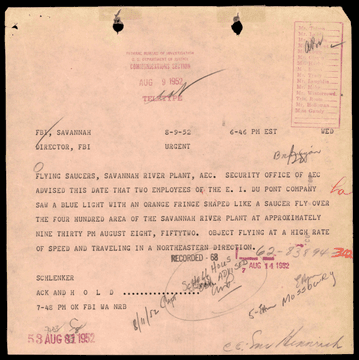
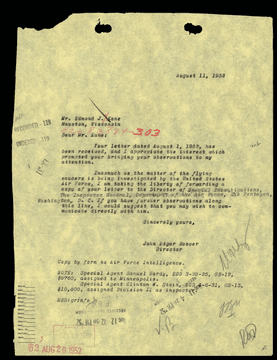
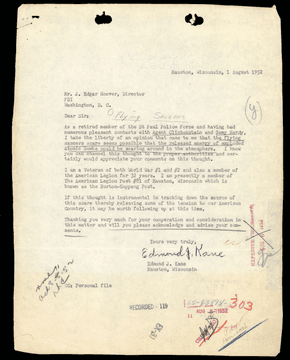
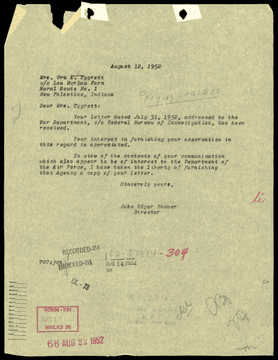
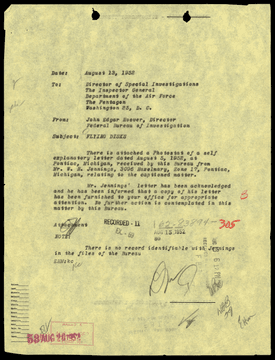
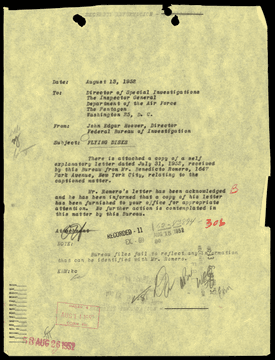
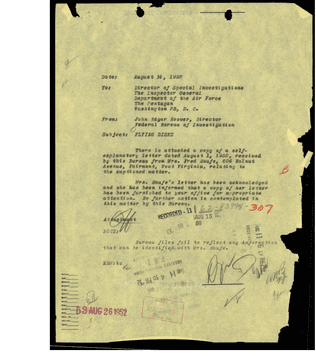
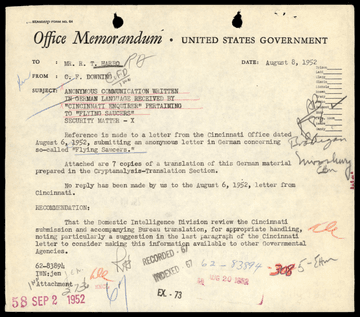
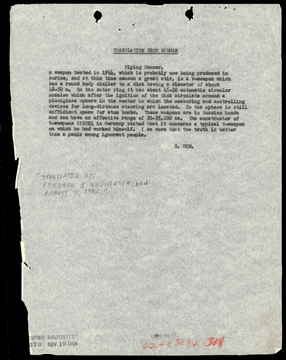
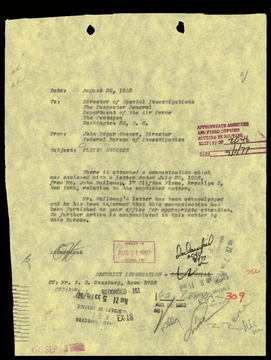
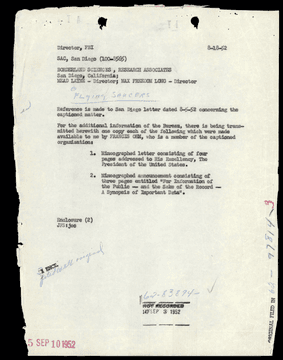
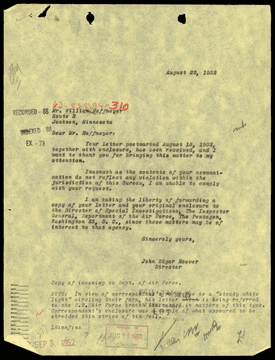
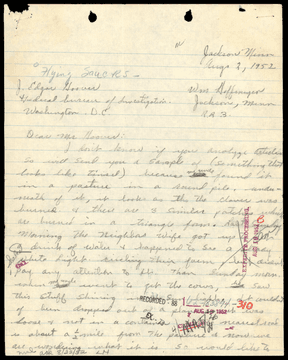
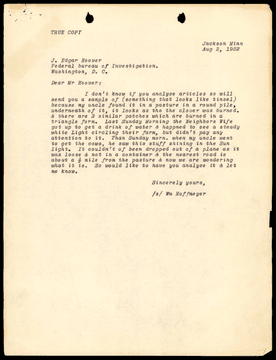
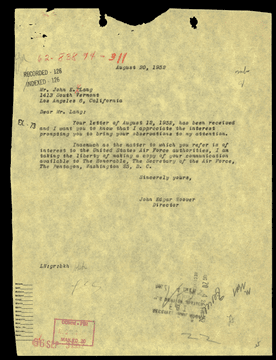
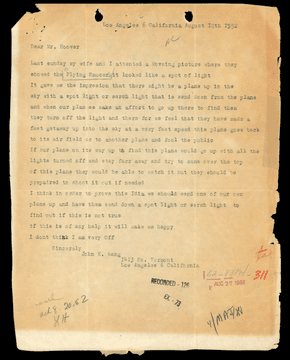
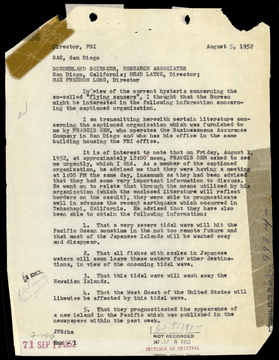
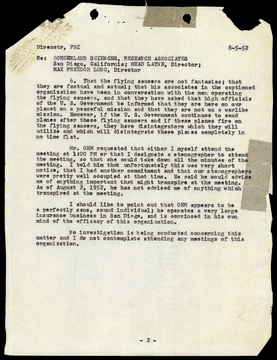
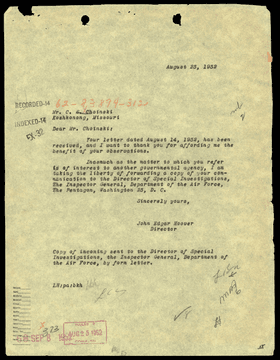
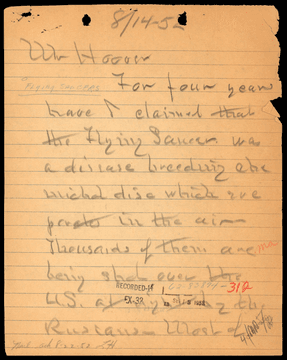
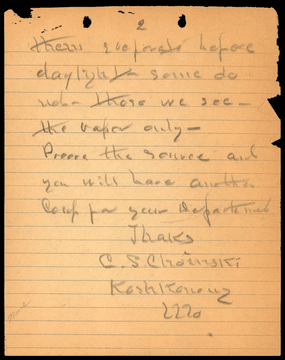
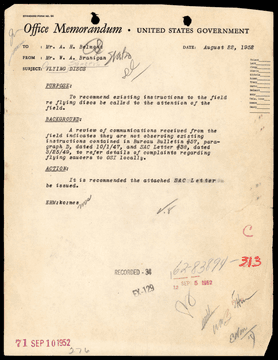
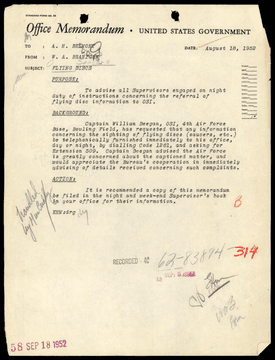
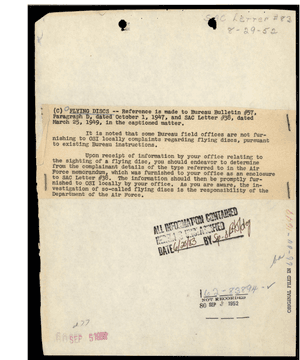
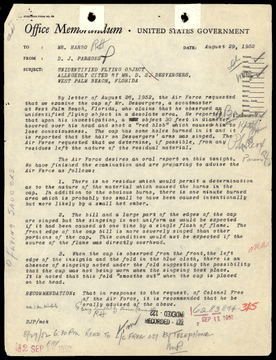
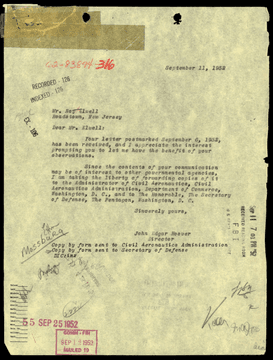
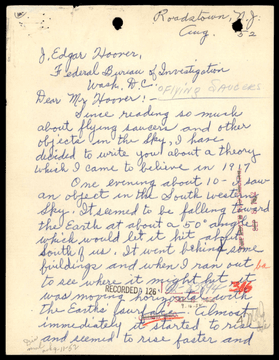
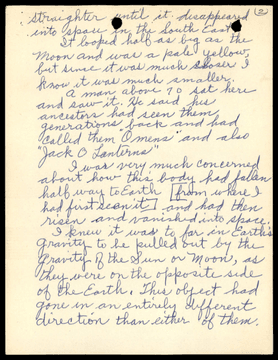
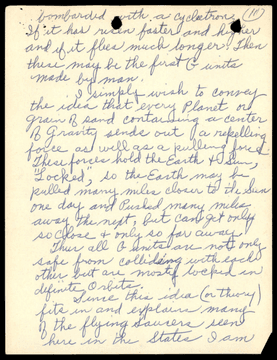
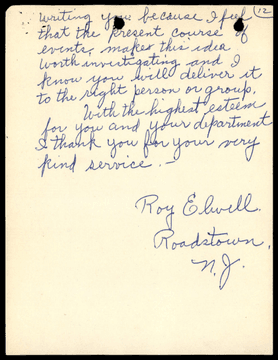
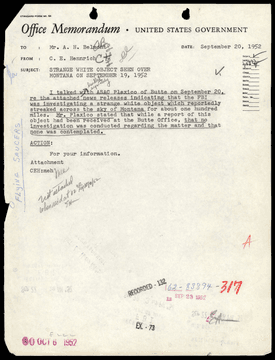
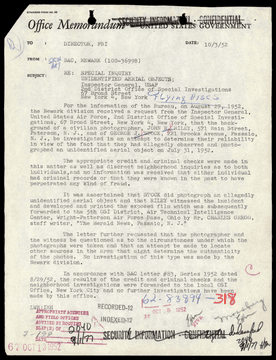
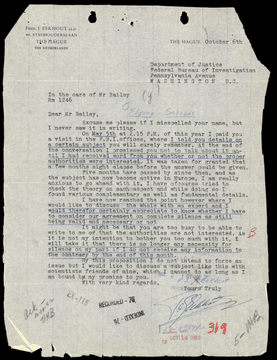
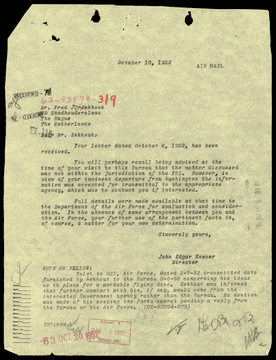
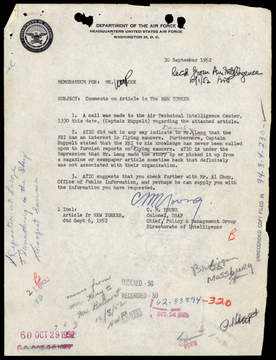
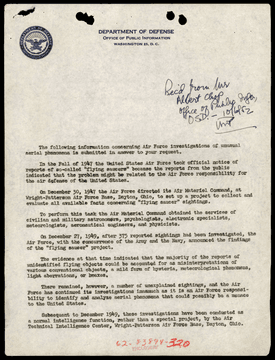
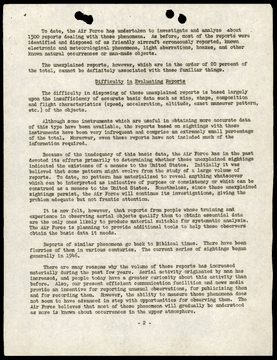
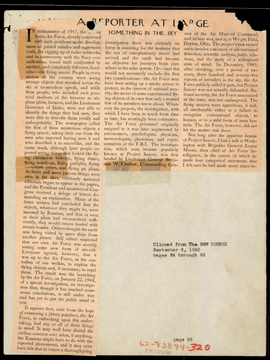
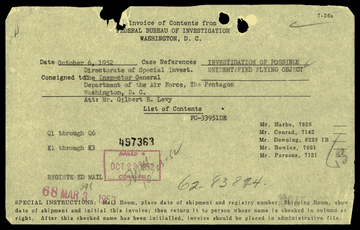
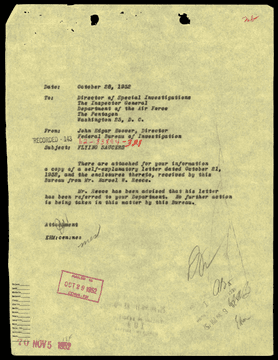
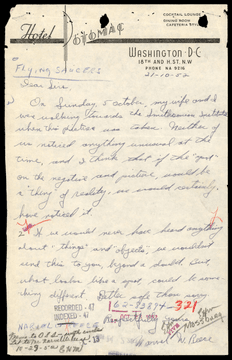
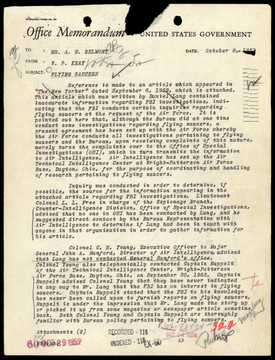
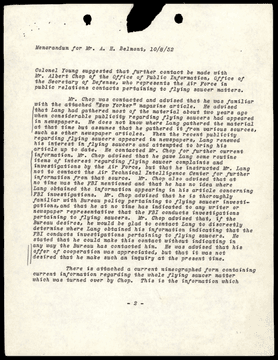
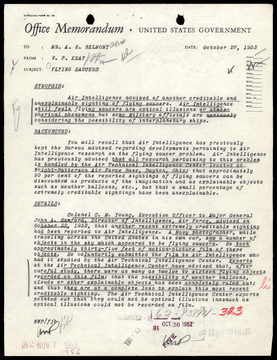
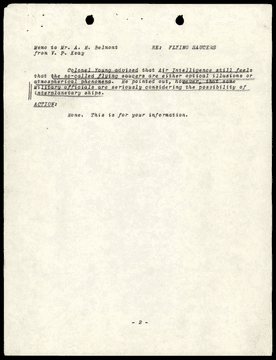
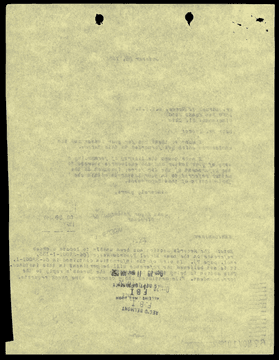
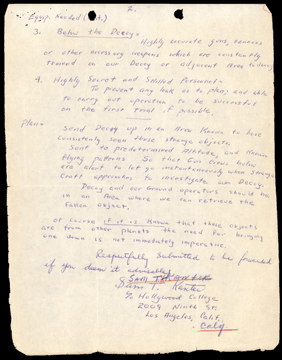
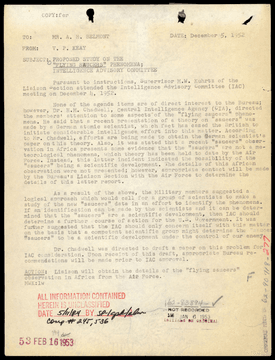
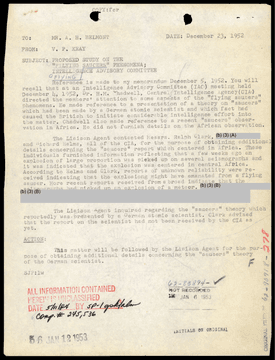
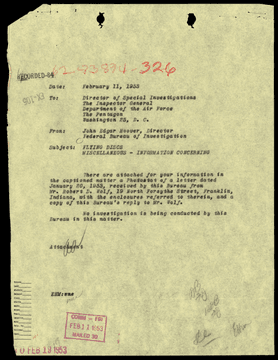
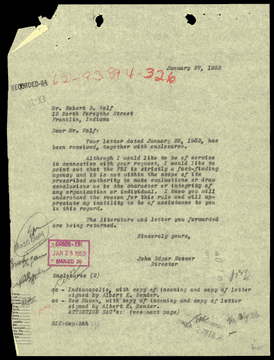
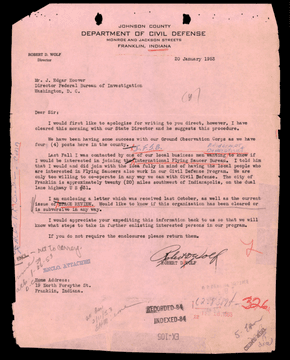
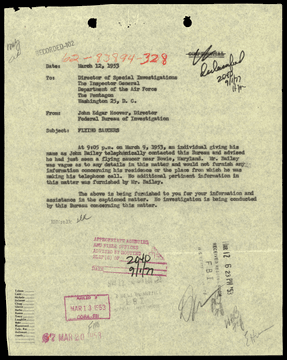
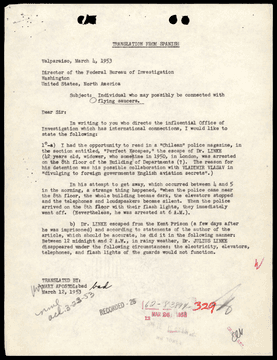
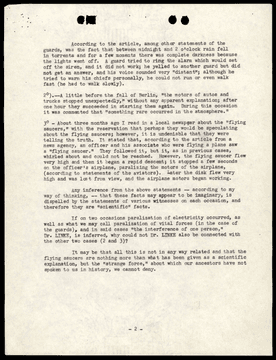
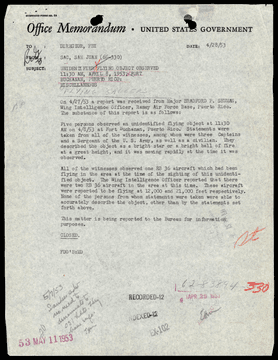
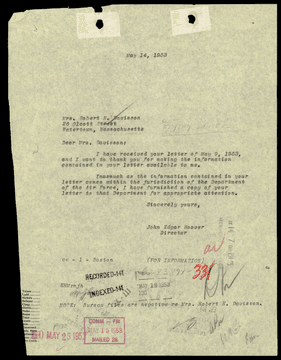
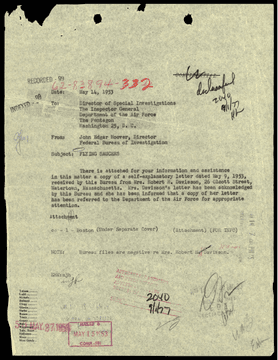
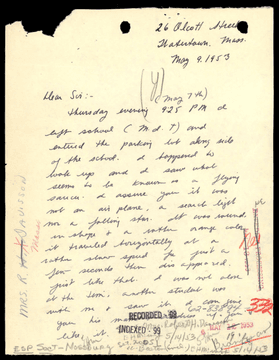
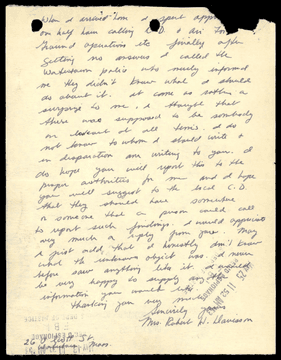
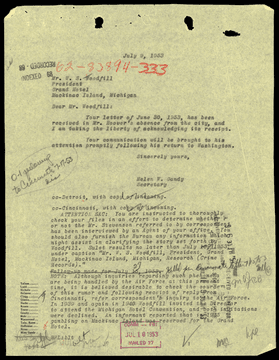
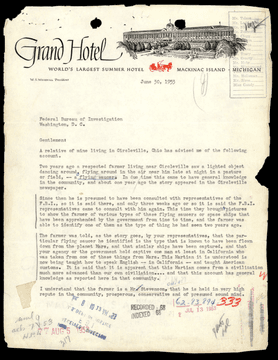
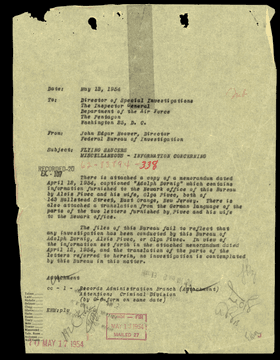
This page is an excerpt from a New Yorker article dated September 6, 1952, discussing the history of the U.S. Air Force's investigation into UFOs, known as Project Saucer, and the public reaction to the phenomena.
A REPORTER AT LARGE

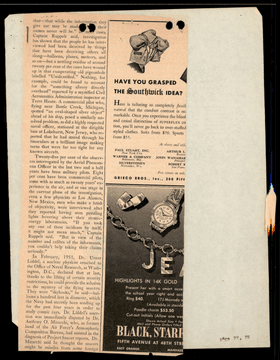
In midsummer of 1947, the United States Air Force, already concerned with such problems as the development of guided missiles and supersonic craft, the rigging up of radar networks, and its controversy with the Navy over unification, found itself confronted by another, and completely different, headache—the flying saucer. People in every section of the country were seeing strange objects that streaked across the sky at tremendous speeds, and while these people, who included such practiced students of the heavens as airplane pilots, farmers, and the Lieutenant Governor of Idaho, were not able to identify the things they had seen, they were able to describe them vividly and unforgettably. The newspapers called the first of these mysterious objects a flying saucer, taking their cue from the man who reported having seen it and who described it as saucerlike, and the name stuck, although later people reported seeing things that looked like flying chromium hubcaps, flying dimes, flying teardrops, flying gaslights, flying ice-cream cones, and flying pie plates.

As more and more curious things were seen in the skies, cautiously quizzical editorials began to appear in the papers, and the President and members of Congress received a deluge of letters demanding an explanation. Many of the letter writers had concluded that the objects, whatever they might be, were manned by Russians, and that as soon as their pilots had reconnoitred sufficiently, they would return loaded with atomic bombs. Others thought the earth was being visited by space ships from another planet. Still others suspected that our own Air Force was secretly testing some new form of aircraft. Everyone agreed, however, that it was up to the Air Force, as the custodian of our welkin, to explain the flying objects and, if necessary, to repel them. The result was the launching by the Air Force, on January 22, 1948, of a special investigation, an investigation that, though it has reached numerous conclusions, is still under way and has yet to put the public mind at rest.

It appears that, aside from the hope of reassuring a jittery populace, the Air Force, in embarking upon this undertaking, had any or all of three things in mind. It may have shared the civilian concern over what, if anything, the Russians might have to do with the reported phenomena, and it may even have felt that to insure a thoroughgoing investigation there was certainly no harm in assuming for the moment that the era of interplanetary travel had arrived and the earth had become an objective for journeys from elsewhere—and this would not necessarily exclude the first two considerations—the Air Force may have been setting up a smoke screen to protect, in the interest of national security, the secret of some experimental flying objects of its own that only a trusted few of its members knew about. Whatever the purpose, the investigation, with which I have been in touch from time to time, has seemingly been exhaustive. The Air Force personnel originally assigned to it was later augmented by astronomers, psychologists, physicists, meteorologists, physicians, and representatives of the F.B.I. The investigation, which soon became popularly known as Project Saucer, was first headed by Lieutenant General Benjamin W. Chidlaw, Commanding General of the Air Matériel Command, and its base was, and is, at Wright Field, Dayton, Ohio. The project's task turned out to involve a mixture of old-fashioned detection, scientific analysis, public relations, and the study of a widespread state of mind. In December, 1949, after checking, over a period of two years, three hundred and seventy-five reports of intruders in the sky, the Air Force publicly called it quits, but Project Saucer was not actually disbanded. National security, the Air Force announced at the time, was not endangered. The flying saucers were apparitions, it said, all attributable either to a failure to recognize conventional objects, to hoaxes, or to a mild form of mass hysteria. The Air Force, however, did not let the matter rest there.

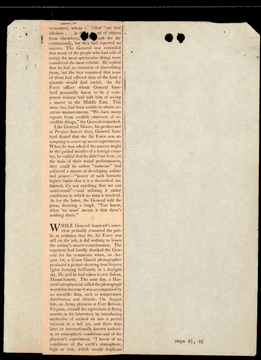
Not long after the apparent demise of Project Saucer, I had a talk in Washington with Brigadier General Ernest Moore, then chief of Air Force Intelligence, in the course of which he made four categorical statements that I felt sure he had made many times before.

Clipped from THE NEW YORKER
September 6, 1952
pages 64 through 82

[HANDWRITTEN: 62-83894-320]